




EOBR Mandate Reintroduced in Senate
Two senators have restarted last year's effort to pass a bill that would mandate electronic onboard recorders on most trucks. Sens. Mark Pryor, D-Ark., and Lamar Alexander, R-Tenn., reintroduced the Commercial Driver Compliance Improvement Act, a bill they offered last September but that expired at the end of the congressional session

Two senators have restarted last year's effort to pass a bill that would mandate electronic onboard recorders on most trucks.
Sens. Mark Pryor, D-Ark., and Lamar Alexander, R-Tenn., reintroduced the Commercial Driver Compliance Improvement Act, a bill they offered last September but that expired at the end of the congressional session.
The bill, which would give the Department of Transportation 18 months to come up with a final rule and an additional 18 months to put it into effect, has the strong support of a group of trucking companies, the Alliance for Driver Safety and Security.
"Electronic onboard recorders are the logical next step in the pursuit of safe highways," said Steve Williams, chairman of the Alliance and chairman and CEO of Maverick USA, based in Little Rock, Ark. "I commend Senators Pryor and Alexander for the continued commitment to safety and the re-introduction of this important legislation," he said in a statement.
Independents represented by the Owner-Operator Independent Drivers Association oppose the measure.
"With all due respect to Senator Pryor, EOBRs will not improve highway safety," said Todd Spencer, Executive Vice President of OOIDA, in a statement. "However, they sure will cost small-business truckers their hard-earned money and their privacy. EOBRs are nothing more than over-priced record keepers lobbied by big business trucking companies to wipe out small business competition."
If it passes, the legislation would create a third track for the ongoing effort to establish EOBRs as an industry standard.
The first track is a Federal Motor Carrier Safety Administration rule that goes into effect June 1, 2012. It says that carriers that violate hours of service rules 10 percent of the time, based on single compliance review, must use electronic onboard recorders to track driver hours. This will affect about 5,700 interstate carriers.
The second track is an FMCSA proposal issued in January that would expand the 2012 rule to cover all of the approximately 500,000 carriers now required to maintain driver logs. It will not apply to short-haul interstate carriers that use timecards to document hours of service. This proposal also covers requirements for documentation to prove compliance with the hours of service rule, and it would require carriers to monitor driver compliance with the rule. FMCSA will be accepting comments on this proposal until May 23.
The Pryor-Alexander legislation targets the same group of carriers as the second-track proposal. It might, however, require the agency to take another look at some of the technical specifications it has proposed so far, according to David Kraft, director of business development for Qualcomm Enterprise Services.
Kraft, who serves as chairman of the Technology and Maintenance Council's EOBR Task Force, is concerned that some of the technical standards the agency is considering are not adequate. He mentioned tamper resistance, driver identification, data security and certification of EOBR devices as possible problem areas.
"If the bill passes, FMCSA will have to make changes," he said. The bill, for example, would require the agency to establish a process for approving eligible EOBR systems, while the agency so far has not established such a process. The agency intends to permit suppliers to self-certify their devices, although it is aware of the risks of that approach and holds open the possibility of establishing a certification procedure if necessary.
The carrier alliance that is pushing the legislation would like to see quick action on a stand-alone measure, rather than trying to hitch it onto the massive highway reauthorization bill that Congress may pass later this year. Committees in the House and Senate are working on the highway bill but outlook for passage is mixed, due to a lack of agreement on funding.
More Drivers
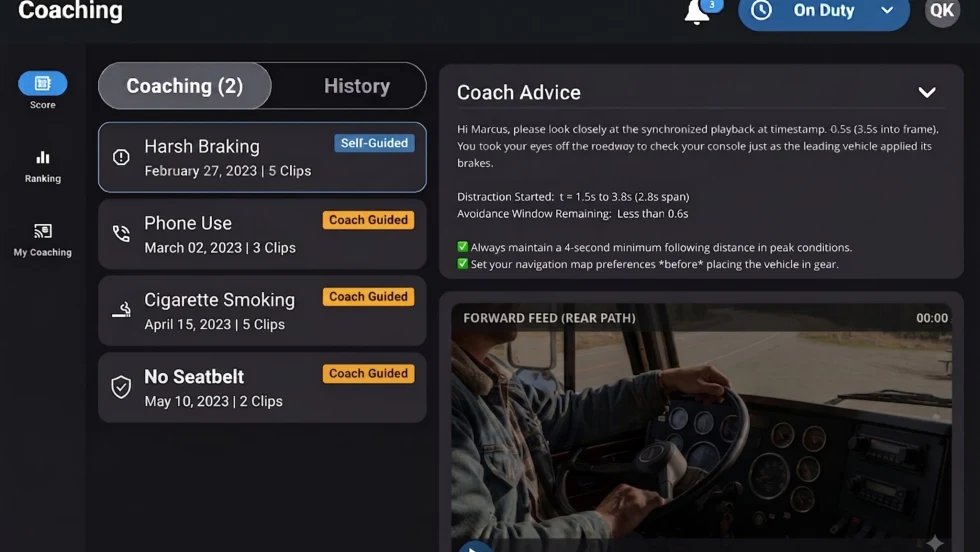
Platform Science Adds Dispatch and Safety Tools
Four additions to PS Fleet help fleets monitor loads, manage driver coaching, share truck locations and adjust video system settings.
Read More →
When Language Stops the Truck: The Return of ELP Out-of-Service Orders
English language proficiency rules for commercial drivers aren’t new, but renewed out-of-service enforcement has raised the stakes. Here’s what carriers need to know before a driver reaches a roadside inspection.
Read More →
Samsara Launches Custom AI Agent Builder
Agent Studio lets fleets create AI tools for hours-of-service monitoring, reporting and driver support, including agents that communicate by phone.
Read More →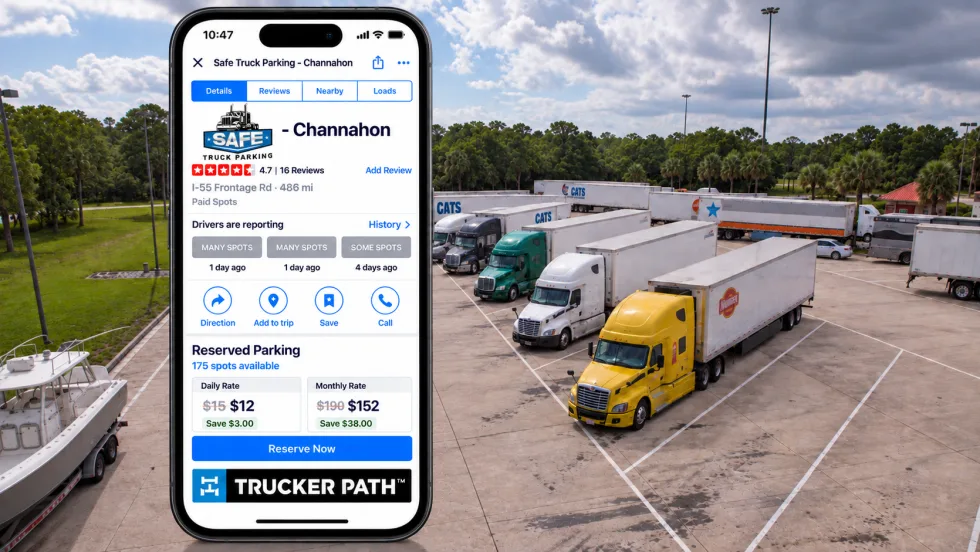
Trucker Path Expands Reserved Parking Network
Trucker Path has added close to 6,000 more truck parking spaces to its Trucker Path Reserved Parking Network with the addition of Safe Truck Parking.
Read More →
EEOC Sues Texas Trucking Company Over Driver Age Limits
The agency says Trancasa USA rejected applicants over 65 and applied tougher driving-record standards to those over 60.
Read More →
Nussbaum, Roehl Announce Second Driver Pay Increase This Year
This year has seen a swath of major truck driver pay increases as freight capacity has tightened.
Read More →
From One Generation to the Next: How Mentorship Builds Safer Truck Drivers
After three decades in trucking, Harold Perry shares what he's learned about driver safety, mentorship, and helping the next generation build confidence behind the wheel.
Read More →
Truck Drivers Need More Than Another Alert
Fleets have more visibility into truck health, safety events, and driver activity than ever. The next challenge is turning all that information into useful guidance for the person who has to decide what to do next.
Read More →
FMCSA Removes 110 Truck Driver Training Schools from Certified ELDT List
Federal regulators also are targeting more than 160 additional training providers and launching a nationwide audit of third-party CDL skills testers as part of a broader crackdown on trucking fraud.
Read More →
Hours of Service Pilot Programs: FMCSA Readies for 2027 Rollout
Two pilot programs could eventually reshape hours-of-service rules, giving truck drivers options to pause their 14-hour clock or use longer split sleeper rest periods.
Read More →