




EEOC Targets Trucking Companies for Harassment, Discrimination
One trucking company has agreed to pay to settle a sexual harassment lawsuit filed by the U.S. Equal Employment Opportunity Commission, while the agency has filed separate litigation against another over claims of religious discrimination.

One trucking company has agreed to pay to settle a sexual harassment lawsuit filed by the U.S. Equal Employment Opportunity Commission, while the agency has filed separate litigation against another over claims of religious discrimination.
Phenix City, Ala.-based Joe-Ryan Enterprises, which does business as Joe Ryan Trucking, will pay $15,000 and offer other relief to settle a sexual harassment lawsuit.
The EEOC says the company subjected a female office clerk to a sexually hostile work environment, including vulgar, insulting and derogatory comments about women and sexually explicit pictures in the workplace. A release from the commission says at the time, the victim, Rhonda Brown, was the only female employee who regularly worked in the company's small office. According to the suit, the work environment became so intolerable Brown was forced to resign.
EEOC says sexual harassment violates Title VII of the Civil Rights Act of 1964. It filed suit in U.S. District Court for the Middle District of Alabama, Eastern Division, after first attempting to reach a pre-litigation settlement.
The three-year consent decree issued by the court on May 14 includes $15,000 for Brown and requires Joe Ryan to implement new policies and practices designed to prevent harassment, conduct employee training on anti-discrimination laws and post notices at the work site. Joe Ryan is also required to provide copies of documents to the EEOC concerning its policies, training efforts, and new complaints of sexual harassment during the time the decree is in effect.
In another case, the EEOC says Star Transport, a trucking company based in Morton, Ill., violated federal law by failing to accommodate two employees because of their religion, Islam, and discharging them.
The lawsuit alleges Star Transport refused to provide two employees with an accommodation of their religious beliefs when it terminated their employment because they refused to deliver alcohol. EEOC District Director John P. Rowe, who supervised the investigation prior to filing the lawsuit, says, "Our investigation revealed that Star could have readily avoided assigning these employees to alcohol delivery without any undue hardship, but chose to force the issue despite the employees' Islamic religion."
Failure to accommodate the religious beliefs of employees, when this can be done without undue hardship, violates Title VII of the Civil Rights Act of 1964 which prohibits discrimination on the basis of religion says EEOC.
The lawsuit filed in U.S. District Court for the Central District of Illinois in Peoria, follows an attempt to reach a voluntary settlement. The agency seeks back pay and compensatory and punitive damages for the fired truck drivers and an order barring future discrimination and other relief.
More Safety & Compliance
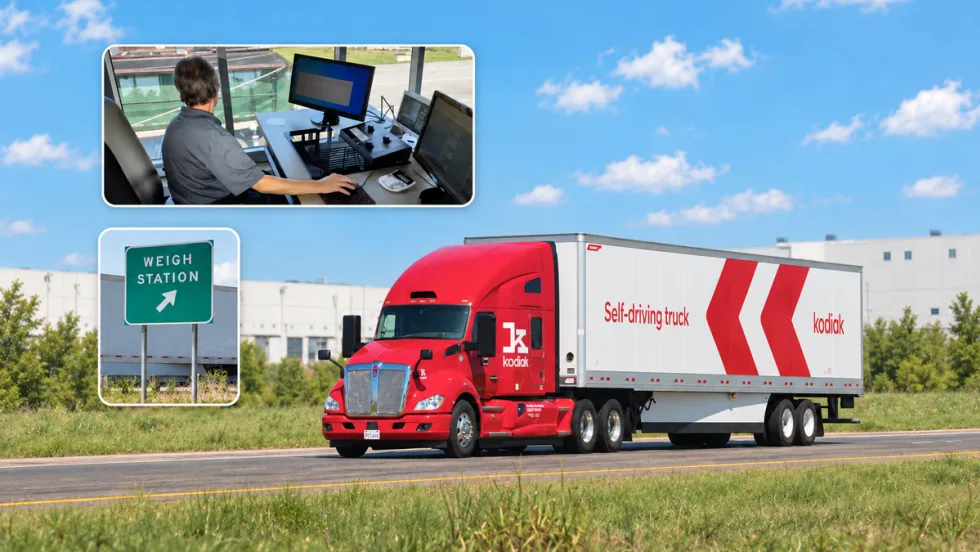
PrePass, Kodiak Connect Driverless Trucks to Roadside Enforcement
The system will allow enforcement agencies to verify Enhanced Inspection information and decide whether Kodiak’s autonomous trucks can bypass roadside screening sites.
Read More →
From One Generation to the Next: How Mentorship Builds Safer Truck Drivers
After three decades in trucking, Harold Perry shares what he's learned about driver safety, mentorship, and helping the next generation build confidence behind the wheel.
Read More →
FMCSA Pauses Biennial-Update Enforcement Amid Motus Transition
Carriers whose updates were due on or after June 1 have more time, while FMCSA works to stabilize its new registration system and warns of phishing sites impersonating its new carrier registration system, Motus.
Read More →
ZF Expands Commercial Vehicle Push in North America
ZF is expanding its North American commercial-vehicle presence with new transmission applications, electrification, trailer technology and autonomous-driving systems.
Read More →
Truck Drivers Need More Than Another Alert
Fleets have more visibility into truck health, safety events, and driver activity than ever. The next challenge is turning all that information into useful guidance for the person who has to decide what to do next.
Read More →
Tesla Wants a Self-Driving Semi. Are Cameras Enough?
Could Tesla’s camera-only autonomous driving technology work on an 80,000-pound Semi? In this commentary, HDT's Deborah Lockridge takes a look at Tesla, Cybercab, and how autonomous trucks see the road.
Read More →
What DOT’s Automated Vehicle Strategy Means for Trucking
The U.S. Department of Transportation issued a new automated-vehicle strategy that outlines plans for driverless-truck regulations, cross-state freight corridors, and federal safety standards.
Read More →
NYC Expands Speed, Pedestrian Safety Tech Across Fleet
New York City is expanding intelligent speed assistance and pedestrian-alert systems across its municipal fleet, moving the technologies from pilot programs into vehicle procurement and retrofit requirements.
Read More →
FMCSA Removes 110 Truck Driver Training Schools from Certified ELDT List
Federal regulators also are targeting more than 160 additional training providers and launching a nationwide audit of third-party CDL skills testers as part of a broader crackdown on trucking fraud.
Read More →
Beyond DOT Compliance: What Makes a Trucking Fleet Truly Safe?
A trucking fleet can follow every rule and still make unsafe decisions. The real test comes when safety conflicts with freight, productivity, or cost.
Read More →