




Economic Watch: Manufacturing Up for 13th Month in a Row
Economic activity in the manufacturing sector expanded in June for the 13th consecutive month, and the overall economy grew for the 61st consecutive month, according to the Institute for Supply Management.


Economic activity in the manufacturing sector expanded in June for the 13th consecutive month, and the overall economy grew for the 61st consecutive month, according to the Institute for Supply Management.
The nation's supply executives are surveyed for the Manufacturing ISM Report On Business.
The June PMI (commonly known as the Purchasing Managers Index) registered 55.3%, a decrease of 0.1 percentage point from May's reading of 55.4%, says Bradley J. Holcomb, chair of the ISM Manufacturing Business Survey Committee, indicating expansion in manufacturing for the 13th consecutive month.
The New Orders Index registered 58.9%, an increase of 2 percentage points from the 56.9% reading in May, indicating growth in new orders for the 13th consecutive month.
The Production Index registered 60%, 1 percentage point below the May reading of 61%.
Holcomb noted that employment grew for the 12th consecutive month, registering 52.8%, the same level of growth as reported in May. Inventories of raw materials remained at 53%, the same reading as reported in both May and April. The price of raw materials grew at a slower rate in June, registering 58%, down 2 percentage points from May.
A PMI in excess of 43.2%, over a period of time, generally indicates an expansion of the overall economy, ISM says. Therefore, the June PMI indicates growth for the 61st consecutive month in the overall economy, and indicates expansion in the manufacturing sector for the 13th consecutive month.
"The past relationship between the PMI and the overall economy indicates that the average PMI for January through June (54%) corresponds to a 3.6% increase in real gross domestic product (GDP) on an annualized basis," Holcomb says. "In addition, if the PMI for June (55.3%) is annualized, it corresponds to a 4% increase in real GDP annually."
Of the 18 manufacturing industries, 15 are reporting growth in June, led by Furniture & Related Products; Nonmetallic Mineral Products; and Food, Beverage & Tobacco Products.
The data is obtained from a survey of manufacturing supply managers based on information they have collected within their respective organizations.
The ISM offered some sample comments from respondents to the survey:
"Business volume is increasing at a good pace and consumers appear to be spending more." (Food, Beverage & Tobacco Products)
"The strength of the automotive industry continues to drive the high demand for steel." (Fabricated Metal Products)
"Business still very solid and strong -- Class 8 Truck and RV." (Transportation Equipment)
More Fleet Management
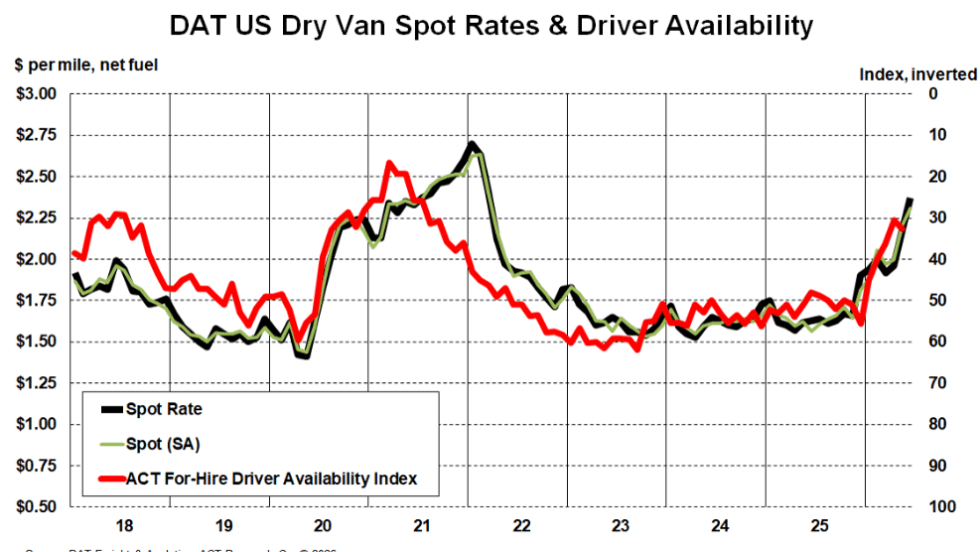
Truckload Rates Keep Rising as Tight Capacity Fuels Freight Market Recovery
Spot and contract rates continued climbing in May and June, not because freight demand is surging, but because fewer trucks and drivers are available.
Read More →
What Geotab's New AI Connector Means for Fleets
Fleets can now ask their usual AI assistants questions about maintenance, safety, fuel use, and vehicle performance, using their live Geotab data, and take action on the answers without leaving their preferred AI tool.
Read More →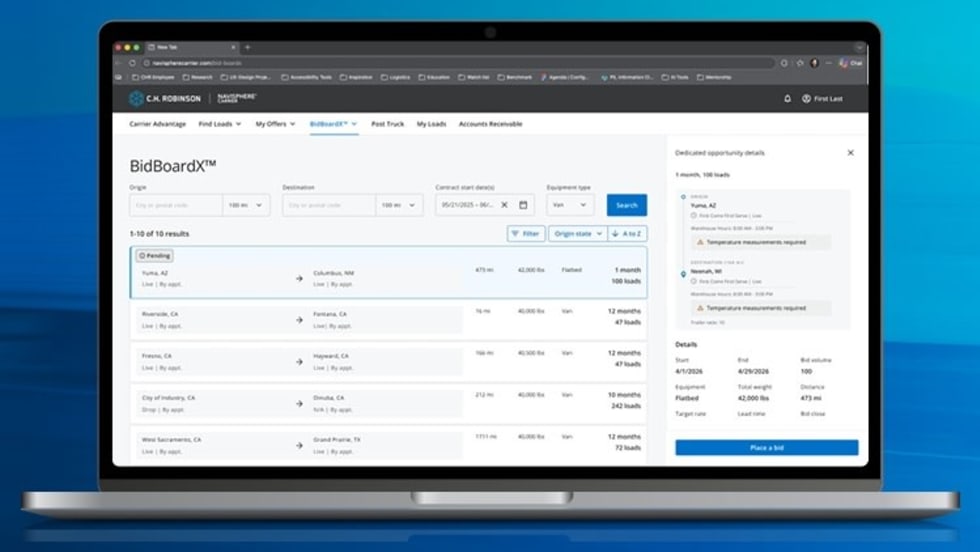
New C.H. Robinson Tool Opens Door to More Predictable Freight
BidBoardX lets carriers search, bid on, and secure committed freight opportunities through a single digital marketplace.
Read More →

New York City's Microhub Project is Delivering Results
Trucking, last-mile delivery companies, and environmental advocates like what they are seeing so far with New York's microhub program.
Read More →
Why Truck Detention Keeps Costing Fleets Time and Money
A 2024 ATRI study found detention affects nearly 40% of truckload stops and costs the industry more than $15 billion annually. Despite the toll on drivers, fleets, and supply chains, the problem remains stubbornly persistent.
Read More →
Time is Running Out to Apply for Exclusive HDT Event
Heavy Duty Trucking Exchange brings fleet managers and suppliers together for the deeper conversations that lead to ideas, partnerships, and solutions. Time is running out to apply for the September event.
Read More →
Amazon Launches Less-Than-Truckload Freight Offering for All Businesses
This launch is the latest addition to Amazon Supply Chain Services, a portfolio of supply chain capabilities from Amazon, including freight, distribution, fulfillment, and parcel shipping.
Read More →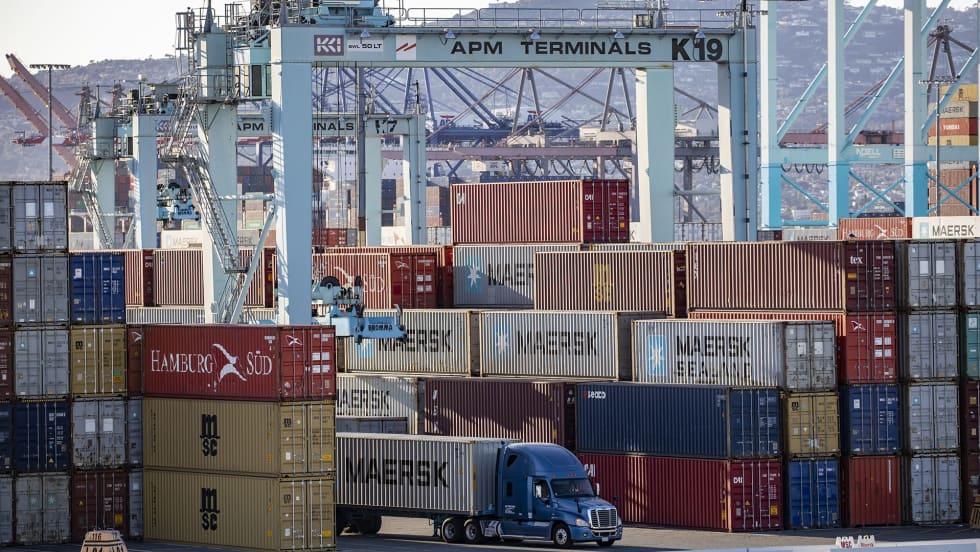
Import Cargo Volume to See Year-Over-Year Gain Again in June, Then Remain Below 2025 Levels Into Fall
After July, the report predicts a weakening in import volume as consumer uncertainty remains high and the impact of increasing inflation takes its toll.
Read More →
AUCTION OF EQUITY INTEREST IN HEAVY HAUL TRUCKING COMPANY!!
Mark your calendar: June 30, 2026 (10:00 a.m. PDT). A 37.5% ownership interest in MagnaTrans, LLC, a California limited liability company doing business as Magna Transportation Group, will be sold in an in-person and online auction to the highest bidder or bidders under Article 9 of the Uniform Commercial Code. The Rancho Cucamonga-based heavy haul and over-dimensional trucking company operates across California, Oregon, and Arizona.
Read More →
Volvo Trucks Adds Unattended Over-the-Air Software Update Capabilities
The latest evolution of Volvo’s over-the-air update technology allows software updates to run while trucks are parked, helping fleets keep vehicles current without disrupting operations.
Read More →