




“Global growth has finally left the starting gate since the global economic and financial crisis."
Economic Watch: Global Growth Expected to Hit 3% in 2018
After exceeding expectations in 2017, the global economy is projected to continue its current momentum to generate a 3% growth rate through 2018, according to The Conference Board’s latest Global Economic Outlook.

Evan Lockridge・Former Business Contributing Editor
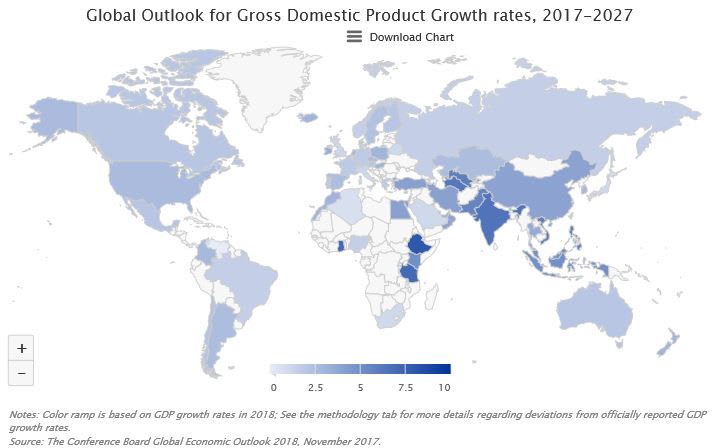
Global outlook for gross domestic product growth rates, 2017-2027. Graphic: The Conference Board
4 min to read

After exceeding expectations in 2017, the global economy is projected to continue its current momentum to generate a 3% growth rate through 2018, according to The Conference Board’s latest Global Economic Outlook.
The non-profit, private research group’s analysis provides projections for the output growth of the world economy, including 11 major regions and individual estimates for 33 mature and 36 emerging market economies for 2018–2022 and 2023–27.
“Global growth has finally left the starting gate since the global economic and financial crisis,” said Bart van Ark, chief economist of The Conference Board. “GDP (gross domestic product) growth, which we predicted to grow at 2.8% [annually] a year ago, is likely to end at about 3% for 2017, and through 2018.”
While the growth path of mature markets will remain solid in the short term, potential for much faster growth is limited, and a growth slowdown is likely to set in later in the decade, according to the report.
“As some major emerging markets are maturing themselves, especially China, they are unlikely to return to growth trends of the past,” said van Ark. “The good news is that a larger role for qualitative growth factors; an improvement in labor force skills, digitization, and especially stronger productivity growth; may help sustain growth and provide better conditions for businesses to thrive over the next decade.”
Mature Economies and Emerging Markets
Momentum in mature economies increased during 2017, which sets them up to continue growing at a decent pace in 2018 compared to the previous five-year average of 1.8% (2012–2017).
Mature economies are projected to grow by 2.1% in 2018 compared to 2.2% in 2017. The U.S. economy will especially benefit from carrying stronger investment growth into next year. By the middle of 2018, several European economies may see some weakening of cyclical tailwinds and fall back to their medium-term growth trend. These slowdowns will mostly be quite modest. On the other hand, Japan and the United Kingdom are projected to slow more dramatically next year.
Emerging markets will continue to gain some strength in 2018, projected to grow by 3.8%, compared to 3.7% in 2017, but there are significant differences across countries.
China had somewhat stronger growth in 2017 than anticipated, due to a revival in exports and ample government support of the economy in the run-up to the once-every-five-year Party Congress in October. But China will continue its long, soft fall going into 2018.
India, which had a weaker-than-expected year due to implementation difficulties with major policy initiatives, such as the demonetization of large currency notes and the introduction of a country-wide goods and services tax, will see improved growth in 2018, largely driven by consumption.
Brazil will continue to recover slowly from a deep economic crisis, while Mexico is likely to face more headwinds from uncertainty around the North American Free Trade Agreement negotiations and domestic policy uncertainty related to upcoming elections in 2018.
Challenges to Sustaining Current Economic Strength
The Conference Board warned that several factors may limit the period during which the current strength in the global economy may continue:
The growth uptick in 2017 reflects a combination of unique events, including the stabilization of energy and commodities prices, improved business confidence based on hopes for fiscal stimulus and tax reforms by the new U.S. administration, a cyclical recovery in Europe, and China’s policy-driven growth stimulus. These events are unlikely to provide sustained growth going forward.
A less-than-convincing recovery in investment may limit the speed with which technology can be translated into productivity growth.
A slowdown in consumption growth is possible in several countries, as real wage growth remains slow, even as labor markets tighten.
Global trade growth may remain modest at best in light of a shift in growth toward less trade intensive categories of services, such as retail and personal and government services, causing a slower medium-term growth path, especially for emerging markets.
Policy and geopolitical risk may also distort the growth path in 2018. Some of those risks are related to domestic policy, especially in the United States, India, and China. Others are more geopolitical and geo-economic in nature, related to a possible fallout from dragging negotiations on Brexit and other threats to Europe’s stability, an acceleration in protectionism or even a trade war between the U.S. and China, and increased risk of political or even military conflicts in different parts of the world.
Long-term economic trends and structural changes pose even bigger risks in the global economy, according to The Conference Board. It said slow labor force growth due to aging populations, troubles with translating technology into productivity, and unequal distribution of the benefits of technological change have limited the potential size of the economy. Also, unfavorable corporate tax regimes and business regulations may be additional structural factors hindering business investment.
More Fleet Management
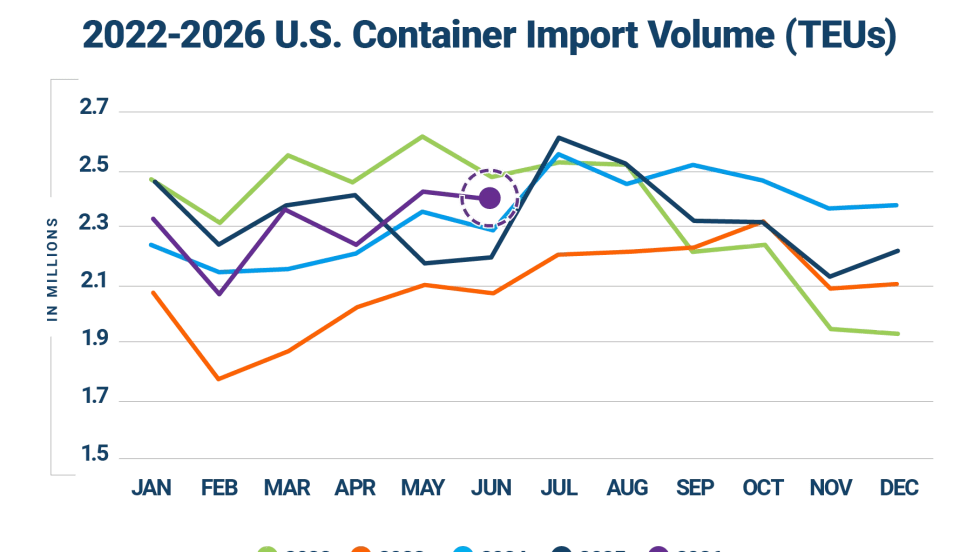
Import Cargo’s Early Peak Season is Winding Down
There was an early start to peak season this year at the nation's gateway ports, as retailers brought in merchandise ahead of tariff changes in late July and responded to other supply chain uncertainties,
Read More →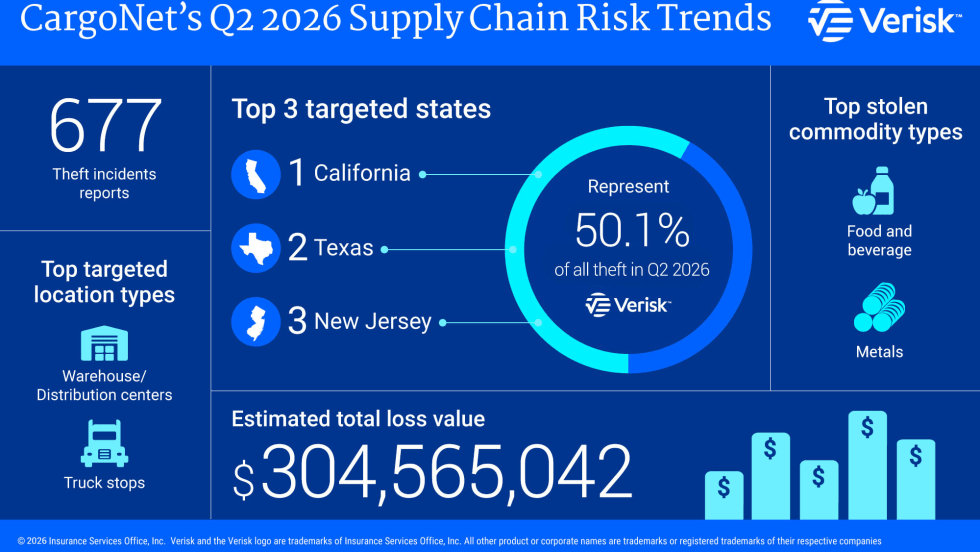
Fewer Cargo Thefts, Bigger Losses: Criminals Target Higher-Value Loads
CargoNet says organized theft rings are stealing fewer shipments but choosing more valuable freight, including metals and technology, resulting in record losses.
Read More →
How Innovative Trucking Leaders Turn Change Into an Advantage
As the pace of change accelerates in trucking, the fleets that adapt best have more than the latest technology. They have cultures that embrace improvement.
Read More →
Freight Broker Bonds Just Got Harder to Get. Here's What That Means for Your Fleet.
When it gets harder for a freight broker to prove they are financially sound, the ones who cannot clear that bar get pushed out of the market. And those are exactly the brokers who used to leave motor carriers holding the bag.
Read More →
Long-Awaited Canadian Border Bridge to Open in Detroit
For trucking, the bridge opening should offer immediate improvements in efficiency and reliability, with new customs facilities, expanded inspection capacity, and direct freeway-to-freeway connections.
Read More →
Aurora Rolls Out Next Generation of Driverless Trucks for Commercial Freight
Aurora's latest autonomous trucks it's rolling out with International feature lower-cost hardware designed for a million miles as the company expands commercial driverless freight operations across the U.S. Sun Belt.
Read More →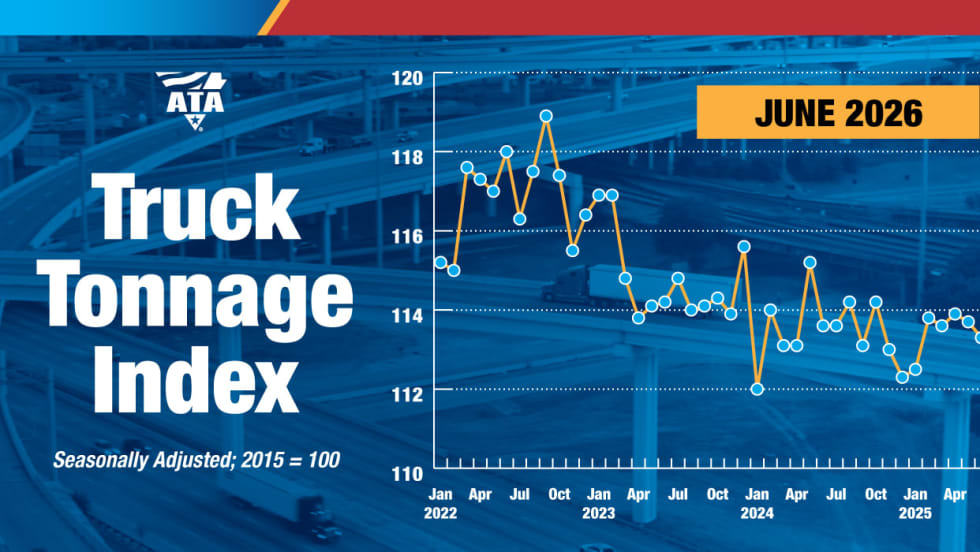
Freight Tonnage Down, Rates up, as Lower Capacity Powers Trucking Recovery
The recovery from the freight recession continues to be driven by reduction in capacity rather than by increased demand.
Read More →
Think Your Trucking Fleet Isn't Using Much AI? Think Again
Shadow AI — the use of unauthorized artificial intelligence tools at work — is becoming increasingly common, putting sensitive company data at risk. Learn how trucking fleets can protect sensitive data while embracing AI.
Read More →
ArcBest Consolidates Brands, Cuts Workforce
The company will bring three business units under the ArcBest brand, eliminate about 2% of positions, and expects the changes to generate $40 million in annual savings.
Read More →
Trucking Fleets Faced Record Operating Costs During Third Year of Freight Recession
ATRI's annual operational cost report shows carriers trimmed fleets, delayed equipment purchases, and ran older trucks as expenses continued to outpace freight rates.
Read More →