




Earnings Watch: Volvo Profit Falls While Daimler Gains
Earnings for two of the world’s biggest truck makers varied greatly in the third quarter, according to figures released on Friday, and both had a dim view of upcoming sales in the North American market.


Earnings for two of the world’s biggest truck makers varied greatly in the third quarter, according to figures released on Friday, and both had a dim view of upcoming sales in the North American market.
Mack and Volvo parent company Volvo AB of Sweden (OTC: VLVLY) reported net profit for the quarter ending August 31 fell by 15% from a year ago to 2.59 billion kronor or $290 million, according to MarketWatch.
Net sales fell 6% to 68.76 billion kronor, or $8.07 billion, compared to $8.64 billion compared to the third quarter a year earlier. Both revenue and profit fell short of analysts’ expectations.
The Volvo Group’s adjusted operating income declined to 4.8 billion kronor from 5.1 billion kronor a year earlier, or $568.8 million versus $599.9 million. However the company’s adjusted operating margin improved slightly, hitting 7% compared to 6.9% in the third quarter of last year.
Deliveries in Volvo’s truck business, which makes up about two-thirds of its total sales, were down 13% in all markets except Europe, where activity remained high, according to Martin Lundstedt, president and CEO.
“The downward correction in the North American market continued and there is still a need to take down dealer inventories," he said. "Production volumes have gradually been adjusted downwards to meet the lower demand and further steps will be taken. Expectations of unit growth in other truck markets are limited and therefore focus will be on the service business and continuous improvements."
Despite this he noted Volvo’s truck business continued to improve its profitability, and the adjusted operating margin increased to 8.2% despite total net orders falling 7%.
Truck orders in Europe increased by 6%, but in North America order intake declined by 37% compared to the same quarter last year, and deliveries came down by 46% in total.
The decline in both orders and deliveries compared with 2015 was caused by the market correction and dealers focusing on reducing their inventories, according to the company Production in the Group’s North American manufacturing system was lowered in the quarter and will be further reduced in the fourth quarter to allow for further inventory reduction at dealers.
Daimler Jumps Despite Weak Truck Sales
German rival Daimler AG (OTC: DAI), parent to Freightliner and Western Star, reported record unit sales in both cars and trucks with its net profit rising to 2.60 billion euros, or $2.83 billion, from 2.39 billion euros a year earlier, according to the Wall Street Journal, beating analysts’ expecations.
Revenue increased 4% to 38.6 billion euros. Earnings before interest and taxes after special items (EBIT) were up 10% to 4 billion euros.
In the third quarter of 2016, Daimler sold 754,100 cars and commercial vehicles worldwide, more than ever before in a third quarter and surpassing the total for the prior-year period by 5%, according to the company. Much of the increase was in sales of Mercedes-Benz cars, with unit sales up by 11%. Unit sales at Mercedes-Benz Vans were up 13%.
Daimler Trucks and Daimler Buses could not match their high earnings of the prior-year quarter. Daimler Trucks revenue fell 19% as unit sales slumped 24%. The company sold 97,100 vehicles in the third quarter of this year compared to 128,500 a year earlier. Sales were lower in the company’s key markets. In North American, unit sales totaled 31,400 versus 52,200 a year earlier. Truck sales were also lower in Brazil, Turkey, the Middle East and Japan. Sales were up in most parts of Europe, and in the Far East there were improvements in Indonesia as well as in a joint venture in China.
Daimler believes unit sales in full-year 2016 will be significantly lower than in the previous year, in large part due to weaker North American demand. However, Daimler remains on track to achieve its earnings forecasts for the full year.
Dana Profit Falls By More Than Half
Both reports follow third quarter earnings from Dana Inc. (NYSE: DAN) showing net income for the third quarter fell 52.1% from a year earlier to $57 million. Earnings per share were 39 cents in the most recent quarter versus 75 cents.
However, third-quarter 2015 results included a $100 million tax benefit and an after-tax impairment charge. Adjusting for these items, net income for the third quarter of 2016 increased compared with last year, primarily due to lower expenses for interest and income taxes partially offset by a higher restructuring expense, according to the company.
Adjusted earnings for the third quarter of this year totaled $168 million, a $1 million increase over last year, while adjusted earnings per share were 49 cents, 6 cents better than a consensus estimate by analysts.
This is despite sales for the Ohio-based company being slightly down over last year, $1.38 billion compared with $1.47 billion during the 2015 quarter.
Dana’s Commercial Vehicle Driveline Technologies sales were $294 million for the 2016 quarter, compared with $367 million in 2015. Weaker Class 8 truck production in North America and the transfer of a customer program to Light Vehicle Driveline reduced sales by $73 million, the company said.
Dana also reaffirmed its full-year guidance of sales of approximately $5.8 billion and adjusted earnings of approximately $655 million.
More Fleet Management

Adam Buttgenbach’s Approach to Electric Trucks: Start With Where They Fit
HDT Truck Fleet Innovator Adam Buttgenbach helped PepsiCo build one of North America’s largest EV fleets by focusing on where electric trucks make operational sense.
Read More →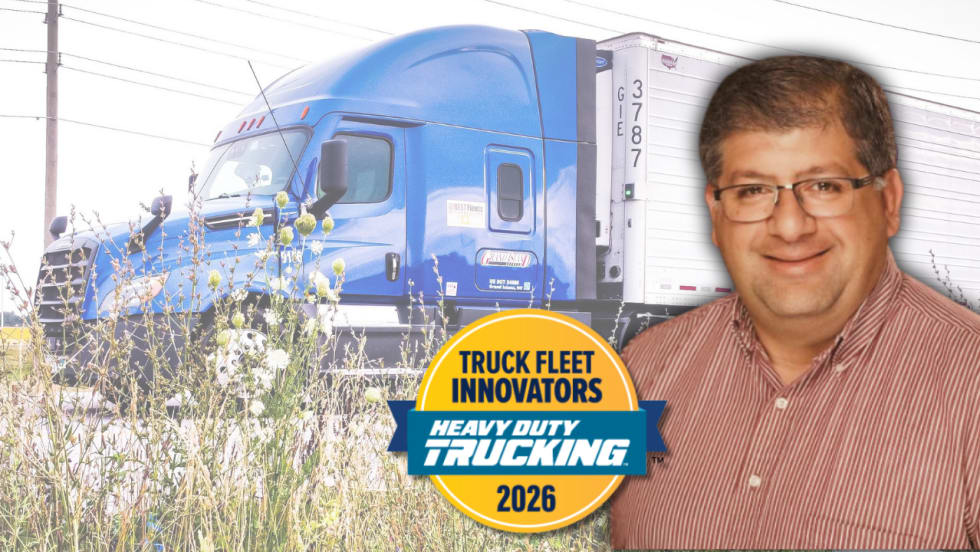
Deen Albert: Let Automation Do the Math, People Make the Decisions
HDT Truck Fleet Innovator Deen Albert makes sure people are still at the heart of operations at Grand Island Express, even while adopting artificial intelligence tools. AI-assisted dispatch helped boost revenue 25% with the same number of trucks.
Read More →
Trimble’s New AI Agent Takes Aim at Fleet Back-Office Busywork
Arc Agent works across Trimble TMS products to automate repetitive tasks such as freight orders, maintenance, invoices, fuel costs and more.
Read More →
How HDT’s 2026 Truck Fleet Innovators Are Rethinking Fleet Operations
Meet five trucking leaders who are challenging assumptions, solving operational problems, and putting innovative ideas to work.
Read More →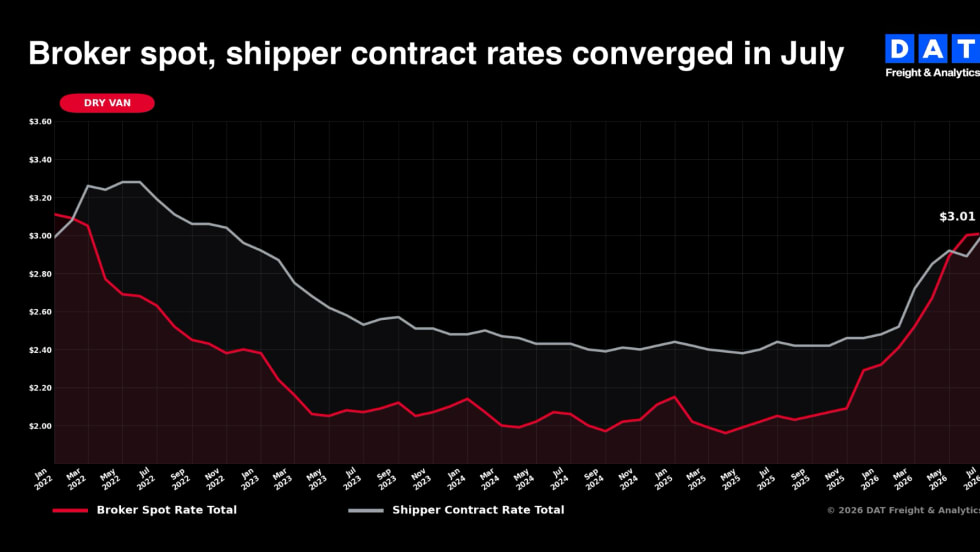
Tight Trucking Capacity Pushes Rates Higher Even as Freight Volumes Fall
“Spot rates moving ahead of contract rates have historically signaled a tightening market, but we haven’t seen a capacity-driven market quite like this one,” said DAT's Dean Croke.
Read More →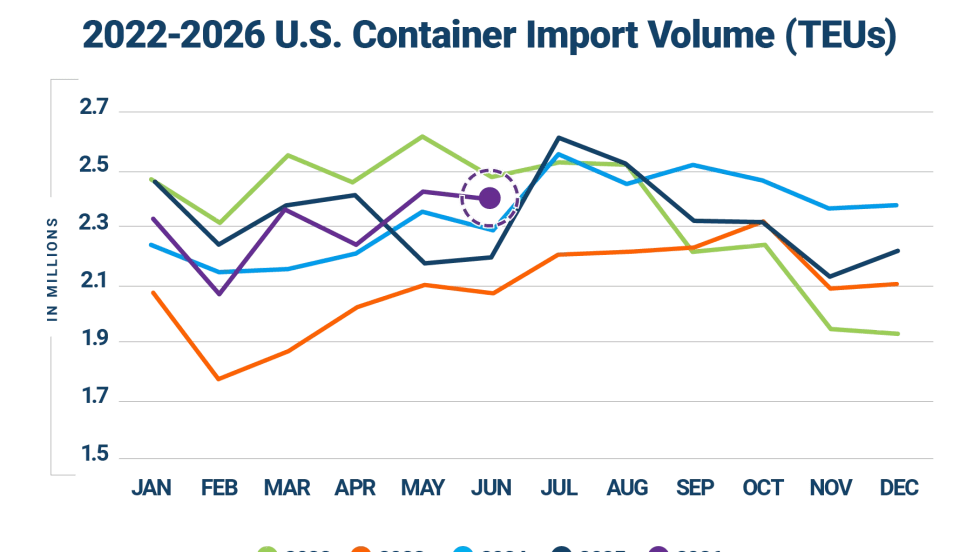
Import Cargo’s Early Peak Season is Winding Down
There was an early start to peak season this year at the nation's gateway ports, as retailers brought in merchandise ahead of tariff changes in late July and responded to other supply chain uncertainties,
Read More →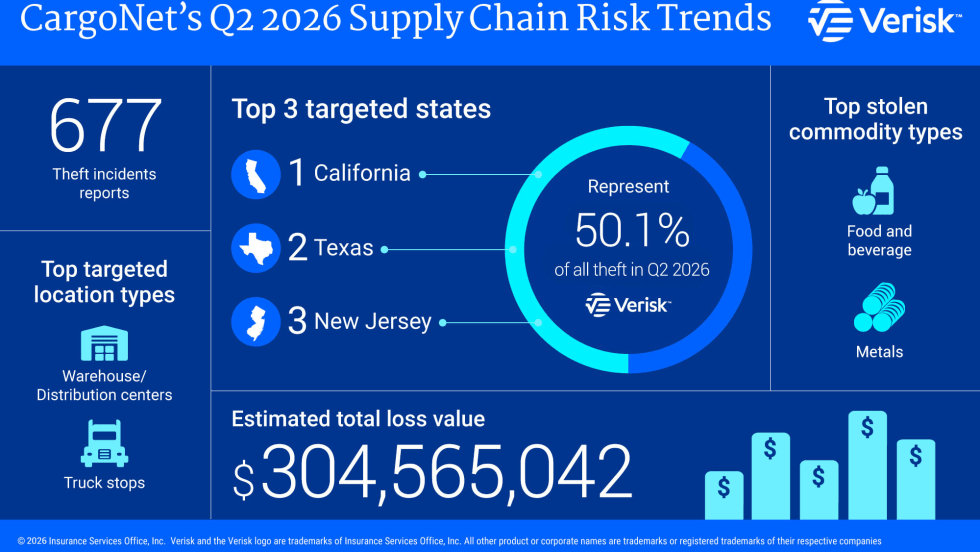
Fewer Cargo Thefts, Bigger Losses: Criminals Target Higher-Value Loads
CargoNet says organized theft rings are stealing fewer shipments but choosing more valuable freight, including metals and technology, resulting in record losses.
Read More →
How Innovative Trucking Leaders Turn Change Into an Advantage
As the pace of change accelerates in trucking, the fleets that adapt best have more than the latest technology. They have cultures that embrace improvement.
Read More →
Freight Broker Bonds Just Got Harder to Get. Here's What That Means for Your Fleet.
When it gets harder for a freight broker to prove they are financially sound, the ones who cannot clear that bar get pushed out of the market. And those are exactly the brokers who used to leave motor carriers holding the bag.
Read More →
Long-Awaited Canadian Border Bridge to Open in Detroit
For trucking, the bridge opening should offer immediate improvements in efficiency and reliability, with new customs facilities, expanded inspection capacity, and direct freeway-to-freeway connections.
Read More →