




Earnings Watch: In Face of EU Antitrust Probe, Daimler Earnings Rise 15%
Daimler AG, parent of Daimler Trucks North America and Mercedes-Benz Vans USA, reported on July 26 a 15% jump in profit for the second quarter, largely on the strength of its global Mercedes-Benz luxury car business.


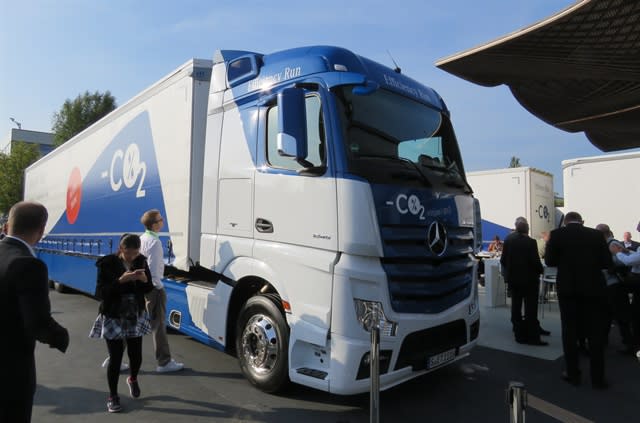
Photo: David Cullen
Germany’s Daimler AG (Ticker symbol DAI), parent of Daimler Trucks North America and Mercedes-Benz Vans USA, reported on July 26 a 15% jump in profit for the second quarter, largely on the strength of its global Mercedes-Benz luxury car business.
That performance was dimmed by recent news that Daimler is among the targets of a probe by the European Union into alleged collusion among automakers.
On July 22, per a report by The New York Times, European antitrust authorities stated they are investigating allegations that Volkswagen, Daimler and BMW colluded illegally to hold down the prices of crucial vehicle technology, including emissions equipment. The alleged acts of collusion began in the mid-1990s and continued until recently, according to a report by the German magazine Der Spiegel.
In addition, earlier this month Munich-based newspaper Sueddeutsche Zeitung reported that Germany’s federal minister of transport Alexander Dobrindt is investigating whether the exhaust-gas treatment systems of certain diesel-powered cars and vans built by Daimler have been manipulated by illegal software that eliminates emission measurements taken during testing and on the road.

Back to Daimler’s financials: The OEM reported that Q2 earnings before interest and taxes (EBIT) increased to 3.75 billion Euros ($4.4 billion) from 3.26 billion Euros ($3.8 billion) for the same period the year before.
The Mercedes-Benz Cars division posted a 70% leap in second-quarter EBIT, but in the meantime, profit dropped 13% for the Daimler Trucks business-- the company’s second-biggest earnings contributor, according to Bloomberg— and it dropped 11% for its commercial van operation.
From April through June, Daimler sold 822,500 cars and commercial vehicles worldwide (+8%), marking another record for unit sales. The company said contributions to the Group’s best-ever unit sales came from all automotive divisions, in particular the records set by Mercedes-Benz Cars (595,200 vehicles, +9%) and Mercedes-Benz Vans (103,400 vehicles, +4%) and the sales growth at Daimler Trucks (116,400 vehicles, +8%).
Daimler said group revenue hit their best-ever figure of €41.2 billion— or 7% higher than in the second quarter of last year. Adjusted for exchange-rate effects, revenue increased by 5%.
“We had an excellent second quarter,” said Dr. Dieter Zetsche, Chairman of the Board of Management of Daimler AG and Head of Mercedes-Benz Cars. “This strong core business is the best basis to exploit new business models around the CASE topics [CASE stands for the four strategic pillars of connectivity (Connected), autonomous driving (Autonomous), flexible use (Shared & Services) and electric drive (Electric)], which Daimler is linking up intelligently.
“Our strategy is taking effect,” he continued. “We have set ourselves ambitious goals. And we are achieving them – in terms of unit sales and profitability. Step by step, we are optimizing efficiency throughout the Group. The transformation of Daimler is going ahead at full speed. And we have everything we need for it: the resources to invest and the scope to innovate.”
The company noted that earnings for the global Daimler Trucks division “reflect expenses for customer-service measures at Mercedes-Benz Trucks, and despite efficiency gains, did not match the earnings of the prior-year quarter.” Also, Mercedes-Benz Vans and Daimler Buses “achieved high levels of EBIT but lower than the amounts posted in the prior-year quarter.”
Daimler added that “following the cyclical downturn of the previous year for the truck market in the NAFTA region, demand can be expected to recover gradually as the year progresses.” Nonetheless, the OEM expects that for full-year 2017, sales of Class 6 to 8 trucks are “likely to be slightly lower than in 2016” and “a rather weaker development is anticipated in the segment of heavy-duty [Class 8] trucks.”
More Fleet Management

Color Match Smarter: Tools That Restore & Perform
For fleet managers and collision repair professionals keeping heavy-duty trucks on the road, getting the color right the first time isn't just about appearance — it's about efficiency, turnaround time, and bottom-line results. Discover how today's digital color tools are transforming the repair process from guesswork to precision.
Read More →
FMCSA Pauses Biennial-Update Enforcement Amid Motus Transition
Carriers whose updates were due on or after June 1 have more time, while FMCSA works to stabilize its new registration system and warns of phishing sites impersonating its new carrier registration system, Motus.
Read More →
2026 Blueprint for Countering Smarter Supply Chain Theft
Cargo theft is no longer just the cost of doing business. It's a multi-billion-dollar criminal enterprise exploiting vulnerabilities across your fleet, drivers, and supply chain.
Read More →


How Telematics Improves Visibility, Control, and Performance in Refrigerated Fleets
Explore how telematics help refrigerated fleets improve visibility, uptime, efficiency, compliance, and cargo protection across connected cold chain operations.
Read More →
What the U.S.-Canada Trade War Means for Trucking
Escalating U.S.-Canada tariffs could disrupt cross-border freight, reduce truck volumes, raise costs, and create new uncertainty for carriers on both sides of the border.
Read More →
What Are Trucking’s Top Concerns for 2026?
The American Transportation Research Institute wants to know what's worrying trucking fleet managers, drivers, and other stakeholders in its annual Industry Issues survey.
Read More →
American Trucking Associations Looks for a New Leader
ATA President and CEO Chris Spear abruptly left his job at the association on August 21, at a pivotal time for the trucking industry.
Read More →
Public Wi-Fi Cybersecurity Risks: How Truck Drivers and Fleets Can Protect Their Data
Public Wi-Fi can expose truck drivers and fleets to credential theft, malware, and other cyber threats. Here’s how to reduce the risk on the road.
Read More →
For Nicky Cupp, Fleet Innovation Starts With Frustration
HDT Truck Fleet Innovator Nicky Cupp turns everyday pain points at Fraley & Schilling into opportunities for better technology and smarter processes.
Read More →
Adam Buttgenbach’s Approach to Electric Trucks: Start With Where They Fit
HDT Truck Fleet Innovator Adam Buttgenbach helped PepsiCo build one of North America’s largest EV fleets by focusing on where electric trucks make operational sense.
Read More →