




DOT Reviews Options for Limiting Greenhouse Gases
The Transportation Department has added its voice to the ongoing debate over how to reduce greenhouse gas emissions, offering an analysis of a half-dozen strategies that are already under way or under consideration. Transportation is a major contributor to the greenhouse gases that most scientists say exacerbate global warming. Tailpipe emissions contribute almost 30 percent of greenhouse gase

The Transportation Department has added its voice to the ongoing debate over how to reduce greenhouse gas emissions, offering an analysis of a half-dozen strategies that are already under way or under consideration.
Transportation is a major contributor to the greenhouse gases that most scientists say exacerbate global warming. Tailpipe emissions contribute almost 30 percent of greenhouse gases
, DOT said in a report to Congress published in April. Most of those emissions, almost 80 percent, come from cars. Trucks contribute most of the remainder, 19 percent.
Strategies For Reducing GHGs
The 605-page report does not make any recommendations. Instead it looks at the policy options that arise from a number of strategies familiar to trucking.
One is more use of low-carbon fuels such as biodiesel. Another is improving fuel economy. On that score DOT is working on a comprehensive analysis of how it might set fuel economy standards for the trucking industry (See story).
DOT also looked at improving the efficiency of the transportation system overall. This would include such steps as lowering speed limits and reducing congestion at bottlenecks by adding capacity and traffic management.
A fourth strategy would be to "reduce carbon-intensive travel." This might be achieved by raising fuel taxes, charging drivers by the mile and expanding transit services.
Another strategy is to improve transportation planning and investment, DOT said. This could be done by supporting mixed-use development in which homes and businesses are close to each other, and by supporting options such as transit, biking and walking as an alternative to driving to work and for errands. Here DOT mentions the idea of promoting lower-carbon freight options such as rails and marine transport over trucks.
The sixth strategy, which is now being set forth in Congress in the cap-and-trade debate, is to increase the cost of carbon energy.
Trucking's Contribution to Emissions
Of particular interest to trucking, DOT's analysis finds that due to deregulation and the emergence of just-in-time inventory management, among other factors, the industry's contribution to greenhouse gas emissions has increased dramatically over the past two decades.
Since 1990, greenhouse gas emissions from medium and heavy trucks have increased 77 percent, DOT said. This is due to what DOT terms "decreasing fuel efficiency," as measured by ton-miles carried, and increasing demand for truck services. Between 1990 and 2005, carbon dioxide emissions per ton-mile increased almost 13 percent, while ton-miles grew 58 percent.
"These changes were driven by an expansion of freight trucking after economic deregulation of the trucking industry in the 1980s; widespread adoption of just-in-time manufacturing and retailing practices (that increased) highway congestion; and structural changes in the economy that produce higher-value, lower-weight, and more time-sensitive shipments better served by trucking," DOT said.
Richard Moskowitz, vice president and regulatory affairs counsel at American Trucking Associations, pointed out that ton-miles may not be an appropriate way to measure truck emissions.
"A truckload of potato chips won't weigh as much as a truckload of batteries," he said.
He also noted that federal clean air standards have in fact led to a reduction in truck fuel efficiency. "For example, the move to exhaust gas recirculation in 2002 produced about an 8 percent penalty. The 2006 transition to ultra low sulfur diesel resulted in a 1 percent penalty and in 2007 particulate traps further eroded fuel efficiency. In addition, these emissions standards increased the vehicle weight."
To see the full report, click here.
More Aftermarket

What Three Fleets Are Doing Differently When Buying Truck Parts in 2026
With freight improving but costs still climbing, fleet maintenance executives explain how they're balancing price, quality, and supplier relationships.
Read More →
ConMet Expands Aftermarket Brake Drum Lineup With TruCast
A new heavy-duty truck brake drum option in the aftermarket gives customers more flexibility within the ConMet product family.
Read More →
Phillips Opens High-Tech Distribution Center for Faster Parts Delivery
Phillips Industries’ new Cincinnati-area distribution center is now shipping aftermarket trucking parts nationwide, aiming to speed up delivery times for customers.
Read More →
Volvo to Sponsor America’s Road Team for 2025
Volvo Trucks announced that it is extending its exclusive sponsorship of America’s Road Team for 2025.
Read More →
Webb to Start Taking Orders for UltraSet Pre-Adjusted Wheel Hubs
Webb, which recently acquired the Stemco Trifecta pre-adjusted hub program, will soon start taking orders for its replacement pre-assembled hub, the UltraSet.
Read More →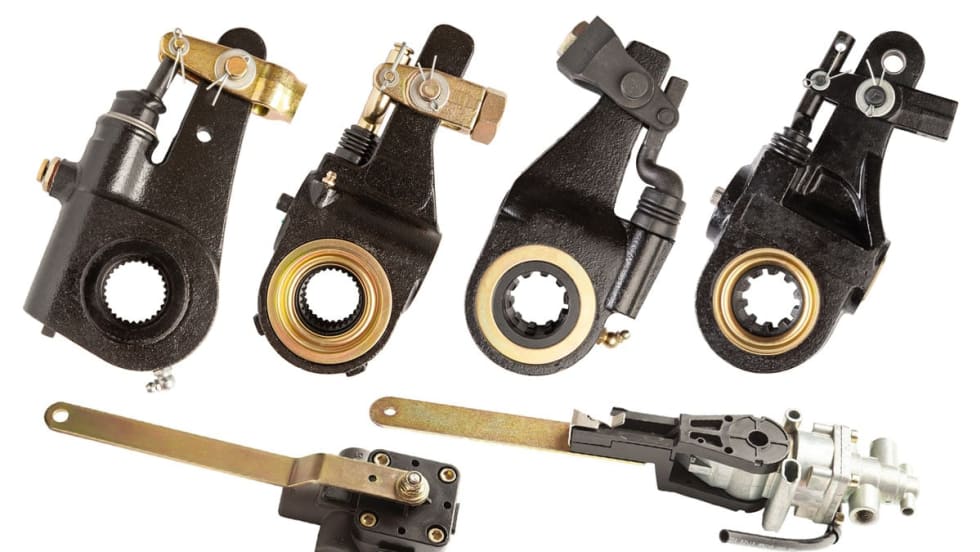
All-Makes Automatic Brake Adjusters, Ride Height Control Valves from Midland
SAF-Holland has added automatic brake adjusters and ride height control valves to its Midland All-Makes Program.
Read More →
ZF Aftermarket Expands [pro]Academy Training
ZF Aftermarket said it is expanding its ZF [pro]Academy training and will be adding 40 new modules this year.
Read More →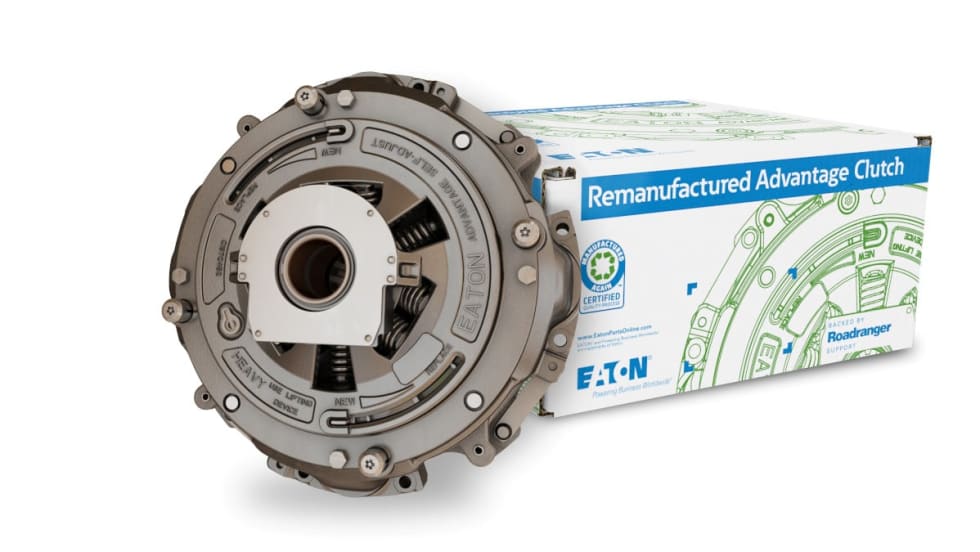
Eaton Adds Remanufactured Advantage Line of Clutches
Eaton has added its Advantage clutches to its remanufactured product line. The clutches feature a unique strap drive intermediate plate designed to allow customers to choose the latest OE specification
Read More →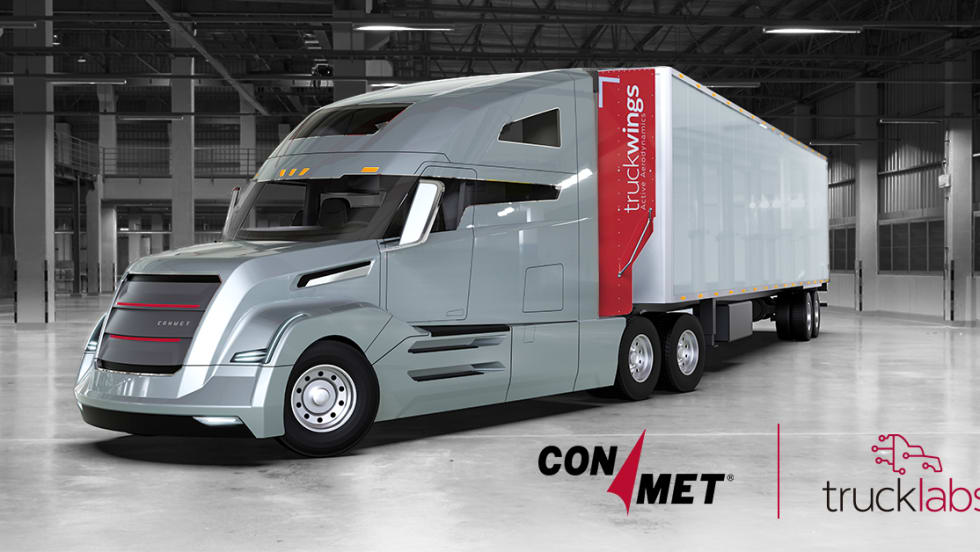
ConMet Acquires TruckLabs, the Creator of TruckWings
Commercial truck and trailer parts provider ConMet acquired TruckLabs, the company that created TruckWings, an aerodynamic device that attaches to truck cabs and deploys to close the gap between truck and trailer. TruckLabs now operates as a subsidiary of ConMet.
Read More →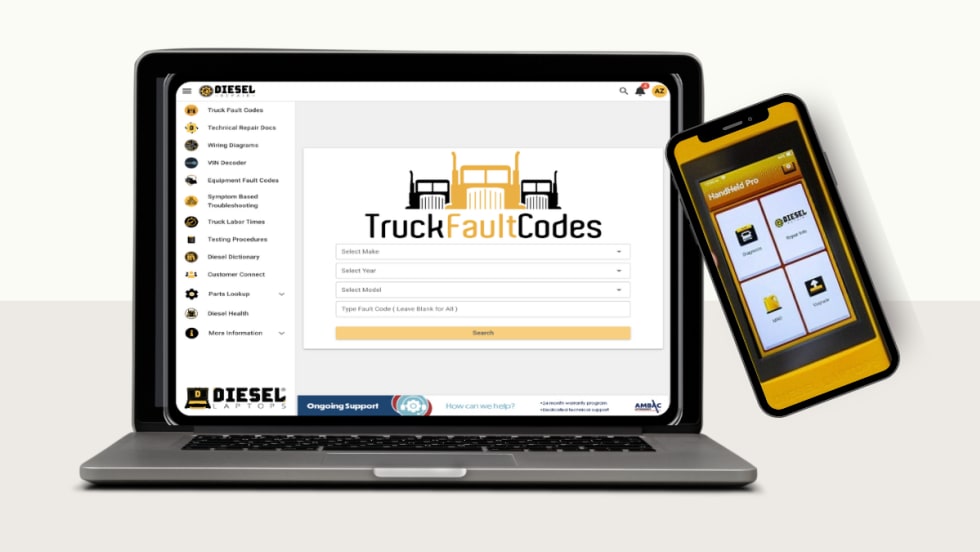
Diesel Laptops Releases Fault-Code-to-Part-Number Tool
Diesel Laptops said its Truck Fault Codes allows users to input a fault code and immediately identify and order the parts needed to complete repair work.
Read More →