




DOT, DOL to Address Predatory Truck Leasing
“America’s truck drivers need and deserve fair leasing agreements, and this work will help ensure that leasing is above board," said Transportation Secretary Pete Buttigieg about the new Truck Leasing Task Force.

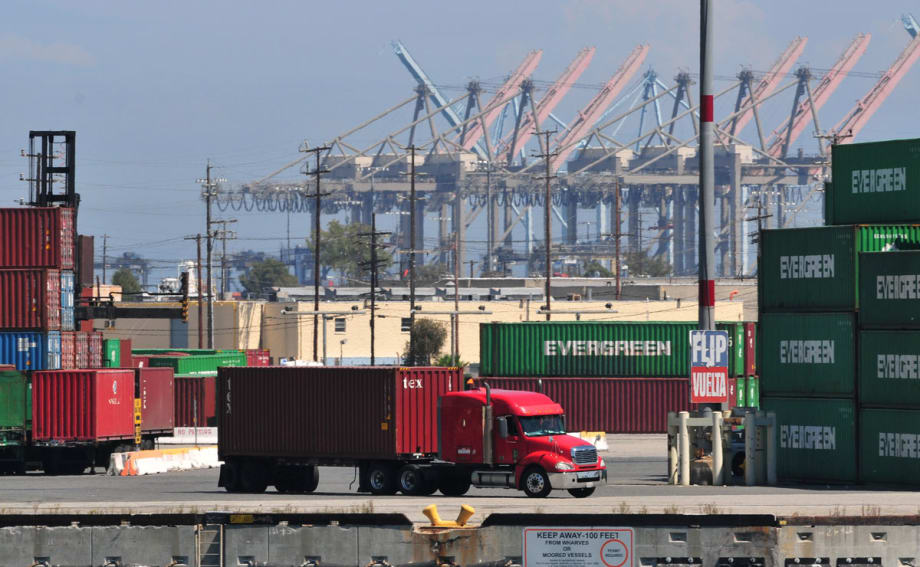
Among the topics to be explored by the Truck Leasing Task Force are leasing agreements among port owner-operators.
Photo: Jim Park
If you've talked to many truck owner-operators, you've likely heard horror stories about motor carriers with truck-leasing agreements that take advantage of those drivers. The U.S. Department of Transportation is setting up a new task force to look into the issue.
The Federal Motor Carrier Safety Administration is accepting applications for the new Truck Leasing Task Force. Working with the U.S. Department of Labor, the task force will evaluate the impacts of commercial motor vehicle lease agreements and discuss best practices for future agreements.
The task force is an initiative mandated by the Bipartisan Infrastructure Law and a long-term effort of the Biden Administration’s Trucking Action Plan.
“Too many American truckers are set up to fail with financing schemes or coerced into paying junk fees, said Consumer Financial Protection Bureau Director Rohit Chopra during the 30-day update on the Trucking Action Plan back in January. “To keep our economy moving, we must ensure that truckers who work hard don’t face financial ruin.”
The Truck Leasing Task Force will cover many areas related to truck leasing arrangements, such as:
Exploring predatory truck leasing arrangements in coordination with DOL and the Consumer Financial Protection Bureau.
Evaluating common truck lease agreements and their terms, identifying and reviewing those that are potentially inequitable in the motor carrier industry, as well as focusing on transparency of these agreements.
Reviewing agreements available to drayage drivers at ports, including those that involve a requirement for trucks to convert to zero emissions.
Studying the impact of truck leasing agreements on the net compensation of commercial motor vehicle drivers.
Explore whether inequitable terms and agreements affect the maintenance and state of repair of these vehicles.
Study whether truck leasing agreements properly incentivize the safe operation of vehicles, including driver compliance with the hours of service regulations and laws governing speed and safety generally.
Examining truck leasing arrangements and financing arrangements among motor carriers, entry-level drivers, driver training providers, and others involved in the industry.
Reviewing loans and other arrangements between incoming driver trainees and training schools and/or trucking companies to understand the extent to which these result in outsized and unanticipated debt for drivers.
The opportunity that equitable leasing agreements provide for drivers to start or expand trucking companies.
Assessing resources that assist CMV drivers in reviewing the financial impacts of leasing agreements.
As outlined in the Bipartisan Infrastructure Law, the task force will include a maximum of 10 members, representing labor organizations, motor carriers, consumer protection groups, legal professionals, owner-operators, and other relevant businesses. It will examine the above issues and submit a report to FMCSA and the Labor Department.
“The Truck Leasing Task Force represents one of the important actions the administration is taking to improve the trucking industry,” said Transportation Secretary Pete Buttigieg. “America’s truck drivers need and deserve fair leasing agreements, and this work will help ensure that leasing is above board.”
TLTF’s charter runs through Feb. 11, 2024. FMCSA encourages diverse, non-traditional representatives, especially women and people of color, to apply to serve on the task force. To apply, visit www.fmcsa.dot.gov/tltf. The application period is open through Friday, May 6, 2022.
From the HDT Archives (2017) — Commentary: Is Your Lease-Purchase Program a Problem?
More Drivers

Truck Drivers Need More Than Another Alert
Fleets have more visibility into truck health, safety events, and driver activity than ever. The next challenge is turning all that information into useful guidance for the person who has to decide what to do next.
Read More →
FMCSA Removes 110 Truck Driver Training Schools from Certified ELDT List
Federal regulators also are targeting more than 160 additional training providers and launching a nationwide audit of third-party CDL skills testers as part of a broader crackdown on trucking fraud.
Read More →
Hours of Service Pilot Programs: FMCSA Readies for 2027 Rollout
Two pilot programs could eventually reshape hours-of-service rules, giving truck drivers options to pause their 14-hour clock or use longer split sleeper rest periods.
Read More →
Medical Cards, English Proficiency Reshape Roadcheck Violations
Medical-card violations jumped to the top of the driver out-of-service list during CVSA’s 2026 International Roadcheck, while English-language proficiency violations appeared among the leading violations for the first time.
Read More →
Driver Trust Can Make or Break the Success of Fleet Safety Technology
New Teletrac Navman research suggests that onboarding, transparency about driver data, and positive feedback can play a significant role in how commercial drivers respond to safety and coaching technology.
Read More →
EEOC Sues KLLM Over Alleged Sex Discrimination in Driver Training
KLLM is facing a federal sex-discrimination lawsuit over policies the EEOC alleges put female truck driver trainees at a disadvantage.
Read More →
FMCSA Moves to Codify English Language Requirements for Commercial Drivers
By changing regulations on English-language proficiency requirements for commercial drivers, rather than relying on a guidance memo, the FMCSA said future administrations won't be able to walk back the Trump administration's stricter enforcement with just a memo.
Read More →
Drivers Put Western Star Trucks to the Test at Star Nation Experience
Watch to get an inside look at the Western Star trucks, technology, and community behind the Star Nation Experience 2026!
Read More →
Trump Administration Looks to Put More Veterans Behind the Wheel
The Freedom Haulers program pulls together existing and expanded programs at several federal agencies to recruit veterans to drive commercial heavy-duty trucks and cut the red tape for them to get a CDL, training, and employment.
Read More →
Putting Mack’s Command Steer to the Test
A test drive of Mack’s Command Steer active steering system evaluates how it can make truck driving easier and less tiring.
Read More →