




DOT Creates Freight Policy Council
The Department of Transportation yesterday officially launched the Freight Policy Council, the first step in creating the first national freight policy as mandated in the recent highway bill. The council will focus on improving the condition and performance of the national freight network to better ensure the ability of the United States to compete in today's global economy
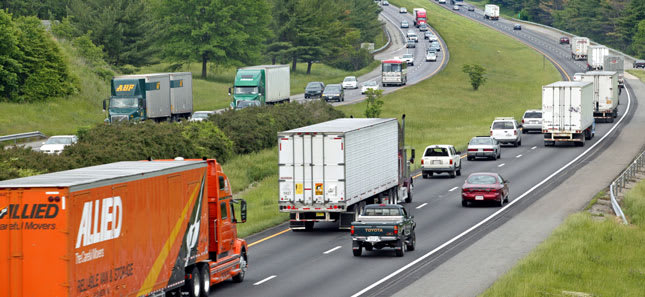
The Department of Transportation yesterday officially launched the Freight Policy Council, the first step in creating the first national freight policy as mandated in the recent highway bill. The council will focus on improving the condition and performance of the national freight network to better ensure the ability of the United States to compete in today's global economy.
The council will develop a national, intermodal plan for improving the efficiency of freight movement and will work with states to encourage development of a forward-looking state freight strategy.
"Our freight system is the lifeblood of the American economy, moving goods quickly and efficiently to benefit both businesses and consumers across the country," said U.S. Transportation Secretary Ray LaHood. "With the launch of the Freight Policy Council, we have an opportunity to make not only our freight system, but all modes of transportation, stronger and better connected."
The recent transportation bill, Moving Ahead for Progress in the 21st Century, or MAP-21, signed by President Obama last month, established a national freight policy and called for the creation of a National Freight Strategic Plan. The DOT's Freight Policy Council will implement the key freight provisions of the legislation. A strong freight transportation system is essential for helping meet President Obama's goal of doubling U.S. exports by 2015, LaHood noted.
The highway bill provision gives DOT three years to come up with a national freight strategic plan based on the condition of the freight network. Specifically, the plan must look at bottlenecks, forecasts of freight volume, and trade corridors. In addition, DOT must develop new ways to evaluate freight-related infrastructure projects. This council is the first step.
The council will be chaired by Deputy Transportation Secretary John Porcari. It will include DOT leadership overseeing highways, rail, ports and airports, plus economic and policy experts from across the administration. The freight and logistics industries, consumers and other stakeholders will also play an advisory role, and states will be asked to offer proposals for improving the freight system in their region.
"With increasing competition abroad, Washington businesses require a 21st century approach to moving goods," said U.S. Sen. Maria Cantwell (D-WA). "This new Freight Policy Council provides the roadmap our nation needs to stay competitive and grow our trade economy."
Related Stories:
6/29/2012 - Agreement Sets New Course for Highway Program
More Drivers

Hours of Service Pilot Programs: FMCSA Readies for 2027 Rollout
Two pilot programs could eventually reshape hours-of-service rules, giving truck drivers options to pause their 14-hour clock or use longer split sleeper rest periods.
Read More →
Medical Cards, English Proficiency Reshape Roadcheck Violations
Medical-card violations jumped to the top of the driver out-of-service list during CVSA’s 2026 International Roadcheck, while English-language proficiency violations appeared among the leading violations for the first time.
Read More →
Driver Trust Can Make or Break the Success of Fleet Safety Technology
New Teletrac Navman research suggests that onboarding, transparency about driver data, and positive feedback can play a significant role in how commercial drivers respond to safety and coaching technology.
Read More →
EEOC Sues KLLM Over Alleged Sex Discrimination in Driver Training
KLLM is facing a federal sex-discrimination lawsuit over policies the EEOC alleges put female truck driver trainees at a disadvantage.
Read More →
FMCSA Moves to Codify English Language Requirements for Commercial Drivers
By changing regulations on English-language proficiency requirements for commercial drivers, rather than relying on a guidance memo, the FMCSA said future administrations won't be able to walk back the Trump administration's stricter enforcement with just a memo.
Read More →
Drivers Put Western Star Trucks to the Test at Star Nation Experience
Watch to get an inside look at the Western Star trucks, technology, and community behind the Star Nation Experience 2026!
Read More →
Trump Administration Looks to Put More Veterans Behind the Wheel
The Freedom Haulers program pulls together existing and expanded programs at several federal agencies to recruit veterans to drive commercial heavy-duty trucks and cut the red tape for them to get a CDL, training, and employment.
Read More →
Putting Mack’s Command Steer to the Test
A test drive of Mack’s Command Steer active steering system evaluates how it can make truck driving easier and less tiring.
Read More →
Competition Heating Up for Truck Drivers
New report reveals rising driver hiring costs, the return of sign-on bonuses, growing AI advantages, and the operational factors shaping driver retention.
Read More →
How Fraley & Schilling Improved Logbook Compliance by Over 50%
Fraley & Schilling needed a way to close a compliance workflow gap in its ELD system without adding more work from driver training, reminders, and back-office follow-ups. It found the answer in a custom driver app.
Read More →