




DOT Announces $1.5 Billion in Funding For Transportation Projects
The U.S. Department of Transportation has allocated $1.5 billion to more than 50 transportation projects as part of the Tiger (Transportation Investment Generating Economic Recovery) Discretionary Grant Program
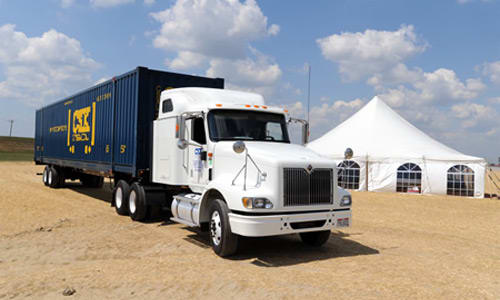
The recently announced Tiger funds will go toward such initiatives as the National Gateway project. Pictured here is the site for the North Baltimore Intermodal Terminal.
The U.S. Department of Transportation has allocated $1.5 billion to more than 50 transportation projects as part of the Tiger (Transportation Investment Generating Economic Recovery) Discretionary Grant Program.
Tiger was included in the American Recovery and Reinvestment Act (ARRA) to spur a national competition for innovative, multi-modal and multi-jurisdictional transportation projects that promise significant economic and environmental benefits to an entire metropolitan area, a region or the nation. Projects funded include improvements to roads, bridges, rail, ports, transit and intermodal facilities.
"Tiger grants will tackle the kind of major transportation projects that have been difficult to build under other funding programs," said U.S. Transportation Secretary Ray LaHood. "This will help us meet the 21st century challenges of improving the environment, making our communities more livable and enhancing safety, all while creating jobs and growing the economy."
The funding includes $777 million to support 22 state-sponsored projects aimed at improving freight connections.
"These investments will unclog bottlenecks that delay freight shipments, reconstruct ports, improve rail lines - producing long-term economic benefits well beyond the initial construction work," said Larry "Butch" Brown, AASHTO president and executive director of the Mississippi Department of Transportation.
One major project receiving funding is the Interstate 95 Interchange & Access Project. The project, sponsored by the South Carolina Department of Transportation, tapped $10 million in Tiger funding to go towards the $360 million initiative to develop a new interstate highway from the coast of South Carolina to the North Carolina border. The $10 million will fund an 11-mile segment in Dillon County where the new highway intersects with I-95, the major north-south East Coast interstate.
Another $10 million will go the North Carolina Department of Transportation to reconstruct seven miles of Interstate 85, including highway, bridge and rail infrastructure, with replacement of three major, deteriorating structures over the Yadkin River. The portion runs about midway between Greensboro and Charlotte, N.C., and receives a significant amount of truck traffic.
The newly announced funding will also go toward several intermodal projects, including the National Gateway Project, a package of rail infrastructure and intermodal terminal projects that will enhance transportation service options along three major freight rail corridors owned and operated by CSX through the Midwest and along the Atlantic coast.
The project, which tapped $98 million through Tiger, will allow trains to carry double-stacked containers, increase freight capacity and make the corridor more marketable to major East Coast ports and shippers. Tiger funds will help complete the first corridor project, from Northwest Ohio to Chambersburg, Pa., through West Virginia and Maryland.
CSX congratulated Ohio Gov. Ted Strickland, Maryland Gov. Martin O'Malley, Pennsylvania Gov. Ed Rendell, Virginia Gov. Bob McDonnell, West Virginia Gov. Joe Manchin and the National Gateway coalition on the federal award.
"The entire National Gateway coalition has shown extraordinary vision, dedication and commitment," said Michael Ward, chairman, president, and CEO of CSX. "Supporting this investment creates jobs now and improves America's transportation system and competitive advantage over the long-haul."
The Crescent Corridor intermodal freight rail program, sponsored by the states of Alabama and Tennessee, was awarded $105 million in funding. The money will go toward the continued development of Norfolk Southern's rail intermodal route from the Gulf Coast to the mid-Atlantic. Specifically, it will fund the construction of two new intermodal facilities in Memphis, Tenn., and Birmingham, Ala.
The Ports of Oakland, Stockton and West Sacramento received $30 million for the California Green Trade Corridor/Marine Highway project, an effort to develop and use a marine highway system as an alternative to existing truck and rail infrastructure. The three ports have formed a partnership to provide freight service via barge, primarily for consumer goods moving by ocean vessel and agricultural products grown in central California.
To access a complete list of the grant recipients, click here.
More Drivers
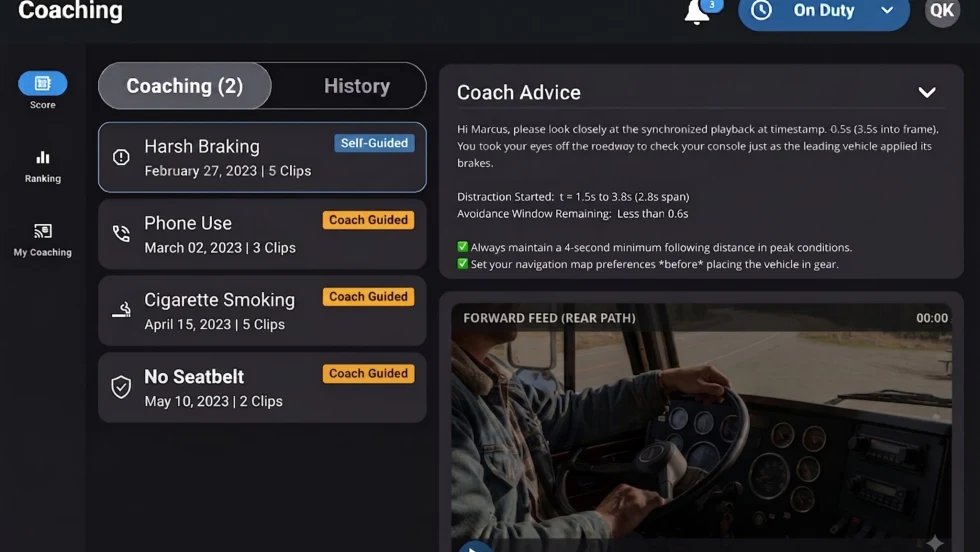
Platform Science Adds Dispatch and Safety Tools
Four additions to PS Fleet help fleets monitor loads, manage driver coaching, share truck locations and adjust video system settings.
Read More →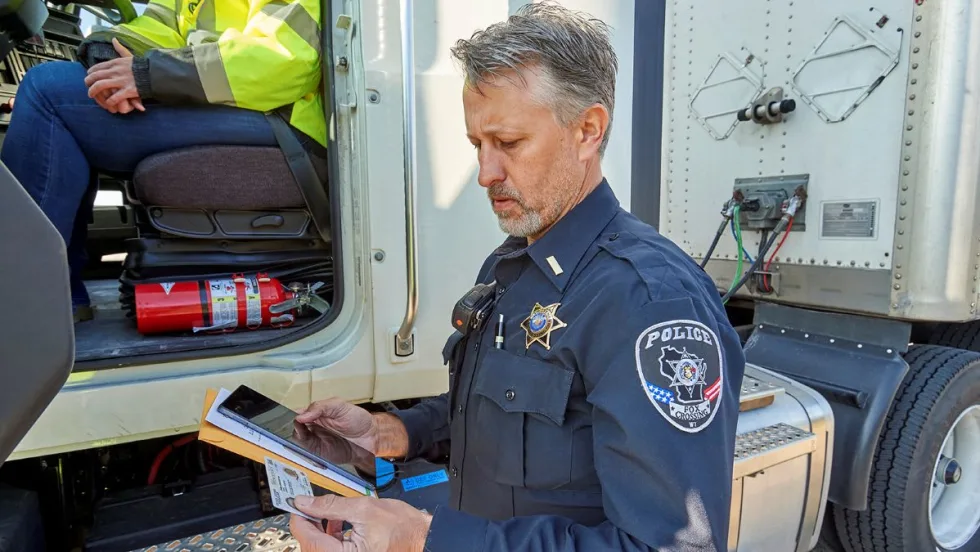
When Language Stops the Truck: The Return of ELP Out-of-Service Orders
English language proficiency rules for commercial drivers aren’t new, but renewed out-of-service enforcement has raised the stakes. Here’s what carriers need to know before a driver reaches a roadside inspection.
Read More →
Samsara Launches Custom AI Agent Builder
Agent Studio lets fleets create AI tools for hours-of-service monitoring, reporting and driver support, including agents that communicate by phone.
Read More →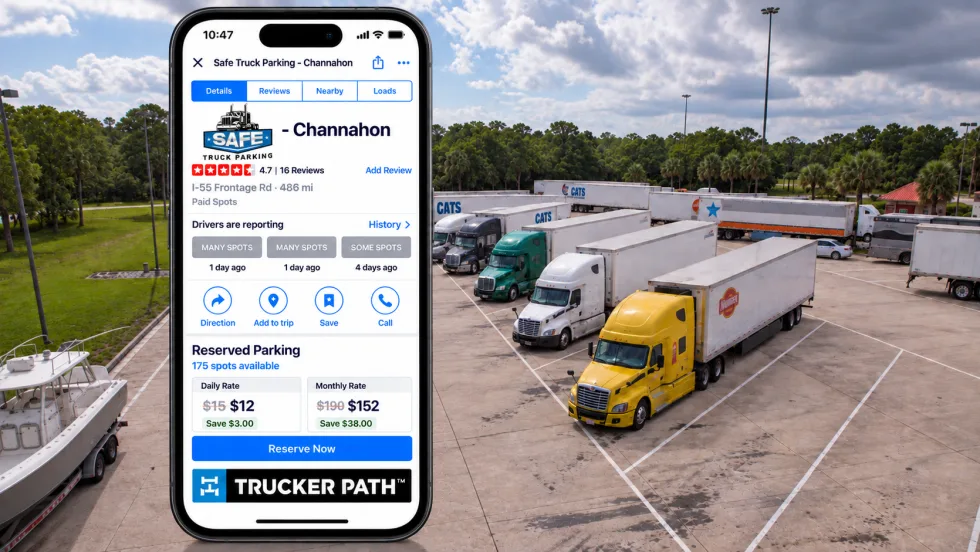
Trucker Path Expands Reserved Parking Network
Trucker Path has added close to 6,000 more truck parking spaces to its Trucker Path Reserved Parking Network with the addition of Safe Truck Parking.
Read More →
EEOC Sues Texas Trucking Company Over Driver Age Limits
The agency says Trancasa USA rejected applicants over 65 and applied tougher driving-record standards to those over 60.
Read More →
Nussbaum, Roehl Announce Second Driver Pay Increase This Year
This year has seen a swath of major truck driver pay increases as freight capacity has tightened.
Read More →
From One Generation to the Next: How Mentorship Builds Safer Truck Drivers
After three decades in trucking, Harold Perry shares what he's learned about driver safety, mentorship, and helping the next generation build confidence behind the wheel.
Read More →
Truck Drivers Need More Than Another Alert
Fleets have more visibility into truck health, safety events, and driver activity than ever. The next challenge is turning all that information into useful guidance for the person who has to decide what to do next.
Read More →
FMCSA Removes 110 Truck Driver Training Schools from Certified ELDT List
Federal regulators also are targeting more than 160 additional training providers and launching a nationwide audit of third-party CDL skills testers as part of a broader crackdown on trucking fraud.
Read More →
Hours of Service Pilot Programs: FMCSA Readies for 2027 Rollout
Two pilot programs could eventually reshape hours-of-service rules, giving truck drivers options to pause their 14-hour clock or use longer split sleeper rest periods.
Read More →