




Distracted Driving Summit Sets Stage for Reform
Conducting cell phone business while driving is destined to go the same way as driving without a seat belt and getting behind the wheel after a few drinks. There's a lot of talking still to be done, details worked out

Sights like this may soon be a thing of the past. (Photo by Jim Park)
Conducting cell phone business while driving is destined to go the same way as driving without a seat belt and getting behind the wheel after a few drinks. There's a lot of talking still to be done, details worked out,
laws passed, rules enforced and public service messages delivered, but the clear import of the Department of Transportation's Distracted Driving Summit yesterday is that motorists are going to have to change their habits.
"Distracted driving is an epidemic," said Transportation Secretary Ray LaHood in keynote remarks to the gathering of some 300 transportation officials, scientists, industry representatives, legislators and families of people killed or injured by distracted drivers.
LaHood said new National Highway Traffic Safety Administration data show that in 2008 nearly 6,000 people died in crashes involving a distracted or inattentive driver, and more than half a million were injured. On any given day, he said, more than 800,000 drivers use a hand-held cell phone.
"Every single time someone takes their eyes or their focus off the road - even for a few seconds - they put their lives and the lives of others in danger," he said. "Distracted driving is unsafe, irresponsible and in a split second, its consequences can be devastating."
The summit, which continues today, has brought together key stakeholders in the issue to lay out the research on distracted driving, define the problem and discuss solutions. Among the many issues that complicate the situation are differences of opinion on the quality and usefulness of research data, the difficulty of enforcing laws targeting distracted driving, and the varied laws and enforcement schemes that states have adopted in the absence of a national standard.
That last point may be addressed by a bill offered this summer by Sen. Charles Schumer, D-N.Y., the Avoid Life Endangering by Reckless Texting (ALERT) Act. This bill would cut federal highway funds to states that do not prohibit writing, sending, or reading text messages while driving. Schumer, and one of the co-sponsors of the bill, Sen. Amy Klobuchar, D-Minn., were on hand yesterday seeking support for their approach.
LaHood promised that this afternoon he will announce concrete steps DOT plans to take to address the problem. Look for more coverage tomorrow on Truckinginfo.com.
For more on the Distracted Driving Summit, go to www.rita.dot.gov/distracted_driving_summit
More Drivers
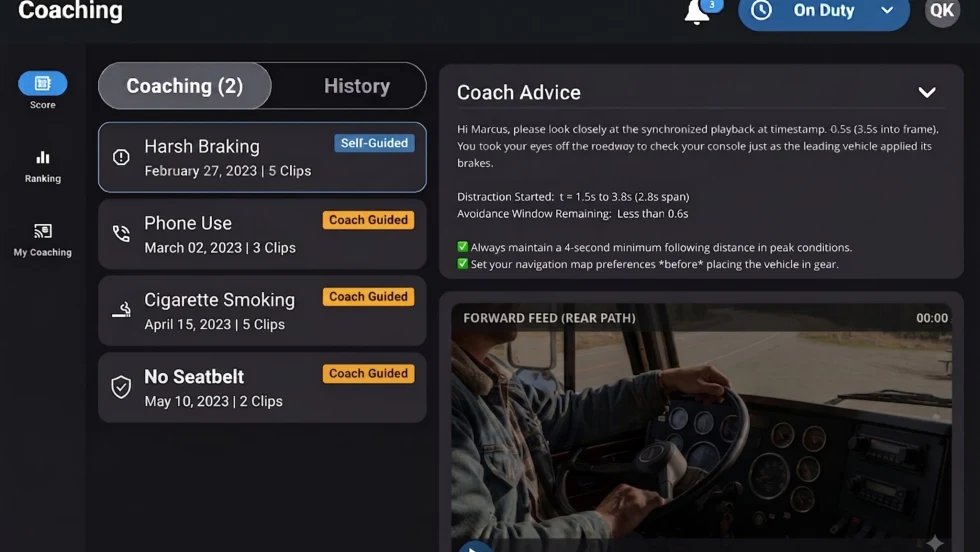
Platform Science Adds Dispatch and Safety Tools
Four additions to PS Fleet help fleets monitor loads, manage driver coaching, share truck locations and adjust video system settings.
Read More →
When Language Stops the Truck: The Return of ELP Out-of-Service Orders
English language proficiency rules for commercial drivers aren’t new, but renewed out-of-service enforcement has raised the stakes. Here’s what carriers need to know before a driver reaches a roadside inspection.
Read More →
Samsara Launches Custom AI Agent Builder
Agent Studio lets fleets create AI tools for hours-of-service monitoring, reporting and driver support, including agents that communicate by phone.
Read More →
Trucker Path Expands Reserved Parking Network
Trucker Path has added close to 6,000 more truck parking spaces to its Trucker Path Reserved Parking Network with the addition of Safe Truck Parking.
Read More →
EEOC Sues Texas Trucking Company Over Driver Age Limits
The agency says Trancasa USA rejected applicants over 65 and applied tougher driving-record standards to those over 60.
Read More →
Nussbaum, Roehl Announce Second Driver Pay Increase This Year
This year has seen a swath of major truck driver pay increases as freight capacity has tightened.
Read More →
From One Generation to the Next: How Mentorship Builds Safer Truck Drivers
After three decades in trucking, Harold Perry shares what he's learned about driver safety, mentorship, and helping the next generation build confidence behind the wheel.
Read More →
Truck Drivers Need More Than Another Alert
Fleets have more visibility into truck health, safety events, and driver activity than ever. The next challenge is turning all that information into useful guidance for the person who has to decide what to do next.
Read More →
FMCSA Removes 110 Truck Driver Training Schools from Certified ELDT List
Federal regulators also are targeting more than 160 additional training providers and launching a nationwide audit of third-party CDL skills testers as part of a broader crackdown on trucking fraud.
Read More →
Hours of Service Pilot Programs: FMCSA Readies for 2027 Rollout
Two pilot programs could eventually reshape hours-of-service rules, giving truck drivers options to pause their 14-hour clock or use longer split sleeper rest periods.
Read More →