




Diesel Price Outlook Revised Slightly Upward
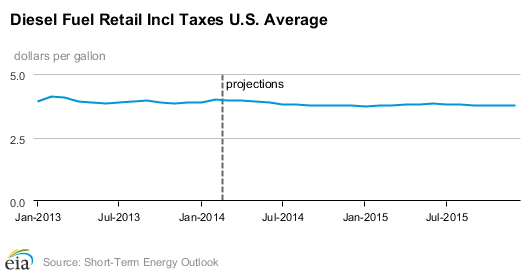
Diesel fuel prices, which averaged $3.92 per gal in 2013, are projected to average $3.85 this year.


The U.S. Energy Department has revised upward its forecast for fuel prices, according to its latest Short Term Energy Outlook.
Diesel fuel prices, which averaged $3.92 per gal in 2013, are projected to average $3.85 this year and $3.78 in 2015. That’s up two cents and five cents, respectively, from its projection a month ago.
The price of diesel is also forecast to continue moving lower as 2014 progresses, dropping from an expected average of $3.95 in the current quarter to $3.76 in the fourth quarter.
Regular gasoline retail prices, which fell from $3.63 per gallon in 2012 to an average of $3.51 in 2013, will continue to fall to $3.45 this year and $3.37 in 2015, nearly unchanged from last month’s outlook
The reason for the declines, says the department, is crude oil prices are projected to move slightly lower, though not as much as called for earlier.
The average West Texas Intermediate crude oil price, which fell to $95 per barrel in January 2014, increased to $101 in February as a result of strong Midwestern refinery runs after cold-weather-related disruptions in January. The forecast calls for it to average $95 this year, $2 higher than last month's outlook, and $90 during 2015.
Brent crude oil prices in February averaged between $108 and $112 per barrel for the eighth consecutive month. DOE expects the Brent crude oil price to weaken as non-OPEC supply growth exceeds growth in world consumption. The Brent crude oil price is projected to average $105 per barrel and $101 per barrel in 2014 and 2015, respectively.
Growth in domestic crude oil production is expected to continue contributing to a decline in imports. The share of total U.S. liquid fuels consumption met by net imports peaked at more than 60% in 2005 and fell to an average of 33% in 2013. DOE expects the net import share to decline to 25% in 2015, which would be the lowest level since 1971.
More Fuel Smarts

Cummins, Paccar Ease DEF Derates After EPA Guidance
Updated diesel engine software gives truck operators more time to address emissions-system issues while staying compliant with EPA emissions standards.
Read More →
Maintenance in the Messy Middle Part 3: Biodiesel
Biodiesel can reduce emissions, improve fuel-system lubricity and use existing diesel infrastructure. But NACFE’s Messy Middle maintenance report says fleets must actively manage storage, cold-weather operation, filters and oil drain intervals to avoid problems.
Read More →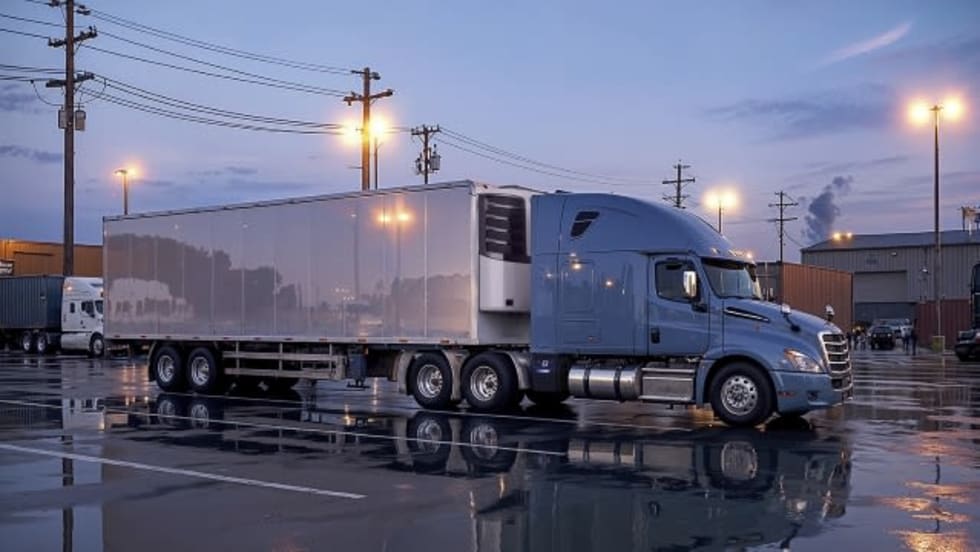
Enhance Fleet Performance with High-Efficiency Auxiliary Power Units
Drive sustainable cost savings while increasing driver comfort during short- and long-haul logistics operations.
Read More →
Maintenance in the ‘Messy Middle’ Part 2: Renewable Diesel Fuel
NACFE's latest Messy Middle Powertrain Service & Maintenance report says renewable diesel gives fleets an opportunity to reduce carbon emissions without changing trucks, fueling infrastructure or maintenance practices. But technicians still need to understand several important operational differences.
Read More →
The Diesel Engine Enters NACFE’s ‘Messy Middle’
NACFE’s new Messy Middle Powertrain Service & Maintenance report says keeping modern diesel engines running now depends as much on software, diagnostics and data as traditional mechanical service.
Read More →
DTNA Software Update Gives Truckers More Time Before DEF Derates Take Effect
The changes reflect EPA guidance aimed at reducing downtime caused by emissions-system faults while maintaining compliance requirements.
Read More →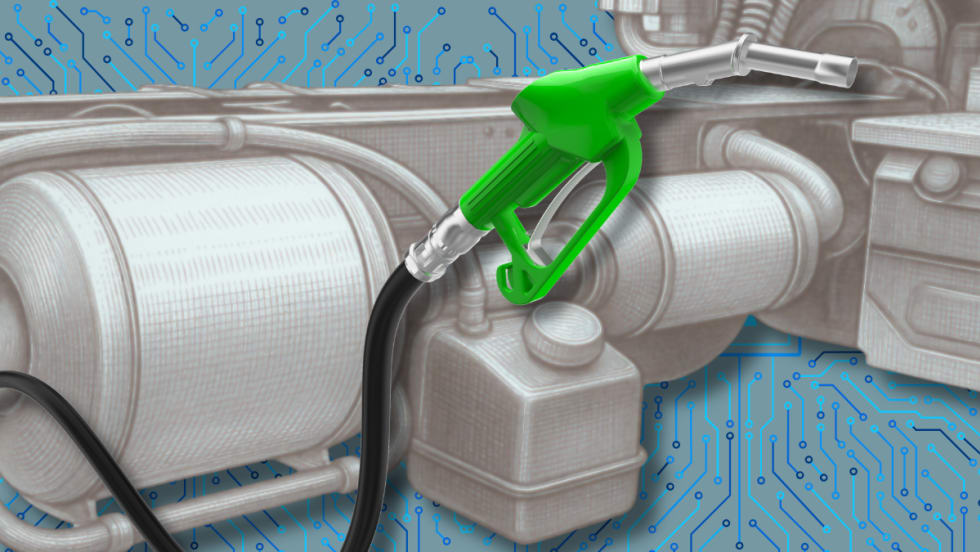
New Agentic Predictive Maintenance Report Demonstrates How Degraded Aftertreatment Systems Waste Fuel
Questar analyzed a large mixed-class fleet and discovered it was wasting as much as $30 in fuel per vehicle, per day, because of mechanically degraded aftertreatment systems.
Read More →
New York City's Microhub Project is Delivering Results
Trucking, last-mile delivery companies, and environmental advocates like what they are seeing so far with New York's microhub program.
Read More →
Lessons Learned About Alternative Fuels: Start Small, Stay Flexible
Practical advice on adopting alternative fuels and ZEVs from HDT's 2026 Top Green Fleets, from renewable diesel and natural gas to electric trucks.
Read More →
Kempower Adds Flex EV Charger to Help Support Transition to Megawatt Charging
The Kempower Mega Satellite Flex has both a CCS and MCS connector, allowing operators to serve both types of heavy-duty vehicles.
Read More →