




Detroit Automated Manual Comes Standard with IPM
Intelligent Powertrain Management comes standard on the Detroit DT12 automated manual transmission when paired with any heavy-duty Detroit engine.
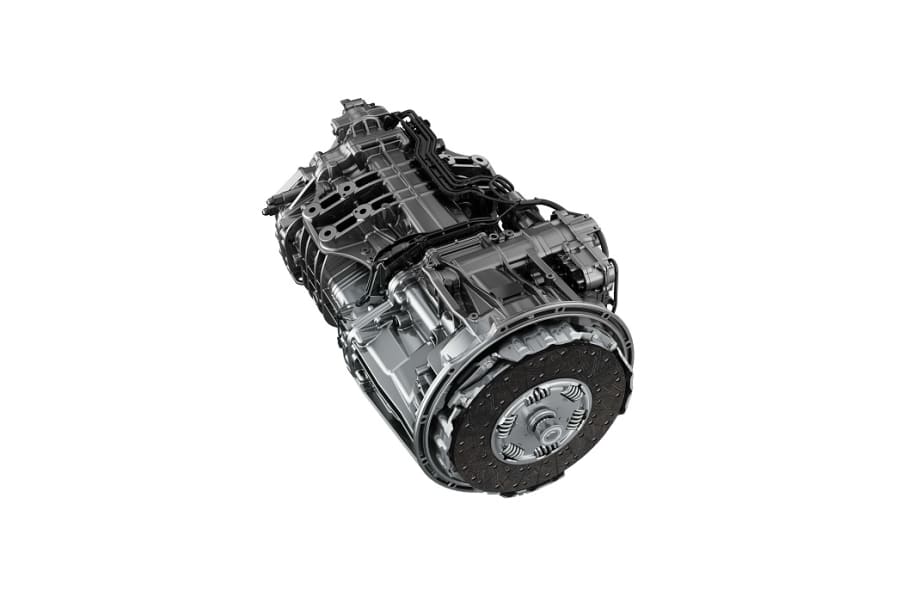
The Detroit DT12 Automated Manual Transmission: Photo via Detroit.
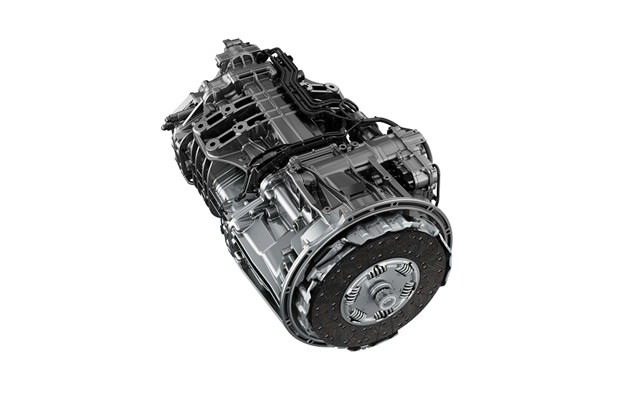
The Detroit DT12 Automated Manual Transmission:Photo via Detroit.
Intelligent Powertrain Management comes standard on the Detroit DT12 automated manual transmission when paired with any heavy-duty Detroit engine. The helps the powertrain operate as efficiently as possible by using momentum generated by the terrain to improve fuel efficiency.
The IPM uses pre-loaded terrain maps and GPS to understand the route ahead and use the truck’s momentum to reduce fuel consumption. It prevents unnecessary shifts by using engine braking and fueling to shift efficiently and control eCoast events.
The IPM works when the driver activates cruise control, so the efficiencies are most felt when a driver spends a greater time in cruise control. Routes with varied terrain but no extreme elevation changes provide the system with the greatest opportunity to improve efficiency.
IPM also integrates with the Detroit Assurance suite of safe driving systems that include Active Brake Assist and Adaptive Cruise Control.
“Intelligent Powertrain Management technology employs many of the same behaviors that an experienced driver uses behind the wheel,” said Brad Williamson of Daimler Trucks North America. “But in many situations [it] takes actions that even the most experienced driver would be unable to employ.”
More Equipment

How Volvo Updated Its D13 for EPA 2027 [Watch]
Volvo’s updated D13 promises lower emissions without sacrificing performance or fuel economy. Take a closer look at what changed inside the engine in this HDT Spotlight video.
Read More →
Michelin Tire Improves Efficiency and Durability for Regional Fleets
The Michelin X Multi Energy D2 is a regional haul drive tire engineered to help fleets improve fuel efficiency, durability and traction in demanding stop-and-go operations.
Read More →
ZF Expands Commercial Vehicle Push in North America
ZF is expanding its North American commercial-vehicle presence with new transmission applications, electrification, trailer technology and autonomous-driving systems.
Read More →
Tesla Wants a Self-Driving Semi. Are Cameras Enough?
Could Tesla’s camera-only autonomous driving technology work on an 80,000-pound Semi? In this commentary, HDT's Deborah Lockridge takes a look at Tesla, Cybercab, and how autonomous trucks see the road.
Read More →
Kodiak: Driverless Long-Haul Truck Launch on Track for 2026
Kodiak AI says its driverless long-haul safety case is 93% complete and it remains on track to begin commercial operations by year-end 2026.
Read More →
What DOT’s Automated Vehicle Strategy Means for Trucking
The U.S. Department of Transportation issued a new automated-vehicle strategy that outlines plans for driverless-truck regulations, cross-state freight corridors, and federal safety standards.
Read More →
East Coast Port Launches $45M Electric Truck Push
The Port Authority of New York and New Jersey announced millions in incentives for zero-emission drayage trucks, yard tractors, and new charging hubs near the port.
Read More →
PlusAI Going Public to Fund Autonomous Truck Launch
A SPAC deal could provide PlusAI with up to $300 million as it works toward a 2027 commercial launch of factory-built autonomous trucks.
Read More →
NHTSA Moves to Rewrite Truck Fuel-Economy Rules
The National Highway Traffic Safety Administration says it lacks authority to regulate medium- and heavy-duty truck engines separately from complete vehicles, but the existing standards have not yet been eliminated.
Read More →
Detroit Opens Orders for EPA 2027 Engines
Detroit isn’t starting from scratch to meet EPA 2027 diesel emissions standards. Its Gen 6 DD13 and DD15 engines keep much of today’s platform while updating the fuel and aftertreatment systems.
Read More →