




Day Two at the Hours of Service Roundtable
One of the key criticisms of the plan to reform the hours-of-service rules is that by cutting back the length of the workday, it will force trucking companies to put more trucks on the road, with inexperienced drivers at the wheel — not good for safety. So far, though, the critics have failed to prove this point to the Federal Motor Carrier Safety Administration
One of the key criticisms of the plan to reform the hours-of-service rules is that by cutting back the length of the workday, it will force trucking companies to put more trucks on the road, with inexperienced drivers at the wheel — not good for safety.
So far, though, the critics have failed to prove this point to the Federal Motor Carrier Safety Administration.
“We have today not one piece of data that supports the contention that accidents will increase following new rule,” said Julie Anna Cirillo, acting assistant administrator of the agency, at the hours of service roundtable yesterday.
There still is plenty of time to get the information into the record – final comments are not due until Dec. 15 – but Cirillo’s comment underscores the urgency of the industry’s position. In order to get the safety agency to change its proposal, truckers will need to prove their case with objective, verifiable data.
The roundtable discussions, which continue this week and next, are intended to give truckers and other interested parties a chance to present their data to the agency – and some new information has been turned over. But most will be working on their comments up until the last moment on Dec. 15, or waiting to see what others might say.
The key presentation at yesterday’s session was from the Commercial Vehicle Safety Alliance, focusing on enforcement of the proposal.
CVSA is committed to enforcing any rule that the safety agency comes up with, but has reservations about the current proposal, said executive director Stephen Campbell.
The alliance, whose members include state and federal enforcement personnel as well as truck and bus safety officials, still is collecting data on the proposal. But it is clear, Campbell said, that due to the complexity of the proposed rule, enforcement officials will need more training than the safety agency has estimated – perhaps twice as much.
Enforcement officials also are worried about the onboard recorder requirement. Ultimately, Campbell admitted, the recorders will make it easier for officers to review driver logs. But that won’t happen quickly, because officers will first have to learn how to work with the variety of devices that will be used – and to deal with tampering by drivers.
CVSA wants the safety agency to spin off the onboard recorder requirement into a separate rule, so that performance standards can be tested and enforcement personnel can prepare – an idea supported by American Trucking Associations and the Distribution and LTL Carriers Assn.
Safety activists at the roundtable took issue with idea. Elisa Braver of the Insurance Institute for Highway Safety pointed out that since some trucking operations use electronic logs, inspectors already have experience with them.
Sgt. Don Bridge of the Connecticut Department of Motor Vehicles, said that while some police officers and truck drivers can navigate the intricacies of onboard recorders, many cannot. The problem is training, he explained.
Campbell also said that roadside inspections under the proposed rule will take more time, and that some states will not be able to implement the rule as quickly as the safety agency would like.
Cirillo pointed out that the increased costs of enforcement can be covered by significant increases in federal grant money that are scheduled to flow to the states.
Campbell agreed but added: “Our concern is being accurate about estimating the cost of the proposal. Whatever the regulation ends up being, we will train and enforce, and do whatever is necessary. We will enforce the law. But everyone needs to understand what it will cost.”
Much of the trucking industry’s anxiety about this proposal arises from the uncertainty that it creates.
Frankie Willis, president of regional truckload carrier Trucks Inc., Jackson, GA, crystallized this with a simple question: If a driver takes time off in the middle of a defined work-week, does that restart his weekly clock?
None of the dozen or so FMCSA officials in the room at the time could provide an answer.
Another instance arose when a safety agency official explained that when a truck’s wheels are turning, the electronic onboard recorder will assume that the driver is on duty.
But suppose the driver is actually not on duty, asked Michael Koppenhofer, safety director for Watkins Motor Lines. It is common for Watkins drivers to use bobtail tractors for personal transportation, he said.
As Cirillo has often said throughout the rulemaking process, the agency doesn’t always get everything right.
Under the rules of the rulemaking process, FMCSA cannot announce ahead of time what changes and corrections it will make, so truckers must rely on the agency to do the right thing.
But the uncertainty is a killer. Suzie Schindewolf, owner of Schindewolf Express, a four-truck fleet based in Quincy, OH, believes she is looking at a death sentence for her company: the proposal will put her out of business, she said.
She said she cannot afford to buy the additional truck and hire the additional driver she will need, if the rule as written takes effect. And most of the trucking operations in the country, which have six or fewer trucks, are in the same position, she said.
Cirillo’s response: “We are not in the business of putting people out of business . . . we are in business to improve safety.”
Trucking interests want to take some of the uncertainty out of the process by having an independent third party analyze the economic and safety benefits of the proposal.
Cirillo said the agency welcomes all the information it can get, but she does not expect to retain an outside firm for analysis.
Dave Osiecki, vice president of safety and operations at ATA, and Kevin Williams, CEO of the Distribution and LTL Carriers Assn., called on the agency to issue a supplemental rule.
Elisa Braver pointed out that this message was at odds with ATA’s political position on Capitol Hill, where the association is supporting a bill that would force the safety agency to stop all work on the current proposal or any similar proposal.
The safety agency is planning to consider supplemental rulemaking as an option, once it has received all the comments, but has not definitely committed to that course.
Peter Eide, director of labor law policy for the U.S. Chamber of Commerce, introduced a new wrinkle into the deliberations. Should the Occupational Safety and Health Administration’s ergonomics rules go into effect, they will redefine industrial fatigue – a change that FMCSA will have to consider in its hours-of-service rule.
ATA’s Osiecki revealed that the association has asked an outside consultant to review FMCSA’s performance with respect to federal rules governing the rulemaking process.
A preliminary analysis by the Center for Regulatory Effectiveness found that the safety agency has not complied with a long list of requirements, Osiecki said. CRE is a consulting firm of former officials at the Office of Management and Budget, he explained.
Replied Cirillo, “Current OMB officials said we did OK.”
Part of the dynamics at the second day of the roundtables can be described in schoolyard terms: My data is better than your data.
An example was the exchange over how many drivers cheat on their daily logs.
Elisa Braver of the IIHS, Gerald Donaldson of the Advocates for Auto and Highway Safety and sleep research spokesman Darrel Drobnich of the National Sleep Foundation held that the truest picture of logbook cheating comes from interviews with drivers at truckstops. These surveys reveal a very high level of logbook falsification, and FMCSA used them to reach the conclusion that 40% to 75% of longhaul and regional drivers violate the rules in one way or another.
Trucking interests have a different picture altogether. Osiecki and Williams pressed the safety agency to put greater emphasis on its own data – the record prod
More Drivers

Competition Heating Up for Truck Drivers
New report reveals rising driver hiring costs, the return of sign-on bonuses, growing AI advantages, and the operational factors shaping driver retention.
Read More →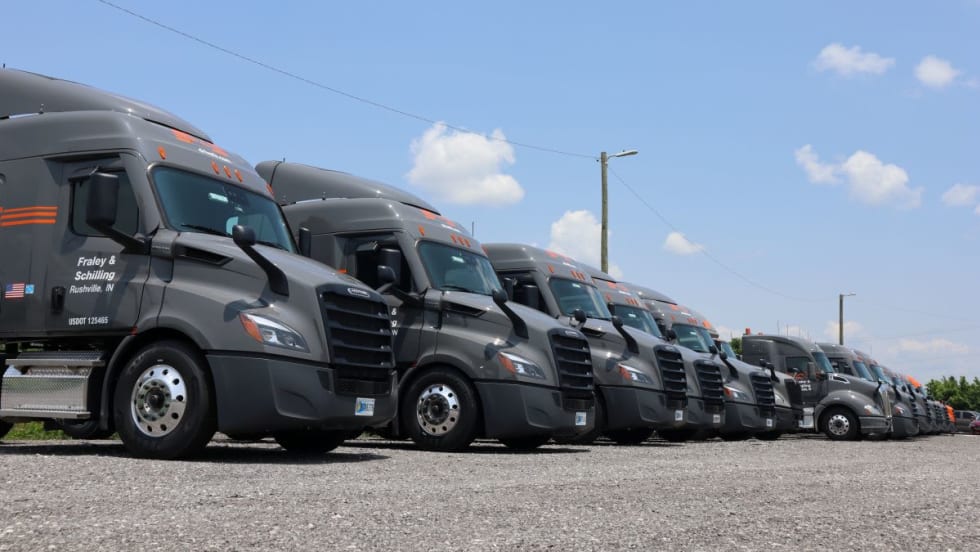
How Fraley & Schilling Improved Logbook Compliance by Over 50%
Fraley & Schilling needed a way to close a compliance workflow gap in its ELD system without adding more work from driver training, reminders, and back-office follow-ups. It found the answer in a custom driver app.
Read More →
Volvo Goes Gaming
Volvo has roared into American Truck Simulator with two new flagship trucks.
Read More →
What the Best Fleets to Drive For Teach About Driver Retention
Survey fatigue, AI-powered routing, owner-operator expectations, and the decline of social media all emerged as themes from this year's Best Fleets to Drive For program.
Read More →
Driver Retention Lessons From the Best Fleets to Drive For
What separates trucking's best workplaces from the rest? Jane Jazrawy shares the biggest lessons from this year's Best Fleets to Drive For program on driver retention, communication, AI, and workforce trends on the HDT Talks Trucking podcast.
Read More →
Farewell, CDL: Why I'm Giving Up My Commercial Driver's License
After more than 20 years as a CDL holder, HDT Executive Editor Jack Roberts is letting his commercial license expire. Not because he wants to — but because trucking's nuclear verdict crisis has made the risks of public-road test drives too great for editors, manufacturers, and everyone involved.
Read More →
How Top Trucking Fleets Improve Driver Retention [Video]
What do healthy snacks, optimized routing, and just picking up the phone have in common? They're all strategies the Best Fleets to Drive For are using to retain truck drivers.
Read More →
Trucker Path Adds Verisk CargoNet Theft Data to Navigation Platform
Trucker Path’s new cargo theft risk overlays give drivers and fleets visibility into high-risk areas, stolen commodity trends, and theft hotspots.
Read More →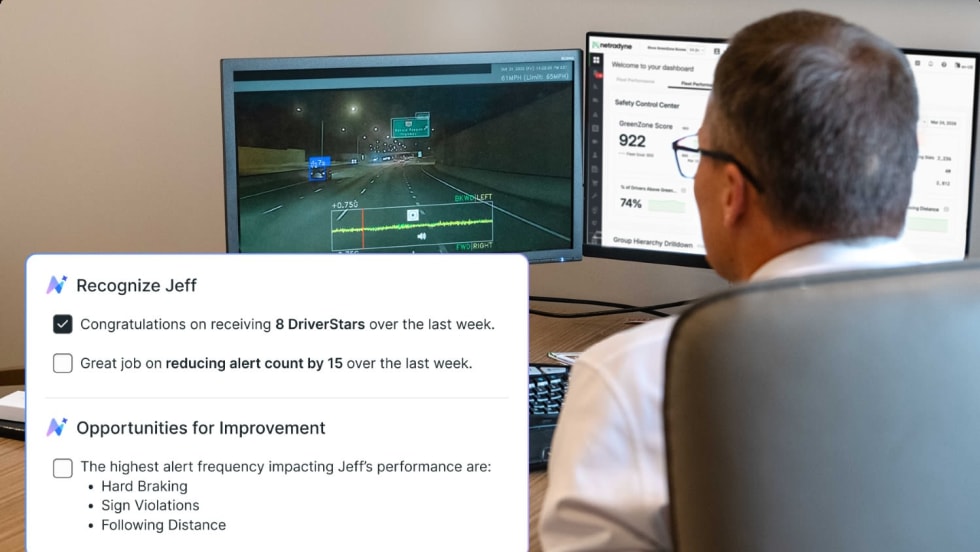
Netradyne Intelligence Uses New AI Agents to Automate Response to In-Cab Camera Data
The company called the next-generation in-cab camera safety platform "a fundamental shift from systems that report on what happened to systems that actively drive what should happen next."
Read More →
Why Truck Detention Keeps Costing Fleets Time and Money
A 2024 ATRI study found detention affects nearly 40% of truckload stops and costs the industry more than $15 billion annually. Despite the toll on drivers, fleets, and supply chains, the problem remains stubbornly persistent.
Read More →