




Daimler Truck Financial Sees Business Picking Up as Recession Recedes
The Great Recession was a severe test for Daimler Truck Financial. Before the downturn, DTF's typical annual book of business ran in the neighborhood of $2 to $2.2 billion a year. In 2009, the nation's largest truck finance company's business dropped by almost half, to $1.2 billion

The Great Recession was a severe test for Daimler Truck Financial. Before the downturn, DTF's typical annual book of business ran in the neighborhood of $2 to $2.2 billion a year. In 2009, the nation's largest truck finance company's business dropped by almost half, to $1.2 billion.
It was bad, but DTF did not have to make dramatic changes to get through, said Geoff Robinson, director of sales, marketing and remarketing, in an interview.
"Whilst it put pressure on us financially and the picture wasn't pretty, we've always been in it for the long haul," he said. "It didn't mean that we reduced our field team or carved out people from our business. We saw it as a temporary situation."
DTF's performance this year underscores the adage that the most important thing about recessions is that they end.
"This year we expect to do something in the neighborhood of $1.7 billion," Robinson said. "You can see in that scale where we were and what we had to digest in 2009, and now where we're trending back to."
Recession Lessons
The lesson the recession brought home to DTF is that the interconnectedness of modern financial relationships has created new risks for business.
Business cycles come and go, but this one contained a unique twist, said Juergen Rochert, vice president of DTF. The company had some customers who were perfectly fine in their own businesses but were being hurt because their bankers were pulling back on lending and credit.
"That was a new one," Rochert said. "We literally had fleets calling in, saying, 'We need to work on payment terms because our bank wants to reduce our line of credit.' We had to meet with the banks of some of our customers to give those banks comfort, when in our view the customer was justified."
Robinson said that during the height of the recession, interest rates were increasing quite significantly, delinquencies and default rates more than doubled, the loss per unit rose as trucks came back and the rate of returned equipment increased more than two-fold.
DTF handled these issues with an array of techniques designed to take pressure off their customers.
"There were things we could do," Robinson said, citing payment holidays, contract restructurings and flexibility on first payments. "We gave payment holidays to about half of the fleet segment in 2009," he said.
The key to working through the crisis was communications with customers. "Many customers had customers going bankrupt on them, and that was throwing their business into a tailspin," Robinson said. "It showed the need to have good communications, to make sure we understood what was happening in their business and make sure they understood that we understood the market."
While DTF has not necessarily become stricter about who it will lend to, it is investing more time in understanding a potential customer's business.
"We consider it our responsibility to make sure that the people who buy trucks through us can actually afford them," Rochert said. "We try to make sure that the customer has enough cash coming in to meet all obligations."
Looking Ahead
Looking ahead, Robinson said he expects demand for new trucks, versus used, to grow.
That's in part because the demand for used equipment has been exceptionally strong over the past year. "Seventy percent of business has been in used equipment, when typically it's in the range of 55 to 60 percent," he said. Also, the appetite for high-mileage used equipment has been strong, with customers happy to take trucks with 350,000 to 400,000 miles on them, he said.
But that is going to change, he predicted. Fleets are running the numbers on the up-front cost of new equipment versus used, as well as follow-on cost such as maintenance and fuel economy.
"We're seeing customers now who are happier to go towards the new trucks, recognizing that the total cost needs to come into consideration, not just the sticker price of the used truck versus the new."
Rochert added: "If you look at the numbers, the average trucks are now more than six and probably soon seven years old. That can't make much sense to operate for most people."
Robinson said that DTF, which provides financial services to the full range of the U.S. market, from large fleets of all types to owner-operators, is in good shape financially now. It has $4.8 billion in fundings for more than 21,000 customers and 107,000 trucks, he said.
And Rochert, who joined DFT last January after serving Daimler in a variety of capacities over the past 28 years, said he sees the pick-up of business that's taking place in Europe coming to the U.S. in six months or so. "We do believe it will get better soon," he said.
More Aftermarket

What Three Fleets Are Doing Differently When Buying Truck Parts in 2026
With freight improving but costs still climbing, fleet maintenance executives explain how they're balancing price, quality, and supplier relationships.
Read More →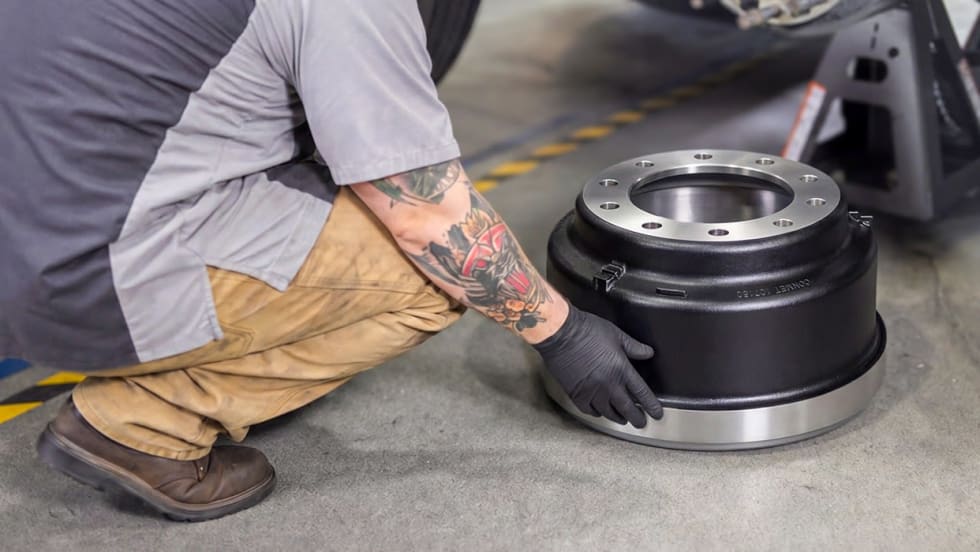
ConMet Expands Aftermarket Brake Drum Lineup With TruCast
A new heavy-duty truck brake drum option in the aftermarket gives customers more flexibility within the ConMet product family.
Read More →
Phillips Opens High-Tech Distribution Center for Faster Parts Delivery
Phillips Industries’ new Cincinnati-area distribution center is now shipping aftermarket trucking parts nationwide, aiming to speed up delivery times for customers.
Read More →
Volvo to Sponsor America’s Road Team for 2025
Volvo Trucks announced that it is extending its exclusive sponsorship of America’s Road Team for 2025.
Read More →
Webb to Start Taking Orders for UltraSet Pre-Adjusted Wheel Hubs
Webb, which recently acquired the Stemco Trifecta pre-adjusted hub program, will soon start taking orders for its replacement pre-assembled hub, the UltraSet.
Read More →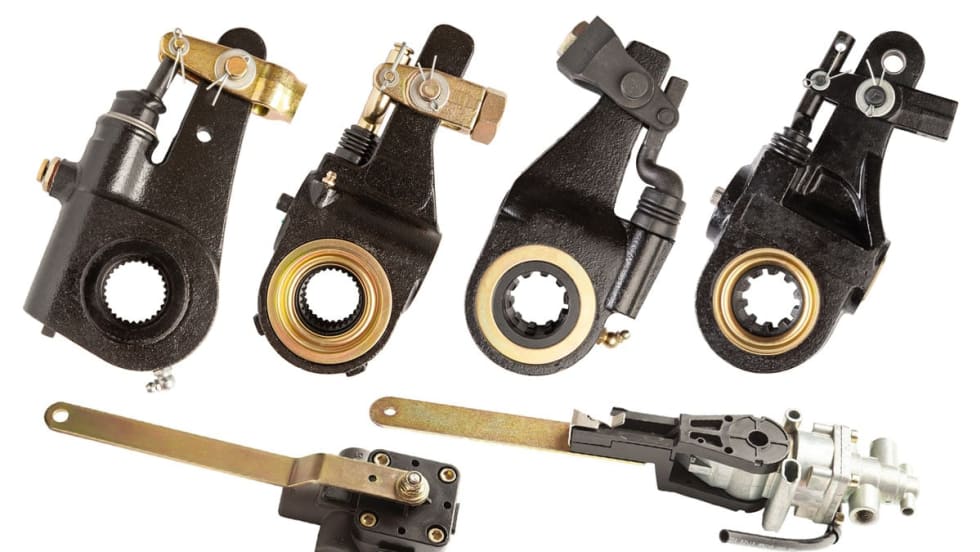
All-Makes Automatic Brake Adjusters, Ride Height Control Valves from Midland
SAF-Holland has added automatic brake adjusters and ride height control valves to its Midland All-Makes Program.
Read More →
ZF Aftermarket Expands [pro]Academy Training
ZF Aftermarket said it is expanding its ZF [pro]Academy training and will be adding 40 new modules this year.
Read More →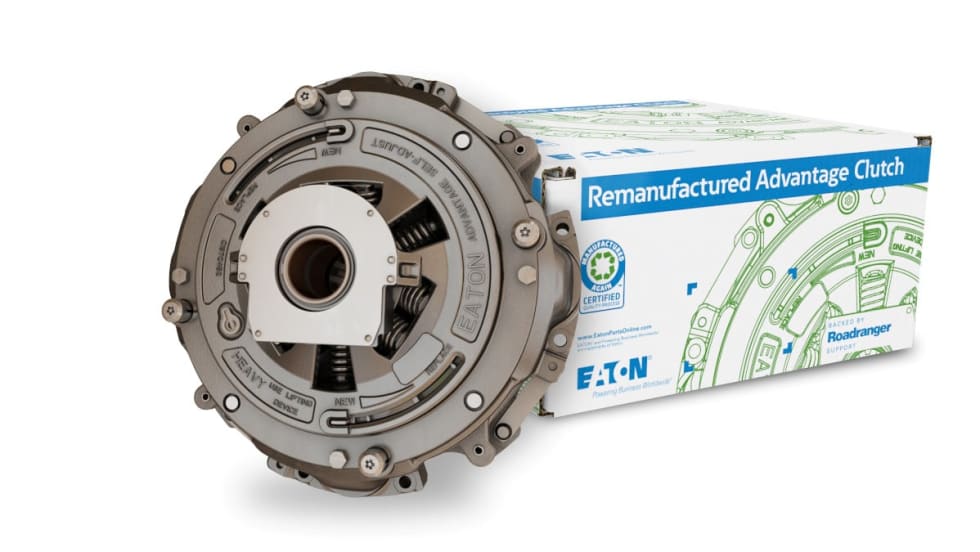
Eaton Adds Remanufactured Advantage Line of Clutches
Eaton has added its Advantage clutches to its remanufactured product line. The clutches feature a unique strap drive intermediate plate designed to allow customers to choose the latest OE specification
Read More →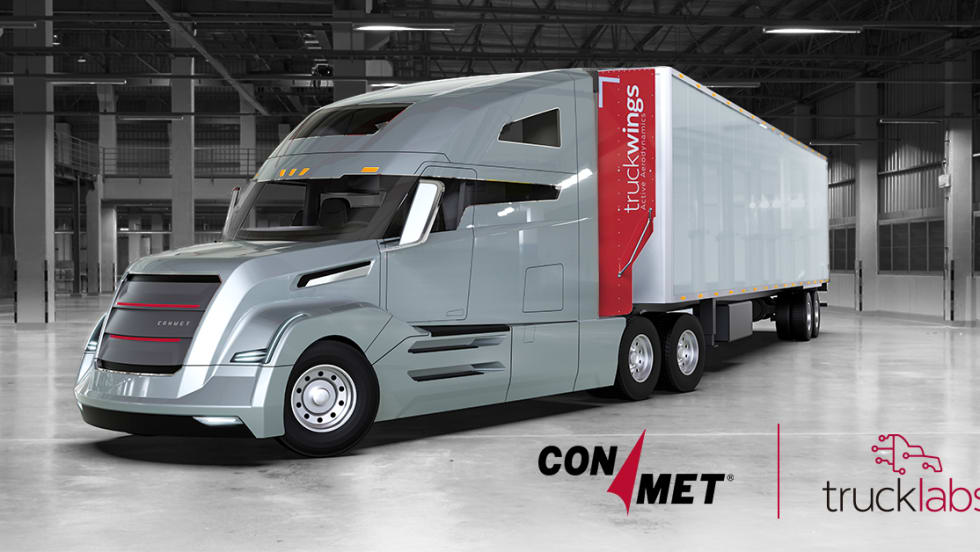
ConMet Acquires TruckLabs, the Creator of TruckWings
Commercial truck and trailer parts provider ConMet acquired TruckLabs, the company that created TruckWings, an aerodynamic device that attaches to truck cabs and deploys to close the gap between truck and trailer. TruckLabs now operates as a subsidiary of ConMet.
Read More →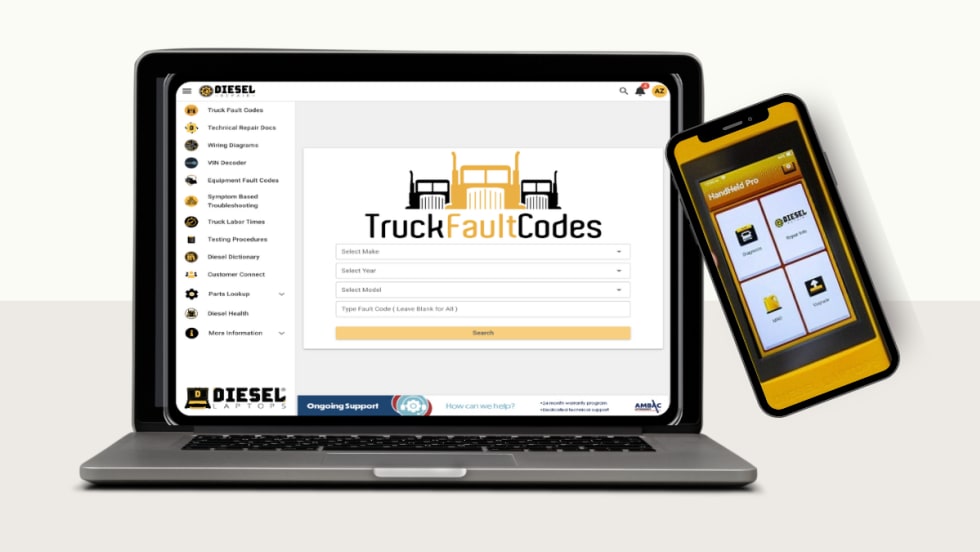
Diesel Laptops Releases Fault-Code-to-Part-Number Tool
Diesel Laptops said its Truck Fault Codes allows users to input a fault code and immediately identify and order the parts needed to complete repair work.
Read More →