





How Optimizing Cylinder Deactivation Cut NOx Emissions 74% in Cummins-Tula Test
Cummins Buying Jacobs
Cummins is buying Jacobs Vehicle Systems — which today does far more than exhaust brakes — to help it advance on the road to zero emissions.
February 9, 2022
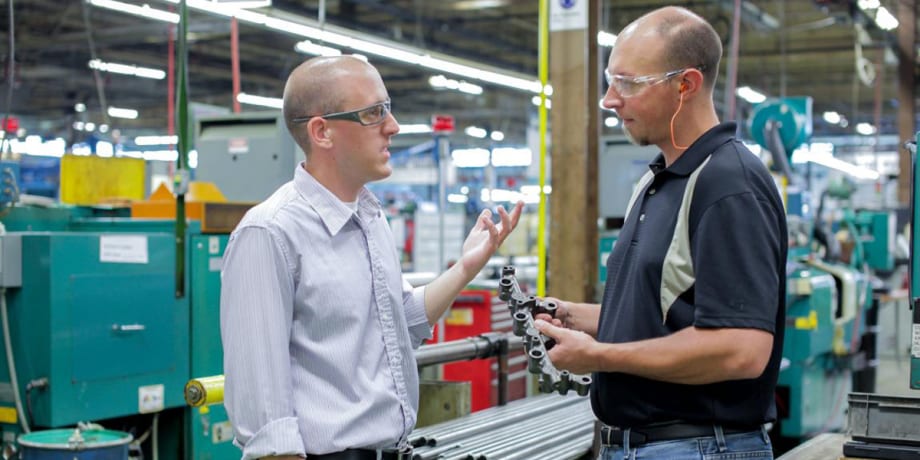
Jacobs has two primary manufacturing facilities in Bloomfield, Connecticut, and Suzhou, China, and Cummins expects to invest additional capacity and resources into those operations.
Photo: Jacobs
2 min to read
To help it in development of current and future advanced diesel engine platforms, Cummins is buying Jacobs Vehicle Systems. Best known for the Jake Brake, today Jacobs also provides cylinder deactivation, start-and-stop and thermal management technologies.
It's a homecoming of sorts; in 1961, Jacobs introduced the first engine brake for commercial vehicles, which was invented by Clessie Cummins, the founder of Cummins.
The acquisition is part of Cummins’ continuing investment in key technologies to reduce greenhouse gas emissions and lower the air quality impacts of their products. Engine braking and cylinder deactivation technologies will be key components to meeting current and future emissions regulations. This acquisition will allow Cummins to better integrate these vital components with its medium- and heavy-duty engines. Both Cummins and Jacobs have also been working with Tula to test more sophisticated algorithms for cylinder deactivation technology.
The acquisition of the Altra Industrial Motion subsidiary also secures engine components for current and aftermarket products, and expands the Cummins Turbo Technologies’ business unit, Cummins officials said in a press release.
Jacobs has two primary manufacturing facilities in Bloomfield, Connecticut, and Suzhou, China, and Cummins expects to invest additional capacity and resources into those operations. Jacobs’ manufacturing footprint will help Cummins meet requirements of the United States-Mexico-Canada Agreement and further invest in the U.S.
Jennifer Rumsey, Cummins’ president and chief operating officer, said she expects the transaction to provide financial returns and future growth opportunities through Jacobs’ engineering expertise, product portfolio and manufacturing capabilities.
Cummins plans to maintain Jacobs’ customer relationships.
Founded in 1961, Jacobs has roughly 600 employees and more than 60 years of experience in engine retarding and valve actuation systems for the commercial vehicle industry.
This acquisition is subject to customary closing conditions, including receipt of applicable regulatory approvals, and is expected to close in 2022.
More Equipment

Used-Truck Remarketing Math Is Changing
Used-truck value is no longer just a concern at trade-in. Decisions made throughout a truck’s first life can influence what it’s worth years later.
Read More →
How Volvo Updated Its D13 for EPA 2027 [Watch]
Volvo’s updated D13 promises lower emissions without sacrificing performance or fuel economy. Take a closer look at what changed inside the engine in this HDT Spotlight video.
Read More →
Michelin Tire Improves Efficiency and Durability for Regional Fleets
The Michelin X Multi Energy D2 is a regional haul drive tire engineered to help fleets improve fuel efficiency, durability and traction in demanding stop-and-go operations.
Read More →
ZF Expands Commercial Vehicle Push in North America
ZF is expanding its North American commercial-vehicle presence with new transmission applications, electrification, trailer technology and autonomous-driving systems.
Read More →
Tesla Wants a Self-Driving Semi. Are Cameras Enough?
Could Tesla’s camera-only autonomous driving technology work on an 80,000-pound Semi? In this commentary, HDT's Deborah Lockridge takes a look at Tesla, Cybercab, and how autonomous trucks see the road.
Read More →
Kodiak: Driverless Long-Haul Truck Launch on Track for 2026
Kodiak AI says its driverless long-haul safety case is 93% complete and it remains on track to begin commercial operations by year-end 2026.
Read More →
What DOT’s Automated Vehicle Strategy Means for Trucking
The U.S. Department of Transportation issued a new automated-vehicle strategy that outlines plans for driverless-truck regulations, cross-state freight corridors, and federal safety standards.
Read More →
East Coast Port Launches $45M Electric Truck Push
The Port Authority of New York and New Jersey announced millions in incentives for zero-emission drayage trucks, yard tractors, and new charging hubs near the port.
Read More →
PlusAI Going Public to Fund Autonomous Truck Launch
A SPAC deal could provide PlusAI with up to $300 million as it works toward a 2027 commercial launch of factory-built autonomous trucks.
Read More →
NHTSA Moves to Rewrite Truck Fuel-Economy Rules
The National Highway Traffic Safety Administration says it lacks authority to regulate medium- and heavy-duty truck engines separately from complete vehicles, but the existing standards have not yet been eliminated.
Read More →