




Covering Trucking for 90 years: Part 2 - The 1970s through the 1980s
We continue our reflection back on the past 90 years of HDT's history. We start Part Two of the series in the 1970s
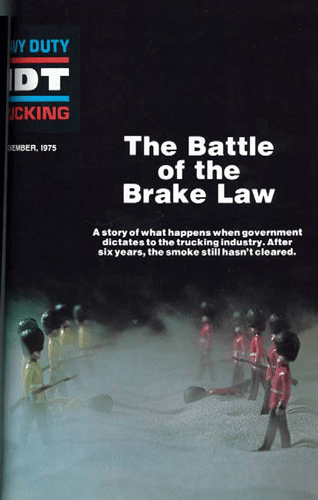
In the 1970s HDT reported on the battle over mandatory antilock brakes.
We continue our reflection back on the past 90 years of HDT's history. We start Part Two of the series in the 1970s.
In the late '60s, HDT had reported that the owner-operator was in the driver's seat. In the 1970s, the romanticized image of the independent trucker as a cowboy, an outlaw-with-a-heart-of-gold, was popularized in movies such as "Smokey and the Bandit" and songs such as "Convoy."
At the same time, the '70s saw the dawn of the age of federal safety regulation, while pressure was building to deregulate the economic aspect of the trucking industry.
In 1970, President Nixon created the Environmental Protection Agency. With the new EPA and many individual states setting new emissions regulations, HDT, in its June 1971 edition, posed the question: "Just how can one truck be expected to meet all of the regulations?"
The newly created National Highway Traffic Safety Administration ran into trouble when it tried to require trucks to have antilock brakes. Federal Motor Vehicle Safety Standard 121 went into effect in January 1975. It also called for spring parking and emergency brakes, and introduced stopping-distance limits that required brakes on front wheels. But it was antilock that was the problem.
A November 1975 HDT cover story, "The Battle of the Brake Law," was an award-winning feature dealing with the government's antilock brake debacle. HDT staff researched the issue with hundreds of truck operators, maintenance men, attorneys, and makers of trucks, trailers and components to weave a tale of government forcing an industry to use technology that hadn't been adequately tested.
Paccar and the American Trucking Associations filed suit. As the case dragged on for three years, antilock brakes were blamed for numerous accidents. The Supreme Court finally struck down the antilock brake provisions of "121," as it became known, in 1978.
A 1970 feature, "When the Trucks Stopped," detailed wildcat strikes, lockouts and driver firings, and HDT ran a "special report on trucking's darkest month." Jimmy Hoffa remained Teamsters president while incarcerated. When President Nixon released Hoffa from prison in 1971, he was ordered to stay out of union affairs until 1980. Hoffa disappeared in 1975.
In 1978, Hoffa's successor and 16 pension fund trustees were charged with misappropriation of funds. As we entered the '80s, Teamsters membership started a decline from its peak of 3.2 million that would only be made worse by deregulation.
Perhaps the most dramatic impact on trucking during the '70s was the Arab Oil Embargo, when Arab nations withheld oil from the U.S. because of its support of Israel. Diesel prices jumped from an average of 27 cents a gallon to as high as 45 cents. A December 1973 article reported every trucker was "trying to squeeze the most he can out of every drop of fuel he can get his hands on. Price is no longer an object - it's getting the stuff that matters."
Truckstops were getting only 60% to 85% of the fuel they ordered, so they limited sales. Owner-operators, angry that fleet customers got preference at the pump, blockaded highways in protest in December 1973, and staged a shutdown near the end of January 1974. Two drivers who defied the shutdown were killed.
In March, Saudi Arabia announced the resumption of fuel shipments to the U.S. The oil crisis was soon upstaged by Watergate, but the Owner-Operator Independent Drivers Association got its start during the crisis.
The Motor Carrier Act of 1980 deregulated trucking and created turmoil among established fleets. Deregulation had been coming in bits and pieces as the ICC loosened its grip, trying to stave off congressional action. But the new law brought fundamental change. The most important was easier entry for new competitors. In one stroke, Congress had made millions of dollars in operating authority virtually worthless.
"An Industry in Turmoil" cover story took a look at deregulation a year later. HDT predicted, correctly, that many more trucking companies would not survive to the next business upturn.
"Trucking has rebounded from many economic recessions in the past. But this one is different," the article said. "The rules changed in midstream when federal deregulation opened trucking industry gates to almost anybody on almost any route. With more people competing for a reduced amount of freight, the rate-cutting has become suicidal."
Shippers soon discovered that nimble truckload carriers could deliver large less-than-truckload shipments quicker and cheaper than the LTLs. Truckload carriers, which were largely non-union, began to siphon off business from the major LTLs. Carriers that had dominated the for-hire business for decades were suddenly in trouble, and as the country slipped into recession, big names began to fall by the wayside. At the same time, many truckload carriers thrived.
There were more regulatory changes in the works. In 1982, the federal Surface Transportation Assistance Act passed, leading to the switch from cab-over-engine road tractors to the conventional-cab layout, and the use of bigger and heavier trailers.
In 1986, the Commercial Mo tor Vehicle Safety Act established national standards for testing, licensing, and disqualifications of interstate drivers and made multiple driver licenses illegal.
From the November issue of HDT magazine.
Related stories: 10/3/2012: HDT's Anniversary: Covering Trucking for 90 Years (Part One)
More Aftermarket

What Three Fleets Are Doing Differently When Buying Truck Parts in 2026
With freight improving but costs still climbing, fleet maintenance executives explain how they're balancing price, quality, and supplier relationships.
Read More →
ConMet Expands Aftermarket Brake Drum Lineup With TruCast
A new heavy-duty truck brake drum option in the aftermarket gives customers more flexibility within the ConMet product family.
Read More →
Phillips Opens High-Tech Distribution Center for Faster Parts Delivery
Phillips Industries’ new Cincinnati-area distribution center is now shipping aftermarket trucking parts nationwide, aiming to speed up delivery times for customers.
Read More →
Volvo to Sponsor America’s Road Team for 2025
Volvo Trucks announced that it is extending its exclusive sponsorship of America’s Road Team for 2025.
Read More →
Webb to Start Taking Orders for UltraSet Pre-Adjusted Wheel Hubs
Webb, which recently acquired the Stemco Trifecta pre-adjusted hub program, will soon start taking orders for its replacement pre-assembled hub, the UltraSet.
Read More →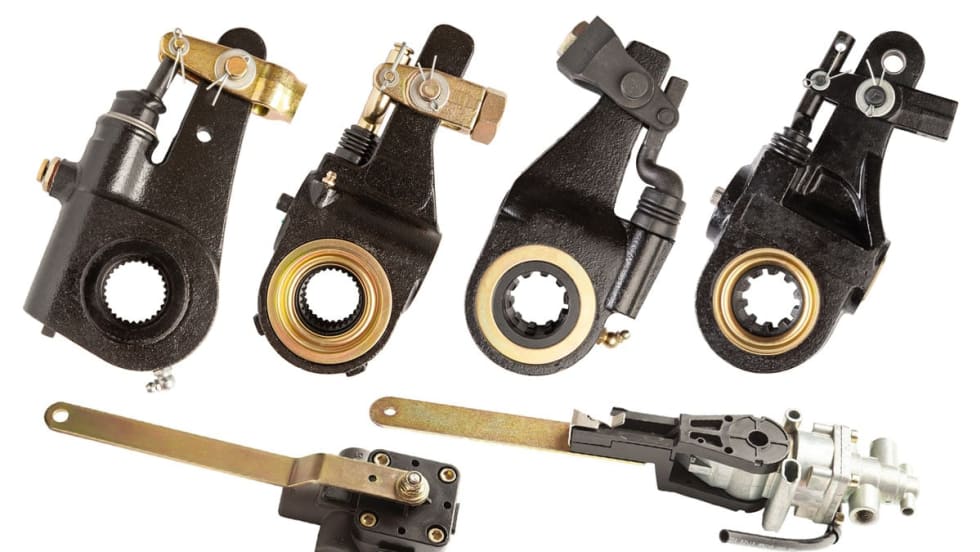
All-Makes Automatic Brake Adjusters, Ride Height Control Valves from Midland
SAF-Holland has added automatic brake adjusters and ride height control valves to its Midland All-Makes Program.
Read More →
ZF Aftermarket Expands [pro]Academy Training
ZF Aftermarket said it is expanding its ZF [pro]Academy training and will be adding 40 new modules this year.
Read More →
Eaton Adds Remanufactured Advantage Line of Clutches
Eaton has added its Advantage clutches to its remanufactured product line. The clutches feature a unique strap drive intermediate plate designed to allow customers to choose the latest OE specification
Read More →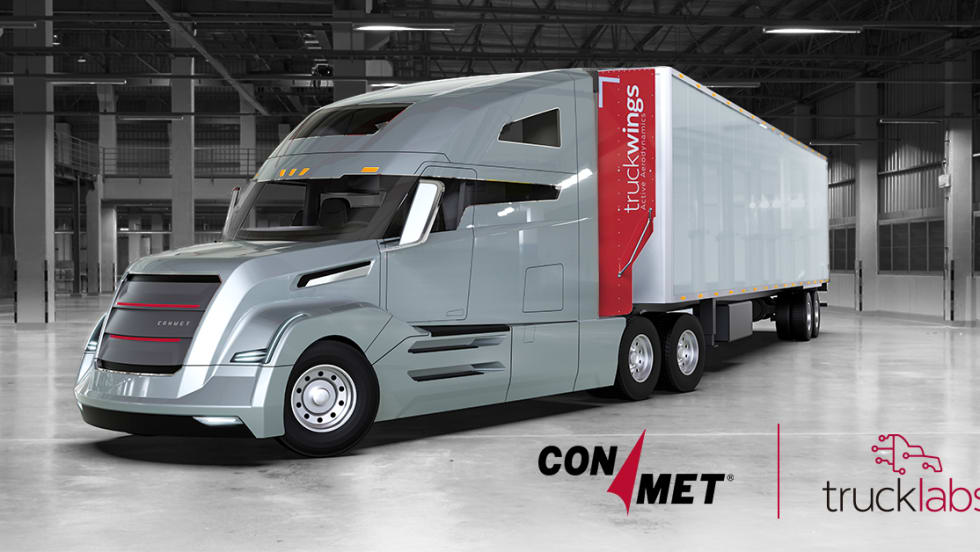
ConMet Acquires TruckLabs, the Creator of TruckWings
Commercial truck and trailer parts provider ConMet acquired TruckLabs, the company that created TruckWings, an aerodynamic device that attaches to truck cabs and deploys to close the gap between truck and trailer. TruckLabs now operates as a subsidiary of ConMet.
Read More →
Diesel Laptops Releases Fault-Code-to-Part-Number Tool
Diesel Laptops said its Truck Fault Codes allows users to input a fault code and immediately identify and order the parts needed to complete repair work.
Read More →