




Clean Diesel, Upcoming GHG Standards Topics at Washington, D.C., Event
This political season is full of angry noise about intrusive, wasteful government regulation, but on Tuesday a choir of businessmen and regulators gathered in Washington, D.C., to sing praises of each other. Truck and engine manufacturers joined with environmental activists and the Environmental Protection Agency to celebrate a successful, decade-long effort to build a clean diesel engine -- and to look ahead to upcoming fuel efficiency standards
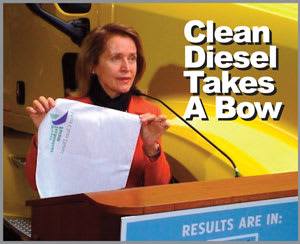
No Soot: Margo Oge, the EPA official who spearheaded the clean diesel effort, shows off a spotless handkerchief that had been held over the exhaust of a Freightliner tractor lent for the occasion by owner-operator Henry Albert.
This political season is full of angry noise about intrusive, wasteful government regulation, but on Tuesday a choir of businessmen and regulators gathered in Washington, D.C., to sing praises of each other.
Truck and engine manufacturers joined with environmental activists and the Environmental Protection Agency to celebrate a successful, decade-long effort to build a clean diesel engine -- and to look ahead to upcoming fuel efficiency standards.
"If you told me in the mid-1990s that we could put the words 'clean' and 'diesel' together I would say you are completely out of your mind," said Margo Oge, director of the EPA Office of Transportation and Air Quality. "Yet here we are today to celebrate 10 years of clean diesel effort."
The clean diesel effort is preventing 35,000 premature deaths a year from respiratory illness, Oge said. "It is a historic environmental effort. It wasn't easy. We didn't always agree early on in the process, but we are here today to celebrate a huge success story."
The 2010 Diesels
The joint work of EPA, truck and engine manufacturers and the oil business led to a 2010 diesel engine that emits 99 percent less nitrogen oxide and 98 percent less particulate matter than the diesel of the 1990s, said Allen Schaeffer, executive director of the Diesel Technology Forum. The Forum sponsored a two-day event that was in part a celebration of the clean diesel effort, and in part a look ahead at what comes next.
One 2010 diesel emits the same amount of pollution as 60 of the older engines, Schaeffer said. "The diesel engine is the lifeblood of the economy, and it is now more efficient and cleaner than ever."
The clean diesel effort to date has not been without stress and dissent. For example, there have been multiple lawsuits, and a settlement agreement that accelerated the implementation of the 2004 rule due to violations by engine makers. But on Tuesday truck manufacturers looked back on the experience with respect.
Patrick Charbonneau, vice president of government relations for Navistar, gave EPA credit for taking a systems approach when it started the clean diesel effort a decade ago -- referring to the requirement that oil refiners come up with ultra-low sulfur diesel fuel.
"We said at the time that if you can provide us clean fuel we can in fact have the technologies to get to near-zero emissions," he said. "Without ultra-low-sulfur diesel we would not have been able to create these diesels. Without that, nothing would have occurred."
Srikanth Padmanabhan, vice president of Cummins Emissions Solutions, said EPA also helped when it took a staged approach to progressively tighter emissions limits, starting in 2004 with follow-on rules in 2007 and this year.
"Defining what needs to happen over a 10-year window, with milestones to be accomplished, was a huge help for us," he said.
Richard Kassel, director of the clean fuels and vehicles project at the Natural Resources Defense Council, said EPA made the clean-up possible by working with stakeholders to create the certainty manufacturers needed to invest in the innovation and technology.
"We did not have to revise the laws of nature to get a cleaner diesel engine," he said. "But the playing field had to change. None of this would have happened without those (EPA) regulations."
Padmanabhan also noted that the success of getting diesel emissions to near-zero set the stage for the next round of regulation -- greenhouse gas and fuel efficiency rules.
Fuel Efficiency Proposal 'Soon'
This joint rulemaking by EPA and the National Highway Traffic Safety Administration, which is now at the White House Office of Management and Budget, will be published "soon," Oge said. President Obama has called for a final rule to be ready by July 30, 2011, and to start taking effect in 2014.
Details of the proposals are not available, but the work done so far indicates that they will focus on the use of existing technologies to cut emissions and improve fuel economy. Schaeffer has said he expects that this will include technologies that are familiar to participants in EPA's SmartWay program -- improved aerodynamics and low rolling resistance tires, for instance.
Preliminary estimates are that the rules will lead to emissions reductions on the order of 20 percent and fuel economy improvements of as much as 25 percent. Engine manufacturers believe the program will establish standards that recognize trucking's needs and the demands of heavy-duty applications.
Oge said Tuesday that she expects the regulation to be a "win-win" solution for the industry, the planet and the U.S. economy.
The more immediate, ongoing challenge, she said, is to clean up behind the 11 million or so on-road and off-road diesel engines that have not been fitted with the latest emissions technology.
She said EPA has spent more than $500 million on retrofit programs, a sum that has been doubled by other contributors. The benefit-to-cost ratio of this investment has been 13 to one, in terms of public health, she said.
More Aftermarket
What Three Fleets Are Doing Differently When Buying Truck Parts in 2026
With freight improving but costs still climbing, fleet maintenance executives explain how they're balancing price, quality, and supplier relationships.
Read More →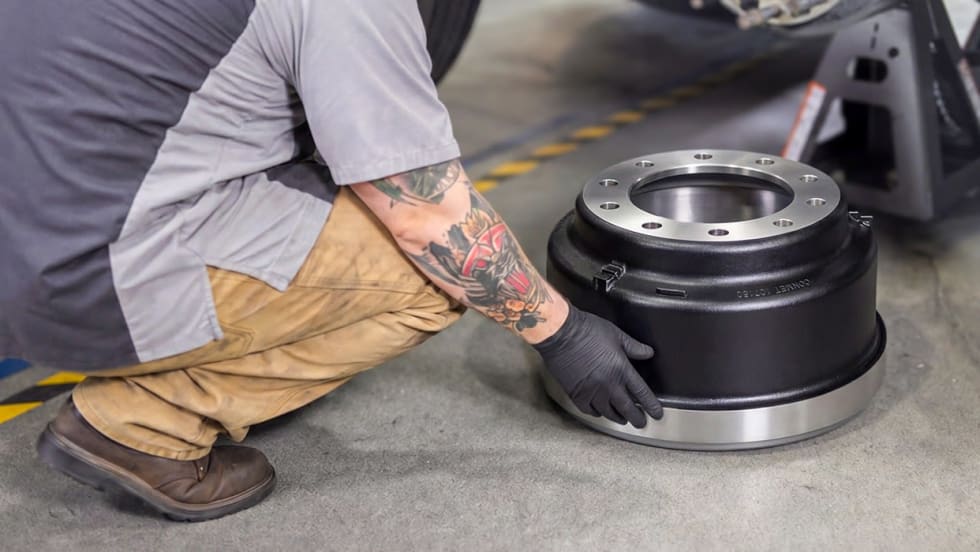
ConMet Expands Aftermarket Brake Drum Lineup With TruCast
A new heavy-duty truck brake drum option in the aftermarket gives customers more flexibility within the ConMet product family.
Read More →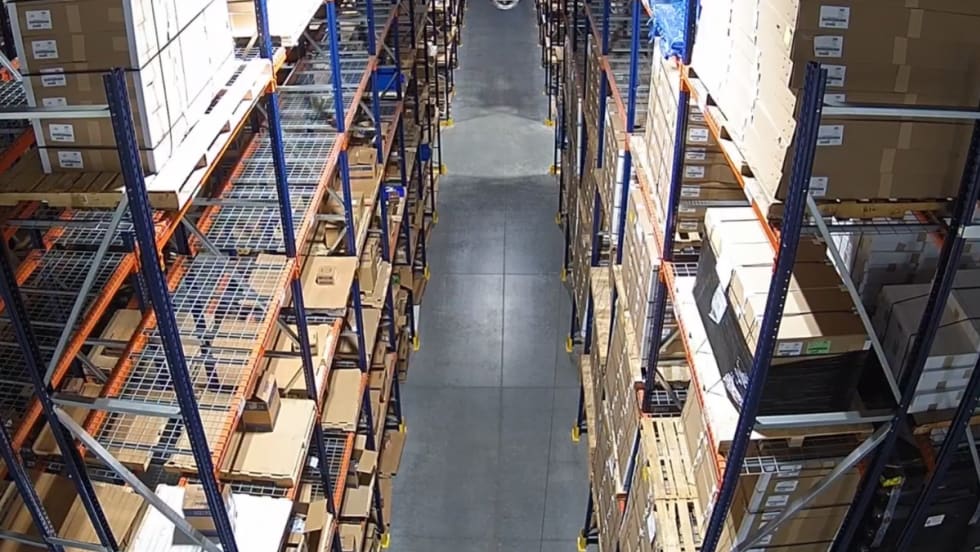
Phillips Opens High-Tech Distribution Center for Faster Parts Delivery
Phillips Industries’ new Cincinnati-area distribution center is now shipping aftermarket trucking parts nationwide, aiming to speed up delivery times for customers.
Read More →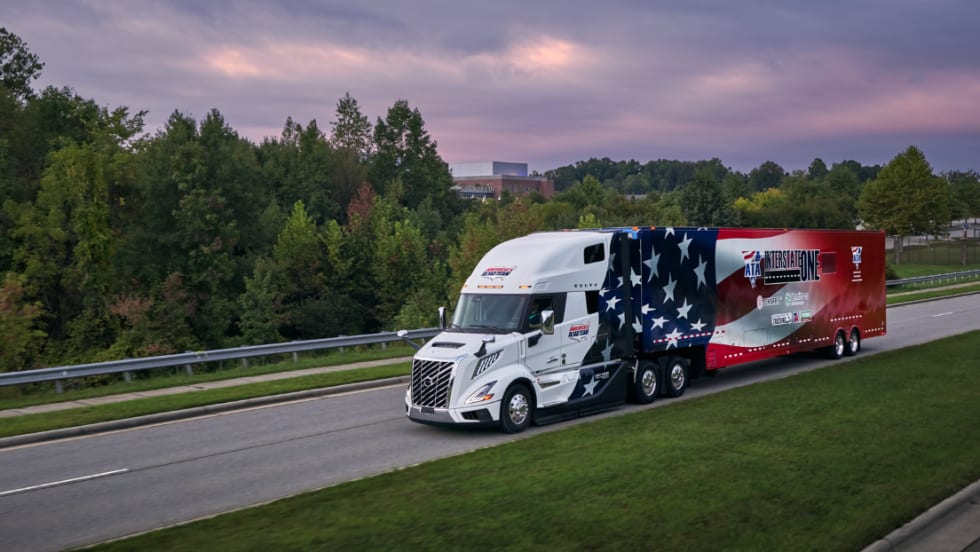
Volvo to Sponsor America’s Road Team for 2025
Volvo Trucks announced that it is extending its exclusive sponsorship of America’s Road Team for 2025.
Read More →
Webb to Start Taking Orders for UltraSet Pre-Adjusted Wheel Hubs
Webb, which recently acquired the Stemco Trifecta pre-adjusted hub program, will soon start taking orders for its replacement pre-assembled hub, the UltraSet.
Read More →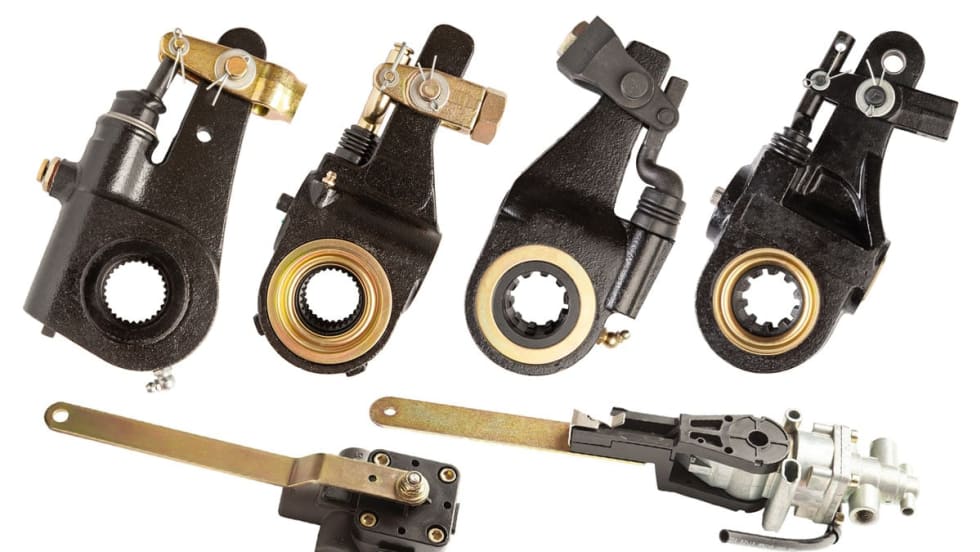
All-Makes Automatic Brake Adjusters, Ride Height Control Valves from Midland
SAF-Holland has added automatic brake adjusters and ride height control valves to its Midland All-Makes Program.
Read More →
ZF Aftermarket Expands [pro]Academy Training
ZF Aftermarket said it is expanding its ZF [pro]Academy training and will be adding 40 new modules this year.
Read More →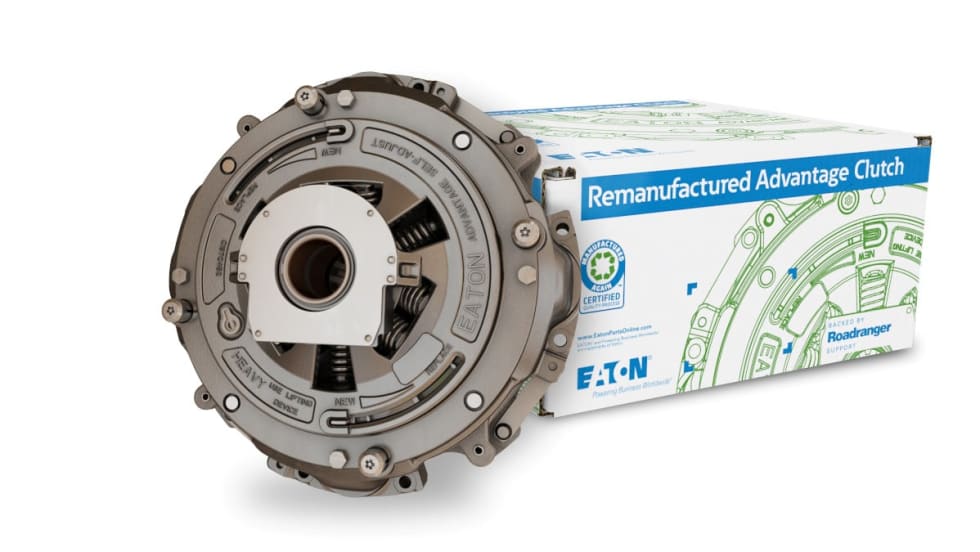
Eaton Adds Remanufactured Advantage Line of Clutches
Eaton has added its Advantage clutches to its remanufactured product line. The clutches feature a unique strap drive intermediate plate designed to allow customers to choose the latest OE specification
Read More →
ConMet Acquires TruckLabs, the Creator of TruckWings
Commercial truck and trailer parts provider ConMet acquired TruckLabs, the company that created TruckWings, an aerodynamic device that attaches to truck cabs and deploys to close the gap between truck and trailer. TruckLabs now operates as a subsidiary of ConMet.
Read More →
Diesel Laptops Releases Fault-Code-to-Part-Number Tool
Diesel Laptops said its Truck Fault Codes allows users to input a fault code and immediately identify and order the parts needed to complete repair work.
Read More →