




Challenge Bibendum Showcases Clean, Efficient Cars And Trucks
The whimsical mixed with the practical at this year's Michelin Challenge Bibendum, a display of vehicles using alternate fuels and other forms of propulsion, and held in late October on the West Coast. Michelin, the French manufacturer
The whimsical mixed with the practical at this year's Michelin Challenge Bibendum, a display of vehicles using alternate fuels and other forms of propulsion, and held in late October on the West Coast.
Michelin, the French manufacturer that pioneered radial tires and now makes them in plants in the U.S. and elsewhere, sponsors the annual Challenge to promote innovation and automotive efficiency. The previous two events were in France.
They are named for Bibendum, the tire-stack mascot otherwise known as the Michelin Man.
First used in 1898, the mascot held a tumbler of nails and other road hazards that Michelin's tires shrugged off. He raised the glass and declared, "Bibendum!" -- literally, "imbibe," but figuratively, "drink up!"
Good tires are part of the equation in any efficient vehicle operation, but there was much more to the '01 Bibendum. Many of the scores of entries competed for handling, quietness and fuel economy titles during trials at the California Speedway in Fontana on Saturday, Oct. 27, and some made a 275-mile run to Las Vegas the following day.
Most entries in the Bibendum were cars and light trucks powered by gaseous fuels, electricity, batteries or fuel cells. Some "hybrids" used piston engines to spin generators that charge batteries that run propulsion motors. Honda and Toyota now sell hybrid cars, and some of them were there.
Most of the technologies employed in the cars and small trucks were futuristic -- still under development for a time that may or may not come. But they foreshadow a day when far less energy will be needed to move us around.
Moving cargo is another matter, because it has to be efficient and economical, and turn a profit in the process. Freightliner and Volvo showed vehicles designed to do this while sitting as well as while under way. Both were equipped with Michelin's latest product, the X-One big single tire that delivers lower weight and higher fuel economy than standard dual radials.
The Freightliner Century S/T tractor featured an experimental auxiliary power unit with hydrogen fuel cells. The APU is hung on the left side of the frame behind the sleeper. Developed by Excellsis, a company partly owned by DaimlerChrysler, Freightliner's parent, the APU generates electricity to heat and cool the sleeper, said Jim Martin, a Freightliner test engineer.
The APU generates 1.5 kilowatts of electricity, which is enough to also run 110/120-volt accessories without help from the engine-driven alternator. This allows idle-free overnight stops and rest breaks, saving diesel fuel and cutting air pollution.
Hydrogen fuel cells are silent, so only a faint whirring from a pair of cooling fans, one atop each "stack" of fuel cells, was audible while standing next to the open unit. With the truck's engine off, noise inside the cab and sleeper is cut by 15 decibels, Martin said.
A fuel cell works like a battery. In this case, hydrogen gas is combined with oxygen from ambient air; an electrochemical reaction produces electrons in the form of 28 to 30 volts of direct current. An 1,800-watt inverter converts the DC to 120 volts AC.
As a byproduct, a small amount of water is also formed; this is caught in a plastic can on the demo truck, but the pure water could drip harmlessly to the ground.
The pressurized hydrogen fuel is carried in a small tank. Hydrogen is explosive, but so are many fuels, so that's not seen as a problem. But hydrogen is not sold at your average truck stop, and building an infrastructure would be a challenge.
So some type of inexpensive "reformer," to extract hydrogen from diesel or other readily available fuel, would be needed. Or, Martin said, another type of fuel cell may be used by the time Freightliner is ready to offer the APU in three to five years.
Available now from Volvo is an inverter kit and a "shore power" option for running 110-volt appliances, both demonstrated on a 770 tractor at the Bibendum. Shore power includes 110-volt wiring in the sleeper and a cord that can be plugged into any nearby 110-volt outlet. Power outlets are more available than one might expect, Volvo people said, because they sold about 6,000 shore power kits last year.
Among operators committed to alternate fuels is United Parcel Service, which displayed three types of trucks at the Bibendum: a Mack tractor and a walk-in van that burn natural gas, and an electric-powered minivan. All run every working day and haul real packages delivered by real drivers.
The Mack is a CH600 whose 12-liter diesel runs on liquified natural gas, or LNG. Its 350-hp E7 diesel was modified with the LNG fuel system that includes special plumbing, ignition system and spark plugs to fire the gas. A pair of 150-gallon insulated tanks carry the liquid gas, super-cooled to minus 250 degrees Fahrenheit, at 250 pounds per square inch.
The single-rear-axle tractor pulls a pair of 28-foot doubles trailers from Ontario about 140 miles to Desert Center, where it swaps the trailers for two brought from Phoenix by a standard tractor, then returns to Ontario. Normal combined gross weights are 65,000 to 80,000 pounds.
"The driver likes it," said Jim Breeher, an automotive manager at UPS's Ontario shop. "It runs smooth and quiet." There's also no smoke, even when starting cold, and no fumes, because only odorless LNG is being burned.
UPS has 12 more LNG tractors like this and will buy more, according to Mike Herr, corporate environmental affairs manager. Tax breaks and other special incentives from federal and some state governments make their high cost -- about $50,000 extra per tractor -- manageable, he said.
Another factor is the cryogenic fueling station, which can cost $250,000 to $500,000. UPS has one in Ontario and others elsewhere, and trucks that have to be fueled from them cannot roam far. This is not a problem because UPS power units all run out of assigned terminals and return home each night.
This Mack averages only a bit over 3 miles per gallon, Breeher said. But LNG costs 65 cents to $1 a gallon, vs. $1.40 to $1.60 or more for diesel. So the cost per mile is about the same or less than for a standard diesel engine, and the cleaner-burning LNG engine should last longer.
UPS plans to buy another nine LNG tractors, according to Jill Reece, Pacific Region automotive manager. A "wish list" of changes, she said, includes more power and an electric driveline retarder. Mack diesels in UPS's linehaul tractors are set to 355/385 horsepower, making the LNG's 350 a little wimpy. And the diesels have Jake Brakes, which cannot work with the LNG engines.
UPS also displayed two P-1000 (for package, 1,000 cubic-foot capacity) walk-in vans with General Motors 4.3-liter V-6 gasoline engines converted to burn compressed natural gas. These "package cars" are Class 5 trucks originally built with Onan diesels, and are among a group of 145 based in the Los Angeles area that were retrofitted with the 122-horsepower CNG engines.
CNG is stored under 3,000-psi pressure in two 16-gallon tanks; a regulator cuts pressure to about 35 psi before it goes to a pair of throttle-body injectors on the engine. As with LNG, range with CNG is limited; the 32 gallons lets one of these cars run 100 miles, less than half the range of a diesel-powered car.
For some reason the engines' spark plugs become fouled at 20,000 to 22,000 miles and are replaced, said Robert Hall, a corporate maintenance manager. And pressure regulators tend to fail at about 25,000 miles. GM has worked on both problems and the second generation of CNG engines shouldn't have those problems.
With little or no soot going into the crankcase, the oil change interval can be stretched from a gasoline engine's 3,000 miles to 4,500 miles, said Al Freilich, a Los Angeles-based fleet manager.
We found that a P-1000's CNG behaves a lot like it still burned gasoline. But of course it makes no fumes and is a bit quieter, Freilich said. You can lug the engine quite low, which
More Aftermarket

What Three Fleets Are Doing Differently When Buying Truck Parts in 2026
With freight improving but costs still climbing, fleet maintenance executives explain how they're balancing price, quality, and supplier relationships.
Read More →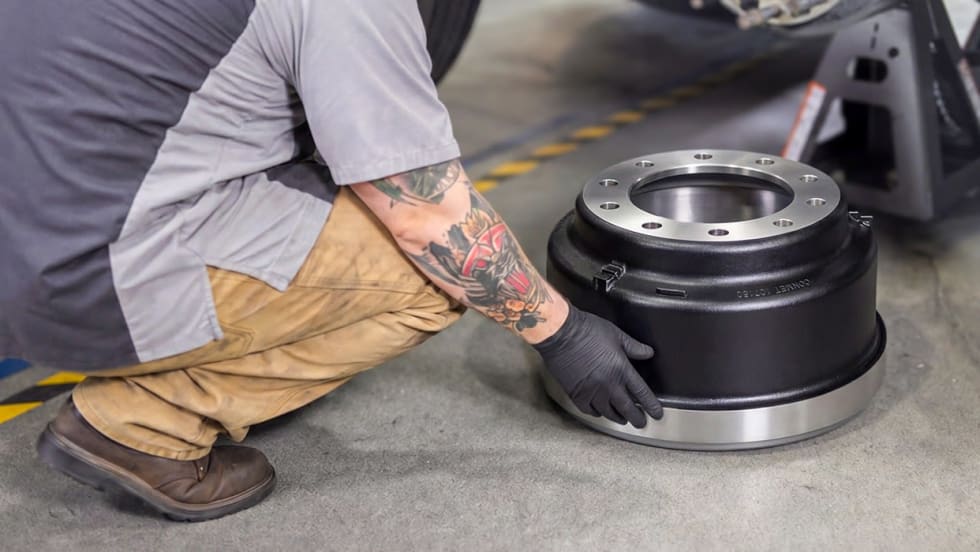
ConMet Expands Aftermarket Brake Drum Lineup With TruCast
A new heavy-duty truck brake drum option in the aftermarket gives customers more flexibility within the ConMet product family.
Read More →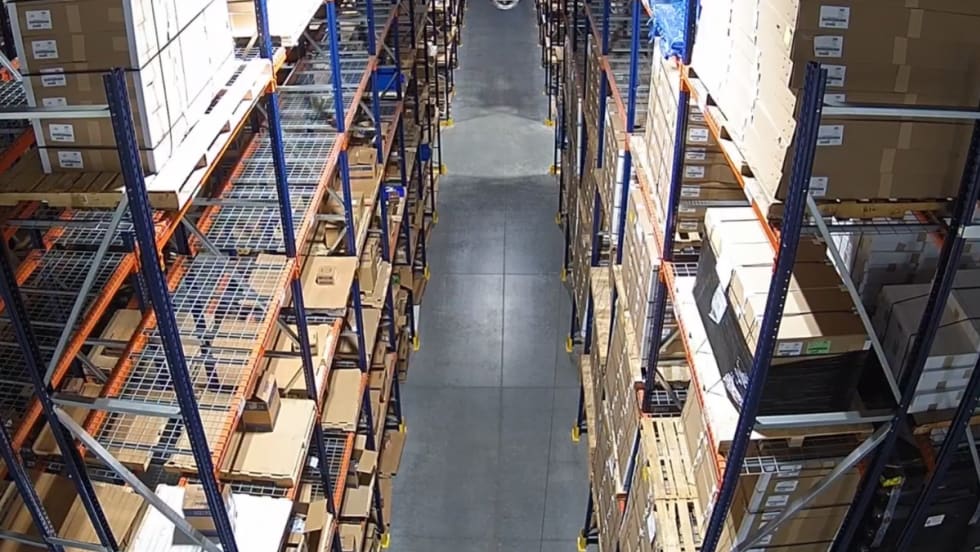
Phillips Opens High-Tech Distribution Center for Faster Parts Delivery
Phillips Industries’ new Cincinnati-area distribution center is now shipping aftermarket trucking parts nationwide, aiming to speed up delivery times for customers.
Read More →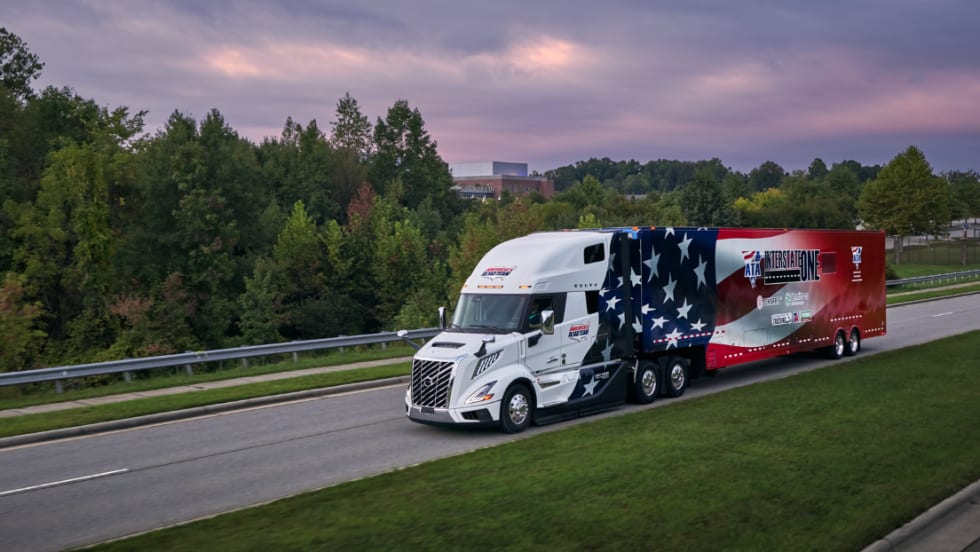
Volvo to Sponsor America’s Road Team for 2025
Volvo Trucks announced that it is extending its exclusive sponsorship of America’s Road Team for 2025.
Read More →
Webb to Start Taking Orders for UltraSet Pre-Adjusted Wheel Hubs
Webb, which recently acquired the Stemco Trifecta pre-adjusted hub program, will soon start taking orders for its replacement pre-assembled hub, the UltraSet.
Read More →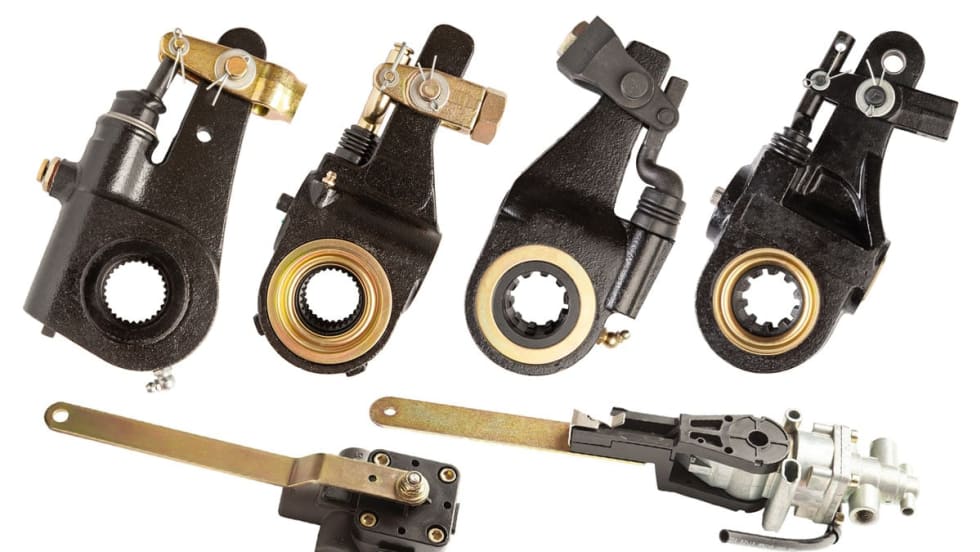
All-Makes Automatic Brake Adjusters, Ride Height Control Valves from Midland
SAF-Holland has added automatic brake adjusters and ride height control valves to its Midland All-Makes Program.
Read More →
ZF Aftermarket Expands [pro]Academy Training
ZF Aftermarket said it is expanding its ZF [pro]Academy training and will be adding 40 new modules this year.
Read More →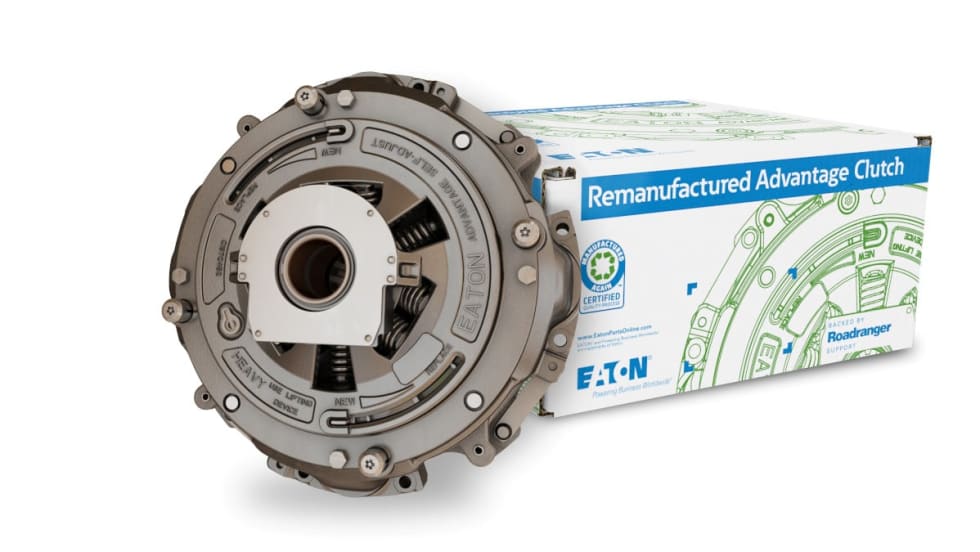
Eaton Adds Remanufactured Advantage Line of Clutches
Eaton has added its Advantage clutches to its remanufactured product line. The clutches feature a unique strap drive intermediate plate designed to allow customers to choose the latest OE specification
Read More →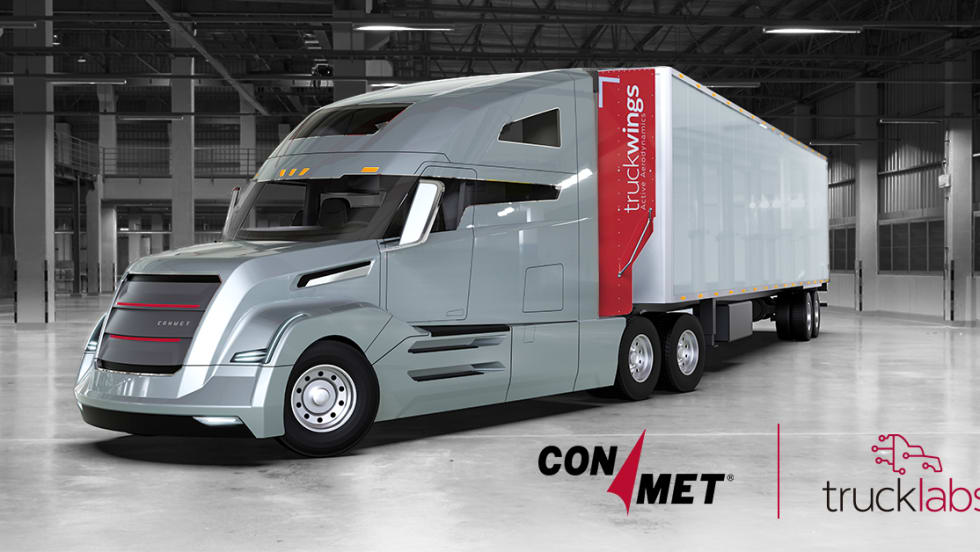
ConMet Acquires TruckLabs, the Creator of TruckWings
Commercial truck and trailer parts provider ConMet acquired TruckLabs, the company that created TruckWings, an aerodynamic device that attaches to truck cabs and deploys to close the gap between truck and trailer. TruckLabs now operates as a subsidiary of ConMet.
Read More →
Diesel Laptops Releases Fault-Code-to-Part-Number Tool
Diesel Laptops said its Truck Fault Codes allows users to input a fault code and immediately identify and order the parts needed to complete repair work.
Read More →