




Carrier Groups Sue to Halt CSA 2010 Safety Data Publication
Several groups of small trucking companies have sued to prevent publication of carriers' safety performance data under the Federal Motor Carrier Safety Administration's new Comprehensive Safety Analysis 2010 program
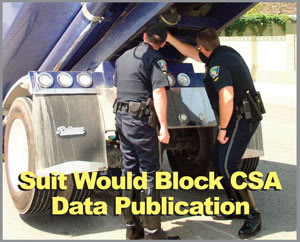
Several groups of small trucking companies have sued to prevent publication of carriers' safety performance data under the Federal Motor Carrier Safety Administration's new Comprehensive Safety Analysis 2010 program.
In their bid for an emergency stay, the carrier groups allege that the agency has not followed proper procedures in its plan to publish carriers' scores in CSA's seven Behavior Analysis and Safety Improvement Categories, or BASICs.
"The basis of our argument is that the FMCSA has failed to comply with the provisions of the Administrative Procedures Act in that they never provided proper notice in the Federal Register, an opportunity for public comment, or a final rule based on the record," said Kenneth Siegel of the Washington, D.C., law firm Strasburger & Price.
Siegel represents the National Association of Small Trucking Companies, the Expedite Alliance of North America and the Air & Expedited Motor Carriers Association. All together, these groups have about 2,750 small carriers as members, according to the motion filed Monday with the U.S. Court of Appeals for the District of Columbia Circuit.
The carriers are concerned that their BASICs data, which are scheduled to be open to the public early in December, does not adequately reflect their safety performance and that publication of that data will put them at a competitive disadvantage, Siegel said.
Their motion describes the agency's approach to CSA 2010 as "rulemaking lite" because it has not yet included a formal rulemaking process that includes consideration of public comments.
The agency is planning to start a formal rulemaking next year on the safety fitness aspect of CSA 2010. In that proceeding, it will ask for comments on its plan to change from the current compliance review process to the new approach of using crashes, inspections and violation history to determine fitness.
The carriers want full disclosure of all aspects of CSA 2010, including the algorithms and other analytical methods the agency will use in developing BASICs grades, before the BASICs data is made public.
"FMCSA should not be allowed to implement CSA 2010 until this process is complete," they say in their motion.
To post the data before then would subject carriers to "irreparable harm," the carriers say.
"Public release of BASIC ratings will change the rules of the game. Once the proposed… data is released, many motor carriers that are now rated 'satisfactory' by FMCSA will receive at least one BASIC grade in the 'deficient/alert' category and effectively will be barred from handling customers' freight," they say.
Siegel explained that most shippers and brokers have conditions in their contracts that can lead to termination if a carrier is not a top safety performer. Thus these shippers and brokers have a legitimate concern, he said.
"What's happened is, by putting this information out there, by characterizing the carriers, DOT is in fact providing plaintiffs' counsel in accident cases an extra tool to use against the carrier and the shipper and broker. Counsel can say the shipper or broker was negligent for hiring a carrier with this kind of record."
He said it is not necessary for FMCSA to stop the CSA 2010 program. The agency can use the BASICs data but should not make it public until it has completed a formal rulemaking, he said.
Siegel said he hopes the court will issue a temporary stay by the end of this week.
More Drivers

Roehl Offers Truck Drivers $10,000 Retention Incentive
Payments begin after the first load and continue in mileage-based installments for eligible experienced drivers joining the fleet.
Read More →
Platform Science Adds Dispatch and Safety Tools
Four additions to PS Fleet help fleets monitor loads, manage driver coaching, share truck locations and adjust video system settings.
Read More →
When Language Stops the Truck: The Return of ELP Out-of-Service Orders
English language proficiency rules for commercial drivers aren’t new, but renewed out-of-service enforcement has raised the stakes. Here’s what carriers need to know before a driver reaches a roadside inspection.
Read More →
Samsara Launches Custom AI Agent Builder
Agent Studio lets fleets create AI tools for hours-of-service monitoring, reporting and driver support, including agents that communicate by phone.
Read More →
Trucker Path Expands Reserved Parking Network
Trucker Path has added close to 6,000 more truck parking spaces to its Trucker Path Reserved Parking Network with the addition of Safe Truck Parking.
Read More →
EEOC Sues Texas Trucking Company Over Driver Age Limits
The agency says Trancasa USA rejected applicants over 65 and applied tougher driving-record standards to those over 60.
Read More →
Nussbaum, Roehl Announce Second Driver Pay Increase This Year
This year has seen a swath of major truck driver pay increases as freight capacity has tightened.
Read More →
From One Generation to the Next: How Mentorship Builds Safer Truck Drivers
After three decades in trucking, Harold Perry shares what he's learned about driver safety, mentorship, and helping the next generation build confidence behind the wheel.
Read More →
Truck Drivers Need More Than Another Alert
Fleets have more visibility into truck health, safety events, and driver activity than ever. The next challenge is turning all that information into useful guidance for the person who has to decide what to do next.
Read More →
FMCSA Removes 110 Truck Driver Training Schools from Certified ELDT List
Federal regulators also are targeting more than 160 additional training providers and launching a nationwide audit of third-party CDL skills testers as part of a broader crackdown on trucking fraud.
Read More →