




Cargo Theft Incidents Decline While Value Increases
In the second quarter of 2013, the logistics security services provider FreightWatch International recorded a total of 194 thefts in the United States, a 27% increase in value and a 12% decrease in volume from the same time a year ago.
In the second quarter of 2013, the logistics security services provider FreightWatch International recorded a total of 194 thefts in the United States, a 27% increase in value and a 12% decrease in volume from the same time a year ago. That compares to a 4% increase in value and a 15% decrease in volume compared to the first quarter of this year.
There were 45 thefts in April, 66 in May and 83 in June. The average loss value per incident during the quarter was $164,594.
FreightWatch says delays in incident reporting have caused measurable increases in theft volumes in the weeks following publication of FreightWatch quarterly reports, so totals for the most recent quarter are expected to rise above those the first quarter of 2013.
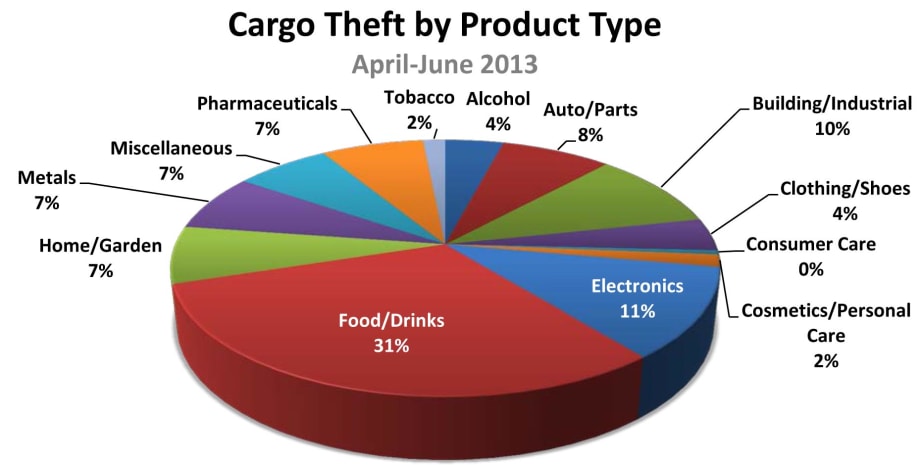
In the most recent quarter, food/drinks was the product type most often stolen, representing 31% of all thefts. The electronics industry experienced 22 thefts, or 11%, primarily of TVs and computers, while the building/industrial category saw 19 thefts, or 10% of the total, largely targeting roofing shingles.
California claimed the top spot with 57 thefts, or 29% of the total. Texas’s 32 thefts put the state in second place, with 17% of all incidents. Illinois ended the quarter in third place, edging out Florida with 21 thefts, or 11% of the total. Florida, typically in the top three states, was in fourth place with 20 thefts, or 10% of total. Together, the top six states recorded 156 cargo thefts, or 80% of the total recorded thefts for the entire country.
Unsecured parking, which experienced 109 thefts in the second quarter of the year, was the location targeted most often by cargo thieves when a location was recorded. Facility was second in theft occurrences, with 18 incidents. Although there were 15 thefts at secured parking.
Following usual trends, incidents involving theft of trailer, 142 in all, were most common during second quarter of 2013, accounting for 73% of all thefts during the quarter.
Thefts involving deceptive pickup fell from 21 in first quarter of the year to 13 in the latest reporting period, but still accounted for the second most common theft type in the quarter. Driver theft, last-mile courier and theft of container each experienced eight thefts, tying for third place.
While the average loss value across all incidents was $164,594 for the second quarter of this year, the average losses in specific product types varied widely. In this quarter, the alcohol category had the highest loss value, at $571,329, due to several high-end spirit thefts.
The tobacco product type logged the second highest average value, at $365,000. Clothing/shoes, while not seeing an especially high volume of thefts, did have a high average loss value of $322,500. Electronics thefts, averaging $238,462, stepped up in value following the first quarter average of $199,078.
Full details are available on the FreightWatch International website.
More Fleet Management

Why Private Fleets Are Taking More Freight
Private fleets are putting their own trucks on demanding customers and high-cost lanes as companies seek greater control over service, costs, and capacity.
Read More →
Color Match Smarter: Tools That Restore & Perform
For fleet managers and collision repair professionals keeping heavy-duty trucks on the road, getting the color right the first time isn't just about appearance — it's about efficiency, turnaround time, and bottom-line results. Discover how today's digital color tools are transforming the repair process from guesswork to precision.
Read More →
FMCSA Pauses Biennial-Update Enforcement Amid Motus Transition
Carriers whose updates were due on or after June 1 have more time, while FMCSA works to stabilize its new registration system and warns of phishing sites impersonating its new carrier registration system, Motus.
Read More →


2026 Blueprint for Countering Smarter Supply Chain Theft
Cargo theft is no longer just the cost of doing business. It's a multi-billion-dollar criminal enterprise exploiting vulnerabilities across your fleet, drivers, and supply chain.
Read More →
How Telematics Improves Visibility, Control, and Performance in Refrigerated Fleets
Explore how telematics help refrigerated fleets improve visibility, uptime, efficiency, compliance, and cargo protection across connected cold chain operations.
Read More →
What the U.S.-Canada Trade War Means for Trucking
Escalating U.S.-Canada tariffs could disrupt cross-border freight, reduce truck volumes, raise costs, and create new uncertainty for carriers on both sides of the border.
Read More →
What Are Trucking’s Top Concerns for 2026?
The American Transportation Research Institute wants to know what's worrying trucking fleet managers, drivers, and other stakeholders in its annual Industry Issues survey.
Read More →
American Trucking Associations Looks for a New Leader
ATA President and CEO Chris Spear abruptly left his job at the association on August 21, at a pivotal time for the trucking industry.
Read More →
Public Wi-Fi Cybersecurity Risks: How Truck Drivers and Fleets Can Protect Their Data
Public Wi-Fi can expose truck drivers and fleets to credential theft, malware, and other cyber threats. Here’s how to reduce the risk on the road.
Read More →
For Nicky Cupp, Fleet Innovation Starts With Frustration
HDT Truck Fleet Innovator Nicky Cupp turns everyday pain points at Fraley & Schilling into opportunities for better technology and smarter processes.
Read More →