




CARB Adopts Low-Carbon Fuel Standard
The California Air Resources Board Thursday adopted a regulation that will implement Gov. Schwarzenegger's Low Carbon Fuel Standard calling for the reduction of greenhouse gas emissions from California's transportation fuels by 10 percent by 2020
The California Air Resources Board Thursday adopted a regulation that will implement Gov. Schwarzenegger's Low Carbon Fuel Standard calling for the reduction of greenhouse gas emissions from California's transportation fuels by 10 percent by 2020.
The new regulation is aimed at diversifying the variety of fuels used for transportation. It will boost the market for alternative-fuel vehicles and achieve 16 million metric tons of greenhouse gas emission reductions by 2020.
The new standard will count all the emissions required to deliver gasoline and diesel to California consumers, reports the Associated Press, including activities such as drilling new oil wells, planting corn, and delivering fuel to retail locations. The regulation requires providers, refiners, importers and blenders to ensure that the fuels they provide for the California market meet an average declining standard of "carbon intensity."
California is also providing funding to assist in the early development and deployment of the most promising low-carbon fuels.
Wednesday, the American Trucking Associations filed comments with CARB, asking the agency to delay implementation of its proposed low carbon fuel standard and to embrace a national solution to reducing the carbon intensity of transportation fuels.
ATA pointed out that the California plan could actually increase carbon emissions by forcing biofuels produced under the federal renewable fuel standard to be transported to California for consumption rather than being consumed close to where they are produced.
ATA also raised concerns over the costs of the proposed standard and the challenges that high percentage biodiesel blends and natural gas alternatives create for the trucking industry.
The petroleum industry also asked CARB to delay their decision, warning that the state may be moving too quickly, and that the alternative fuels that would be required under the proposal might not be available in the quantities needed.
The impetus for this development goes back to January 2007, when in his State of the State address, Gov. Arnold Schwarzenegger established a Low-Carbon Fuel Standard by Executive Order. That order directed the Secretary for Environmental Protection to coordinate the actions of the California Energy Commission, CARB, the University of California and other agencies to develop the protocols for measuring the "life-cycle carbon intensity" of transportation fuels.
More info: http://www.energy.ca.gov/low_carbon_fuel_standard/index.html
More Drivers

Nussbaum, Roehl Announce Second Driver Pay Increase This Year
This year has seen a swath of major truck driver pay increases as freight capacity has tightened.
Read More →
From One Generation to the Next: How Mentorship Builds Safer Truck Drivers
After three decades in trucking, Harold Perry shares what he's learned about driver safety, mentorship, and helping the next generation build confidence behind the wheel.
Read More →
Truck Drivers Need More Than Another Alert
Fleets have more visibility into truck health, safety events, and driver activity than ever. The next challenge is turning all that information into useful guidance for the person who has to decide what to do next.
Read More →
FMCSA Removes 110 Truck Driver Training Schools from Certified ELDT List
Federal regulators also are targeting more than 160 additional training providers and launching a nationwide audit of third-party CDL skills testers as part of a broader crackdown on trucking fraud.
Read More →
Hours of Service Pilot Programs: FMCSA Readies for 2027 Rollout
Two pilot programs could eventually reshape hours-of-service rules, giving truck drivers options to pause their 14-hour clock or use longer split sleeper rest periods.
Read More →
Medical Cards, English Proficiency Reshape Roadcheck Violations
Medical-card violations jumped to the top of the driver out-of-service list during CVSA’s 2026 International Roadcheck, while English-language proficiency violations appeared among the leading violations for the first time.
Read More →
Driver Trust Can Make or Break the Success of Fleet Safety Technology
New Teletrac Navman research suggests that onboarding, transparency about driver data, and positive feedback can play a significant role in how commercial drivers respond to safety and coaching technology.
Read More →
EEOC Sues KLLM Over Alleged Sex Discrimination in Driver Training
KLLM is facing a federal sex-discrimination lawsuit over policies the EEOC alleges put female truck driver trainees at a disadvantage.
Read More →
FMCSA Moves to Codify English Language Requirements for Commercial Drivers
By changing regulations on English-language proficiency requirements for commercial drivers, rather than relying on a guidance memo, the FMCSA said future administrations won't be able to walk back the Trump administration's stricter enforcement with just a memo.
Read More →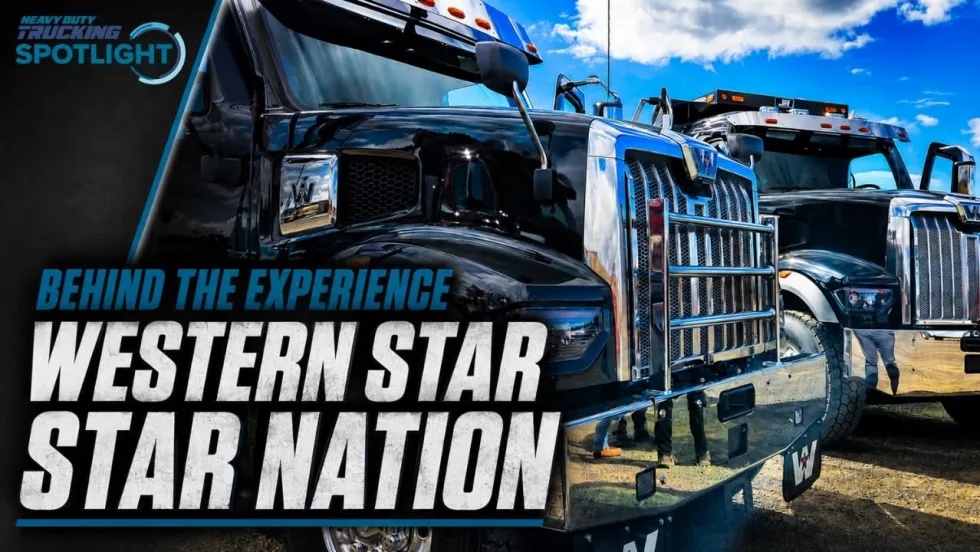
Drivers Put Western Star Trucks to the Test at Star Nation Experience
Watch to get an inside look at the Western Star trucks, technology, and community behind the Star Nation Experience 2026!
Read More →