




Canada Rolls Out New Road Safety Strategy
Canada's Ministers Responsible for Transportation and Highway Safety have approved a new five-year Road Safety Strategy under which Canada will continue to strive to have the safest roads in the world
Canada's Ministers Responsible for Transportation and Highway Safety have approved a new five-year Road Safety Strategy under which Canada will continue to strive to have the safest roads in the world.
The strategy will be used by individual jurisdictions to develop federal/provincial/territorial action plans to address key highway safety concerns and priorities for their respective and unique situations.
Road Safety Strategy 2015 will carry on the progress that has been achieved in reducing fatalities and serious injuries on Canada's roads since 1996 when Canada's first road safety plan was introduced. The provisional fatality total for 2009 is 8.7 percent lower than the number of road users killed in traffic crashes during 2008 and represents a 25.1 percent reduction over the 1996-2001 baseline figure. This is the lowest death toll on record in Canada in more than 60 years.
The new Road Safety Strategy is the result of a broad collaborative effort between all levels of government, public and private road safety stakeholders and the enforcement community. It provides each province and territory with a wide variety of solutions to address key road safety risks -- initiatives that are focused on road users, the vehicles they use and the roadway infrastructure on which they operate. The Canadian Council of Motor Transport Administrators will lead the implementation of the strategy and support stakeholders in the process.
"This strategy represents Canada's desire to be a leader in road safety," said Chuck Strahl, the Federal Minister of Transport and Co-Chair of the Council of Ministers Responsible for Transportation and Highway Safety. "It highlights our ambition to have the best possible road safety outcomes for Canada."
"The number of road fatalities and serious injuries is declining nationwide," said Luke Ouellette, Minister of Transportation of Alberta and Co-Chair of the Council of Ministers Responsible for Transportation and Highway Safety. "These results are encouraging and we look forward to continued improvement over the next five years."
The unveiling of Road Safety Strategy 2015 coincides with the National Year of Road Safety in 2011, an ambitious undertaking which aims to raise public awareness and promote road safety activities across Canada. The Canadian Global Road Safety Committee, whose membership is made up of injury prevention and road safety professionals, is leading this initiative.
It is expected that Road Safety Strategy 2015 will continue to inspire all Canadians to work together toward the common objective of making Canada's roads the safest in the world. Road Safety Strategy 2015 will be officially launched at CCMTA's 2011 Annual Meeting, to be held May 15-19, 2011, in Victoria, B.C.
More info: www.ccmta.ca.
More Drivers
Platform Science Adds Dispatch and Safety Tools
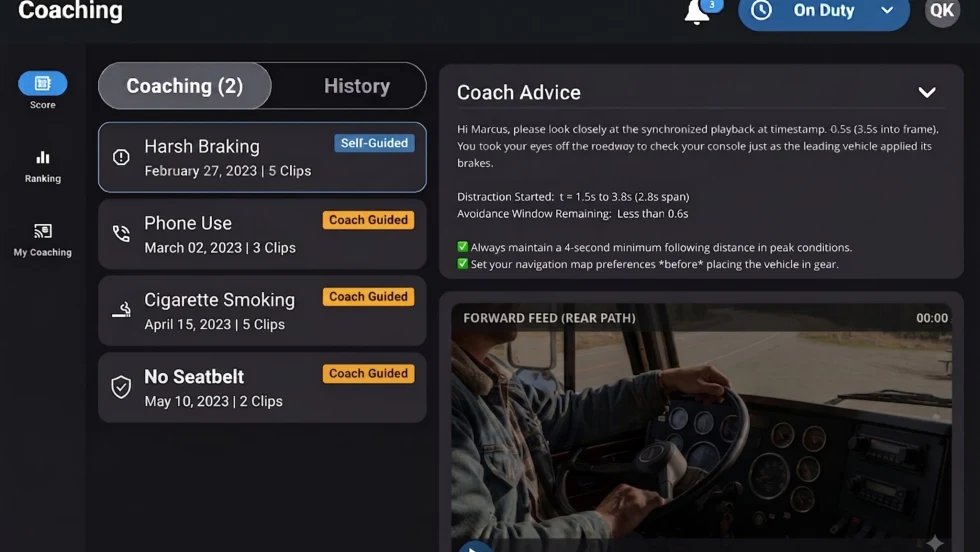
Four additions to PS Fleet help fleets monitor loads, manage driver coaching, share truck locations and adjust video system settings.
Read More →
When Language Stops the Truck: The Return of ELP Out-of-Service Orders
English language proficiency rules for commercial drivers aren’t new, but renewed out-of-service enforcement has raised the stakes. Here’s what carriers need to know before a driver reaches a roadside inspection.
Read More →
Samsara Launches Custom AI Agent Builder
Agent Studio lets fleets create AI tools for hours-of-service monitoring, reporting and driver support, including agents that communicate by phone.
Read More →
Trucker Path Expands Reserved Parking Network
Trucker Path has added close to 6,000 more truck parking spaces to its Trucker Path Reserved Parking Network with the addition of Safe Truck Parking.
Read More →
EEOC Sues Texas Trucking Company Over Driver Age Limits
The agency says Trancasa USA rejected applicants over 65 and applied tougher driving-record standards to those over 60.
Read More →
Nussbaum, Roehl Announce Second Driver Pay Increase This Year
This year has seen a swath of major truck driver pay increases as freight capacity has tightened.
Read More →
From One Generation to the Next: How Mentorship Builds Safer Truck Drivers
After three decades in trucking, Harold Perry shares what he's learned about driver safety, mentorship, and helping the next generation build confidence behind the wheel.
Read More →
Truck Drivers Need More Than Another Alert
Fleets have more visibility into truck health, safety events, and driver activity than ever. The next challenge is turning all that information into useful guidance for the person who has to decide what to do next.
Read More →
FMCSA Removes 110 Truck Driver Training Schools from Certified ELDT List
Federal regulators also are targeting more than 160 additional training providers and launching a nationwide audit of third-party CDL skills testers as part of a broader crackdown on trucking fraud.
Read More →
Hours of Service Pilot Programs: FMCSA Readies for 2027 Rollout
Two pilot programs could eventually reshape hours-of-service rules, giving truck drivers options to pause their 14-hour clock or use longer split sleeper rest periods.
Read More →