




Canada Aligns GHG Emissions Regs with U.S.
Canadian Environment Minister Peter Kent announced Canada's alignment with the U.S. regulations for heavy-duty vehicle and engine greenhouse gas emissions for 2014 and later
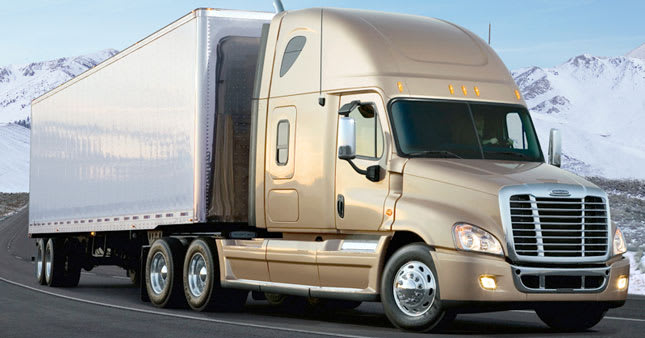
Daimler Trucks North America already has announced that its complete vehicle lineup is certified to the U.S. Greenhouse Gas Standard 2014, led by the Freightliner Cascadia
Canadian Environment Minister Peter Kent announced Canada's alignment with the U.S. regulations for heavy-duty vehicle and engine greenhouse gas emissions for 2014 and later.
Canada's government first announced plans to develop GHG emissions/fuel economy standards for heavy trucks back in May 2010, the same day President Obama did. Canada's draft regulations were expected to be released that fall -- as the U.S. ones were -- but have been delayed.
Member companies of the Canadian Vehicle Manufacturers' Association, Chrysler, Ford, General Motors and Navistar, support the new regulations, and vehicle manufacturers are pleased that this will result in one national heavy-duty vehicle and engine GHG standard for Canada and the
Under the proposed regulations, heavy truck, tractor and engine OEMs will be encouraged to meet average GHG emission targets as a percentage of their total fleet sales over the 2014-18 period. Compliance measures in the U.S. will include a system of bankable and tradable credits and possibly penalties. The regulations will not deal with existing tractors. Nor will they cover existing or new trailers, although the U.S. Environmental Protection Agency has indicated it could regulate GHG emissions caused by trailer drag in 2018.
U.S. Daimler Trucks North America recently announced its vehicle lineup is already GHG14 compliant.
"Today's announcement means that, by the year 2020, greenhouse gas emissions from Canada's heavy-duty vehicles will be reduced by 3 million tonnes per year. This is equivalent to removing 650,000 personal vehicles from the road," said Kent in a news release.
The proposed regulations are subject to a 60-day public consultation period.
It is expected that manufacturers will meet the targets mainly through cab design (aerodynamics), engine modifications and low-rolling-resistance tires. By model year 2018, the goal is that GHG emissions from new heavy trucks will be 20% less than 2010 models.
The Canadian Trucking Association has been encouraging the Canadian government to accompany the regulation with a labelling system identifying "GHG-compliant tractors" and accelerated capital cost allowance to speed up the penetration of those trucks into the marketplace.
"The regulation is flexible in that it does not prescribe what has to be done to reach the GHG reduction targets, as was the case with the smog emissions mandate," says Canadian Trucking Alliance President David Bradley. "That is not a bad thing, since the trucking industry is not homogenous in terms of the type of equipment used to transport various commodities, the terrain, etc. -- but it does not provide the truck buyer with an Energy Star type labeling system identifying the most fuel-efficient product."
For more info:
Canadian Vehicle Manufacturers' Association
Canadian Environment Minister Peter Kent
Canadian Trucking Alliance
To learn more about the U.S. GHG standards and how manufacturers might meet them, read
"A Peek at How Engine Makers Might Hit New Fuel Efficiency and Greenhouse Gas Reduction Targets" from the January 2012 issue of HDT.
More Drivers

EEOC Sues Texas Trucking Company Over Driver Age Limits
The agency says Trancasa USA rejected applicants over 65 and applied tougher driving-record standards to those over 60.
Read More →
Nussbaum, Roehl Announce Second Driver Pay Increase This Year
This year has seen a swath of major truck driver pay increases as freight capacity has tightened.
Read More →
From One Generation to the Next: How Mentorship Builds Safer Truck Drivers
After three decades in trucking, Harold Perry shares what he's learned about driver safety, mentorship, and helping the next generation build confidence behind the wheel.
Read More →
Truck Drivers Need More Than Another Alert
Fleets have more visibility into truck health, safety events, and driver activity than ever. The next challenge is turning all that information into useful guidance for the person who has to decide what to do next.
Read More →
FMCSA Removes 110 Truck Driver Training Schools from Certified ELDT List
Federal regulators also are targeting more than 160 additional training providers and launching a nationwide audit of third-party CDL skills testers as part of a broader crackdown on trucking fraud.
Read More →
Hours of Service Pilot Programs: FMCSA Readies for 2027 Rollout
Two pilot programs could eventually reshape hours-of-service rules, giving truck drivers options to pause their 14-hour clock or use longer split sleeper rest periods.
Read More →
Medical Cards, English Proficiency Reshape Roadcheck Violations
Medical-card violations jumped to the top of the driver out-of-service list during CVSA’s 2026 International Roadcheck, while English-language proficiency violations appeared among the leading violations for the first time.
Read More →
Driver Trust Can Make or Break the Success of Fleet Safety Technology
New Teletrac Navman research suggests that onboarding, transparency about driver data, and positive feedback can play a significant role in how commercial drivers respond to safety and coaching technology.
Read More →
EEOC Sues KLLM Over Alleged Sex Discrimination in Driver Training
KLLM is facing a federal sex-discrimination lawsuit over policies the EEOC alleges put female truck driver trainees at a disadvantage.
Read More →
FMCSA Moves to Codify English Language Requirements for Commercial Drivers
By changing regulations on English-language proficiency requirements for commercial drivers, rather than relying on a guidance memo, the FMCSA said future administrations won't be able to walk back the Trump administration's stricter enforcement with just a memo.
Read More →