




California Truck Stop Opens Public Charging for HD Electric Trucks
San Diego Gas & Electric unveiled four public DC fast chargers at a busy truck stop just north of the Otay Mesa Port of Entry in California.

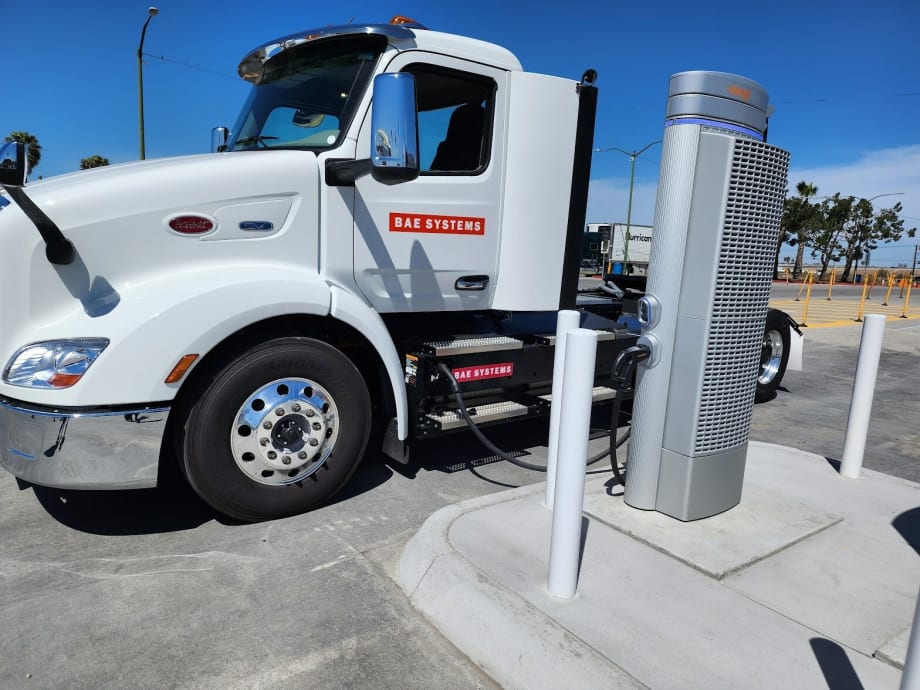
The DC fast chargers are designed to provide high power charging for heavy-duty trucks, delivery vans, buses and other large vehicles.
Photo: San Diego Gas & Electric
San Diego Gas & Electric unveiled four public, direct current (DC) fast chargers at a busy truck stop just north of the Otay Mesa Port of Entry in California.
While these chargers are designed to provide high power charging for heavy-duty trucks, delivery vans, buses and other large vehicles, they can also be used to charge passenger cars.
Installed at Truck Net, near the U.S./Mexico border, the 250-kilowatt (kW) chargers can charge a typical medium-duty box truck from 20%-80% in about an hour and fully charge from empty to 100% in about two hours.
The Otay Mesa Port of Entry is the busiest commercial border crossing in California, processing nearly one million commercial trucks and five million privately owned vehicles each year. Idling vehicles waiting to cross the border is a key contributor to air pollution in the San Diego region.
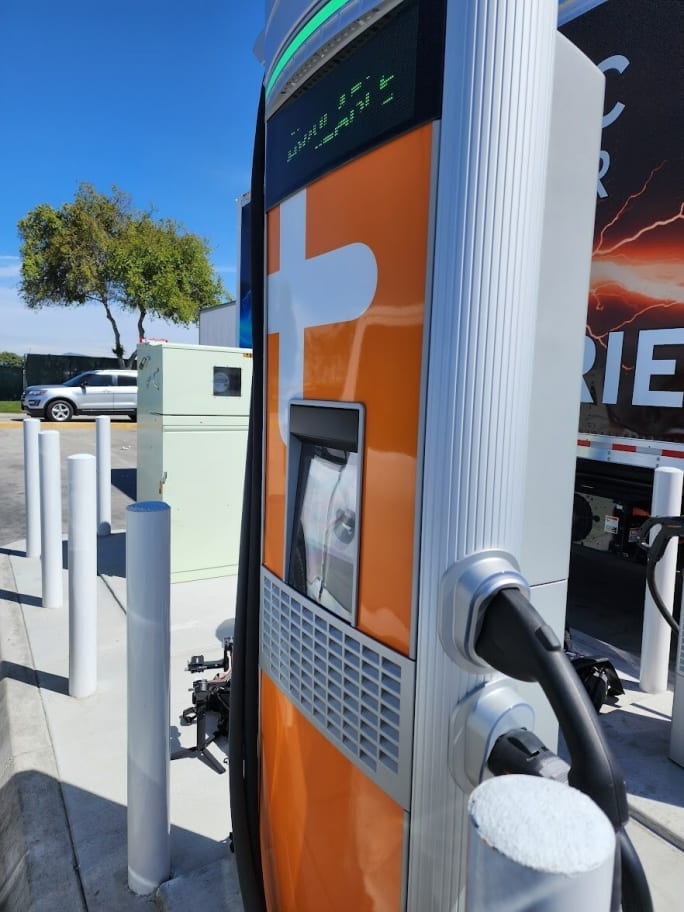
The chargers are funded by a $200,000 grant through the CEC's Clean Transportation Program.
Photo: San Diego Gas & Electric
"Reducing air pollution and tailpipe emissions are top priorities for our region and California especially in equity priority communities, and SDG&E is committed to building the infrastructure needed to enable businesses and residents to adopt electric vehicles and other clean technologies," said SDG&E CEO Caroline Winn in a press release. "We all share the goal of building a cleaner, more sustainable and healthier future."
Winn was joined by several dignitaries at the event, including California Energy Commissioner (CEC) Patty Monahan; San Diego County Board of Supervisors Chair Nora Vargas, who serves on the California Air Resources Board and the County Air Pollution Control District board, in addition to being chair of the San Diego Association of Governments (SANDAG) board.
"Air pollution doesn't recognize national boundaries, and to accommodate the transition to zero-emission trucks on both sides of the border, it's critically important that we rapidly scale up the charging network," Monahan said. "The California Energy Commission is helping fund this project and others across the state to build a better and more equitable charging infrastructure system for both cars and trucks."
The chargers are funded by a $200,000 grant through the CEC's Clean Transportation Program. Now in its 14th year, the program has provided more than $1 billion to alternative fuel and vehicle technology projects. Funding for the program is scheduled to phase out at the end of the year.
SDG&E built the underlying infrastructure tying the chargers to the grid, as part of its Power Your Drive for Fleets program. The program connects fleet operators with resources and financial incentives to easily and cost-effectively design and install charging infrastructure for medium and heavy-duty fleets.
The project helps support Gov. Gavin Newsom's executive order requiring sales of all new passenger vehicles to be zero-emission by 2035 and medium and heavy-duty vehicles to be zero-emission by 2045.
The state also has more than 80,000 public and shared private EV chargers. The vast majority, about 90%, are Level 2 chargers, which provide 14-35 miles of range per hour of charging. The remaining 10% are DC fast chargers, SDG&E officials said in a press release.
More Fuel Smarts

How Volvo Updated Its D13 for EPA 2027 [Watch]
Volvo’s updated D13 promises lower emissions without sacrificing performance or fuel economy. Take a closer look at what changed inside the engine in this HDT Spotlight video.
Read More →
Diesel Price Spike Shortens Payback for Natural Gas Trucks, Report Says
Energy Vision estimates fleets could recover the higher purchase price of an RNG-fueled Class 8 tractor in 1.3 to 2.8 years under current fuel-price scenarios.
Read More →
Calstart Becomes Catalyst Mobility, Reflecting Broader Focus
Calstart is now Catalyst Mobility, reflecting the nonprofit’s growing national role in clean transportation, including zero-emission trucks, infrastructure and incentive programs.
Read More →

Record Diesel Prices Squeeze Trucking Fleets
Average U.S. diesel prices have climbed to nearly $6 a gallon, surpassing the 2022 record as tight refinery capacity and Middle East disruptions keep fuel costs elevated.
Read More →
How Fuel Delivery Shapes Engine Performance
Fuel delivery depends on more than what happens at the injector. For fleet, maintenance and technical professionals, looking at the full path from pump to injector can provide useful context for understanding engine performance.
Read More →
East Coast Port Launches $45M Electric Truck Push
The Port Authority of New York and New Jersey announced millions in incentives for zero-emission drayage trucks, yard tractors, and new charging hubs near the port.
Read More →
California Bill Could Shed Light on Electric Truck Prices
Why do battery-electric Class 8 trucks remain so expensive? A California bill headed to Gov. Gavin Newsom would give fleets and state agencies more visibility into what manufacturers charge.
Read More →
Detroit Opens Orders for EPA 2027 Engines
Detroit isn’t starting from scratch to meet EPA 2027 diesel emissions standards. Its Gen 6 DD13 and DD15 engines keep much of today’s platform while updating the fuel and aftertreatment systems.
Read More →
Zero-Emission Truck Corridor Planned for West Coast
California, Oregon, Washington, British Columbia and Baja California are coordinating plans for truck charging and hydrogen fueling from Canada to Mexico.
Read More →
A Closer Look at Kenworth’s Electric T880E Vocational Truck [Video]
Learn more about Kenworth's T880E battery-electric vocational truck at the Paccar Technical Center, including its range, applications, upfitting considerations, and PTO options, in this HDT Spotlight video.
Read More →