




California Abandons Advanced Clean Fleets Rule
California has withdrawn its request for EPA approval of its controversial regulations requiring trucking fleets to purchase zero-emissions electric and fuel cell trucks.

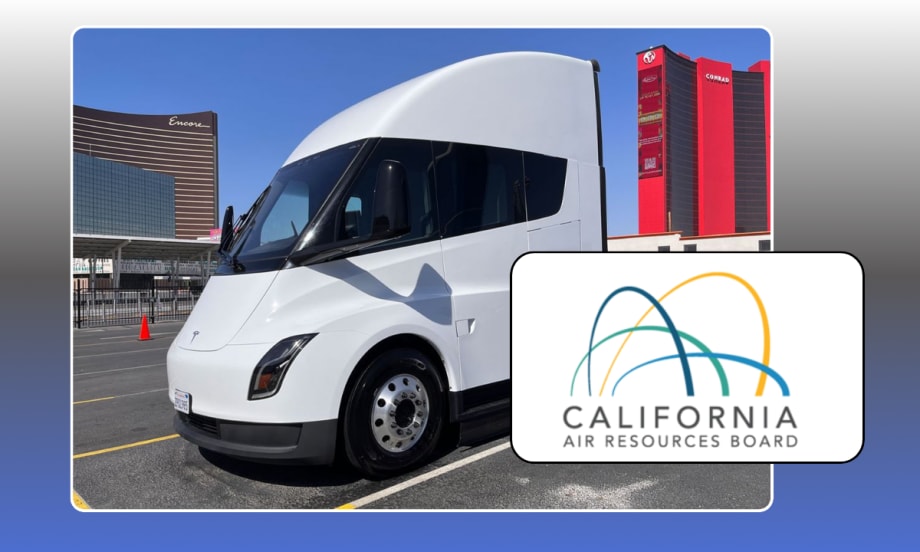
With the Advanced Clean Fleets rule abandoned, at least for now, what will that mean for zero-emission truck makers?
Image: HDT Graphic/Jim Park photo
The California Air Resources Board has withdrawn its request for the waiver it would need from the U.S. Environmental Protection Agency for its controversial Advanced Clean Fleets regulation, saying it’s unlikely to get approval from the incoming Trump administration.
“The withdrawal is an important step given the uncertainty presented by the incoming administration that previously attacked California’s programs to protect public health and the climate and has said will continue to oppose those programs," said CARB Chair Liane Randolph in a statement.
For the first time, ACF required fleets to buy zero-emissions trucks. In the past, emissions regulations targeted the manufacturers.
The ACF would have mandated that truck buyers increasingly purchase zero-emissions trucks, on a phased-in schedule based on fleet size and annual revenues.
It would have ended the sale of new fossil-fuel trucks in 2036 and required large trucking companies to convert their medium- and heavy-duty fleets to zero-emission battery-electric or hydrogen fuel cell models by 2042.
As of right now, however, there is no change to the State and Local Government Fleets component of the rules, as Government Fleet reports.
The Western States Trucking Association said CARB blaming the Trump administration is "a diversionary tactic."
"US EPA received the original ACF waiver application in November of 2023 and had ample time to grant the waiver," the association said in its Jan. 21 email newsletter.
"Clearly, U.S. EPA found 'problems' with the request (which we knew about last year) and likely to save CARB the embarrassment of rejecting the waiver, CARB instead pulled the request and chose to blame Trump."
Advanced Clean Fleets Rule Has Faced a Legal Battle
For drayage operators, the ACF mandated that even one-truck owner-operators comply, noted the Western States Trucking Association, one of the trucking groups that had fought the regulation in court — including banning all new non zero-emissions vehicles from serving California ports and railyards if they had not been previously registered to do so with CARB.
WSTA and other industry groups had sued California over the rules, which had been pending at EPA for more than a year. California must have EPA permission to enforce stricter-than-federal emissions rules under the Clean Air Act through a waiver system.
CARB had previously delayed enforcement of the ACF regulations that were scheduled to kick in last year on drayage and "high-priority fleets" until the EPA could grant a waiver.
Jane Nishida Acting Administrator of the EPA, said, “We have placed a copy of your letter, as well as this response, into the Air Docket at regulations.gov regarding CARB’s request. As a result, the EPA is taking no further action on the HD ACF waiver request (89 FR 57151 (July 12, 2024)) and considers this matter closed.”
In regulatory documents as part of the ACF rulemaking CARB stated they needed the waiver from U.S. EPA to enforce the regulation against drayage truck operators, federal and privately owned fleets.
Advanced Clean Trucks and Other Factors Still Will Mean Push for ZEVs
This move doesn't mean California is backing off on its efforts to push trucking toward zero-emissions vehicles.
The separate California Advanced Clean Trucks (ACT) regulation, which sets limits on truck manufacturers can sell in the state, does have a waiver from the U.S. EPA, granted in 2023.
Dealers operating in California and in states that have adopted California's ACT rules have reported that they have a delicate balancing act of being able to get customers the trucks they need because there are a certain number of zero-emission trucks that must be sold.
In fact, Daimler Truck North America last month announced it would stop selling diesel trucks in Oregon, a decision it reversed earlier this week.
In addition, CARB told HDT in a statement that it is "assessing its option to continue its progress as part of its commitment to move forward the important work of improving the state’s air quality and reducing harmful pollutants that contribute to poor health outcomes and worsen climate change.
"The waivers and authorizations recently approved, along with other existing programs, will advance essential emissions reductions in key sectors as we assess next steps."
However, the American Truck Dealers association, in a statement praising CARB's withdrawal of the waiver request, brought up the possibility that the Trump administration could revoke waivers already granted.
"ATD has engaged with the Trump transition team to express support for its intention to revoke the remaining California ACT and Omnibus NOx CARB waivers, and will continue to press for a sensible and achievable emissions regulations that reflect the market realities of the industry.”
As Matt Schrap, CEO of the Harbor Trucking Association, said in a LinkedIn post, "This isn’t the end, but the beginning of a new pathway."
Keep in mind that California ports had been restricting older, higher-emissions trucks well before the state's Advanced Clean Trucks rule, with the Port of Long Beach and the Port of Los Angeles Clean Trucks Programthat was fully implemented in 2012.
And let's not forget that CARB and truck and engine makers entered into a Clean Truck Partnership in 2023 committing to meet California’s standards in exchange for some flexibility.
Truck Dealers: 'Pleased and Relieved' by Advanced Clean Fleets News
The American Truck Dealers association said it and the country's heavy-duty truck dealers "are pleased and relieved that California has abandoned its completely unrealistic and unworkable Advanced Clean Fleets regulation, which would have forced trucking fleets to adopt zero-emission trucks at levels far above anything that is practical or sensible in today’s market and given today’s significant technological limitations," said ATD President Jacqueline Gelb in a statement.
“California’s mad dash to force the commercial vehicle industry into technologies that are nowhere near ready for full-scale adoption has already devastated the market, with Class 8 truck registrations in the state down 50% year-over-year due in combination to CARB’s Advanced Clean Truck zero-emissions sales mandate, and Omnibus Low NOx regulations (ACT II rule).
“California’s overly aggressive regulatory regime has prevented dealers from being able to stock or sell nearly enough newer, cleaner diesel trucks to our willing customers."
TCA: 'Work is Just Beginning'
The Truckload Carriers Association said the withdrawal is "a move that can only be viewed as a major victory for our industry," said David Heller, TCA Senior VP of safety and government affairs, in a statement.
"While this victory is one that must be celebrated, our work is just beginning," he said.
"Our industry has long been advocates for equipment that is environmentally friendly to create a better tomorrow, and our history has demonstrated exactly that.
"Now is the time to begin engaging with our representatives to lay out a strategy with achievable standards with real world possibilities that places our industry in the driver's seat."
WSTA: 'Not the Time' to Push Zero-Emissions Truck Mandate
The Western States Trucking Association was the first trucking association to file litigation in state court challenging the ACF. Other groups, such as the California Trucking Association, also filed lawsuits challenging the rules.
“We are pleased at this development at a time California is facing crisis that clearly illustrates the importance of heavy-duty vehicles — especially ultra-clean diesel-powered trucks in helping protect our communities and ultimately to begin the massive recovery efforts,” said the association in a statement.
“This was not the time to try and push through a rule designed to transform the industry to meet the desires of a small segment of the population, especially considering many of the burn areas have been without electricity for a least a week and do not have charging facilities to handle all the trucks.”
Updated 2:20 pm EST to add statement from CARB. Updated 5:10 p.m. EST to add statements from TCA, ATD.
Updated 9:50 am EST Jan. 21 to add statement from WSTA.
Updated 2/21/2025 to add clarification that state and government fleet regulations are still in place.
More Fuel Smarts

How Volvo Updated Its D13 for EPA 2027 [Watch]
Volvo’s updated D13 promises lower emissions without sacrificing performance or fuel economy. Take a closer look at what changed inside the engine in this HDT Spotlight video.
Read More →
Diesel Price Spike Shortens Payback for Natural Gas Trucks, Report Says
Energy Vision estimates fleets could recover the higher purchase price of an RNG-fueled Class 8 tractor in 1.3 to 2.8 years under current fuel-price scenarios.
Read More →
Calstart Becomes Catalyst Mobility, Reflecting Broader Focus
Calstart is now Catalyst Mobility, reflecting the nonprofit’s growing national role in clean transportation, including zero-emission trucks, infrastructure and incentive programs.
Read More →

Record Diesel Prices Squeeze Trucking Fleets
Average U.S. diesel prices have climbed to nearly $6 a gallon, surpassing the 2022 record as tight refinery capacity and Middle East disruptions keep fuel costs elevated.
Read More →
How Fuel Delivery Shapes Engine Performance
Fuel delivery depends on more than what happens at the injector. For fleet, maintenance and technical professionals, looking at the full path from pump to injector can provide useful context for understanding engine performance.
Read More →
East Coast Port Launches $45M Electric Truck Push
The Port Authority of New York and New Jersey announced millions in incentives for zero-emission drayage trucks, yard tractors, and new charging hubs near the port.
Read More →
California Bill Could Shed Light on Electric Truck Prices
Why do battery-electric Class 8 trucks remain so expensive? A California bill headed to Gov. Gavin Newsom would give fleets and state agencies more visibility into what manufacturers charge.
Read More →
Detroit Opens Orders for EPA 2027 Engines
Detroit isn’t starting from scratch to meet EPA 2027 diesel emissions standards. Its Gen 6 DD13 and DD15 engines keep much of today’s platform while updating the fuel and aftertreatment systems.
Read More →
Zero-Emission Truck Corridor Planned for West Coast
California, Oregon, Washington, British Columbia and Baja California are coordinating plans for truck charging and hydrogen fueling from Canada to Mexico.
Read More →
A Closer Look at Kenworth’s Electric T880E Vocational Truck [Video]
Learn more about Kenworth's T880E battery-electric vocational truck at the Paccar Technical Center, including its range, applications, upfitting considerations, and PTO options, in this HDT Spotlight video.
Read More →