





Related: DOT Preempts California Meal and Rest Break Rules, Citing Impact on Interstate Commerce
California Meal and Rest Break Suit Dismissed on Basis of FMCSA Preemption Stance
A federal court has determined it lacks jurisdiction to rule on a class-action suit brought against U.S. Xpress that alleges the motor carrier violated California's rules governing meal and rest breaks for commercial vehicle drivers.
May 7, 2019

Court ruling was not on the merits of the lawsuit, but on the basis of whether the court had jurisdiction.
Photo: FMCSA
2 min to read
A federal district court in California has determined that it lacks jurisdiction to rule on a class-action suit brought against U.S. Xpress that alleges the motor carrier violated State of California rules governing meal and rest breaks for commercial vehicle drivers.
Since FMCSA declared on December 21, 2018, that federal law pertaining to interstate commerce preempts state regulations, such as California’s distinct meal and rest break rules, the court determined it did not have the authority to rule on the plaintiffs’ claims.
The U.S. Central District of California (9th Cir.) on May 3 entered an order dismissing the meal and rest break claims of the plaintiff and absent class, presented in Ayala v. U.S. Xpress Enterprises, Inc. et al., based on the decision late last year by the Federal Motor Carrier Administration to preempt the state’s meal and rest break rules as they apply to drivers operating in interstate commerce, according to the defendant’s law firm, Scopelitis, Garvin, Light, Hanson & Feary, PC.
FMCSA's preemption action, approved by Secretary of Transportation Elaine Chao, came “in response to widespread concern from drivers, concerned citizens, and industry stakeholders. In 1996, the agency noted, Congress preempted states from enacting or enforcing policies “related to a price, route, or service of any motor carrier.”
At the time, the Department of Transportation stated that it had determined that California’s law is “incompatible with federal regulations and causes a disruption in interstate commerce. In addition, the confusing and conflicting requirements are overly burdensome for drivers and reduce productivity, increasing costs for consumers. Additionally, safety issues have likely resulted from the lack of adequate parking solutions for trucks in the state.”
“There have been four different appeals filed with the 9th Circuit challenging the FMCSA’s decision [on preemption,” the law firm noted in a news release. “The district court explicitly conditioned the dismissal on the plaintiff’s right to seek reconsideration should the 9th Circuit reverse or possibly stay the FMCSA’s decision on the appeal.”
“Despite the plaintiff’s challenges to the FMCSA’s decision, the district court reasoned that it lacked authority to make any determination regarding the merits of the FMCSA’s decision,” Scopelitis stated. “It could only enforce it.”
The law firm contended that this is “an important precedent for transportation companies facing meal and rest break claims in California. It provides a means to stop the litigation, including discovery on those claims, while the appeal is pending.
“It is important, however, to maintain California-compliant meal and rest break policies and practices for drivers working in California until the appeal is concluded,” Scopelitis cautioned.
More Drivers

Platform Science Adds Dispatch and Safety Tools
Four additions to PS Fleet help fleets monitor loads, manage driver coaching, share truck locations and adjust video system settings.
Read More →
When Language Stops the Truck: The Return of ELP Out-of-Service Orders
English language proficiency rules for commercial drivers aren’t new, but renewed out-of-service enforcement has raised the stakes. Here’s what carriers need to know before a driver reaches a roadside inspection.
Read More →
Samsara Launches Custom AI Agent Builder
Agent Studio lets fleets create AI tools for hours-of-service monitoring, reporting and driver support, including agents that communicate by phone.
Read More →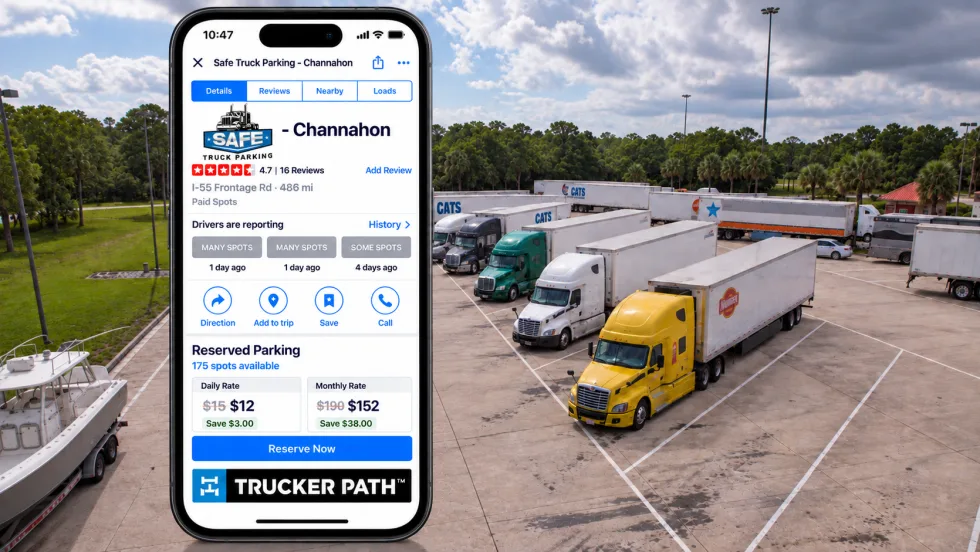
Trucker Path Expands Reserved Parking Network
Trucker Path has added close to 6,000 more truck parking spaces to its Trucker Path Reserved Parking Network with the addition of Safe Truck Parking.
Read More →
EEOC Sues Texas Trucking Company Over Driver Age Limits
The agency says Trancasa USA rejected applicants over 65 and applied tougher driving-record standards to those over 60.
Read More →
Nussbaum, Roehl Announce Second Driver Pay Increase This Year
This year has seen a swath of major truck driver pay increases as freight capacity has tightened.
Read More →
From One Generation to the Next: How Mentorship Builds Safer Truck Drivers
After three decades in trucking, Harold Perry shares what he's learned about driver safety, mentorship, and helping the next generation build confidence behind the wheel.
Read More →
Truck Drivers Need More Than Another Alert
Fleets have more visibility into truck health, safety events, and driver activity than ever. The next challenge is turning all that information into useful guidance for the person who has to decide what to do next.
Read More →
FMCSA Removes 110 Truck Driver Training Schools from Certified ELDT List
Federal regulators also are targeting more than 160 additional training providers and launching a nationwide audit of third-party CDL skills testers as part of a broader crackdown on trucking fraud.
Read More →
Hours of Service Pilot Programs: FMCSA Readies for 2027 Rollout
Two pilot programs could eventually reshape hours-of-service rules, giving truck drivers options to pause their 14-hour clock or use longer split sleeper rest periods.
Read More →