




Byrd: Industry Must Pull Together Like a Family
TMC, NASHVILLE – Trucking. It's complex, highly technological, and essential to the nation's economy. That was the theme of Phil Byrd, chairman of American Trucking Associations and president and CEO of Bulldog Hiway Express, speaking Tuesday at ATA’s Technology & Maintenance Council’s 2014 Annual Meeting.

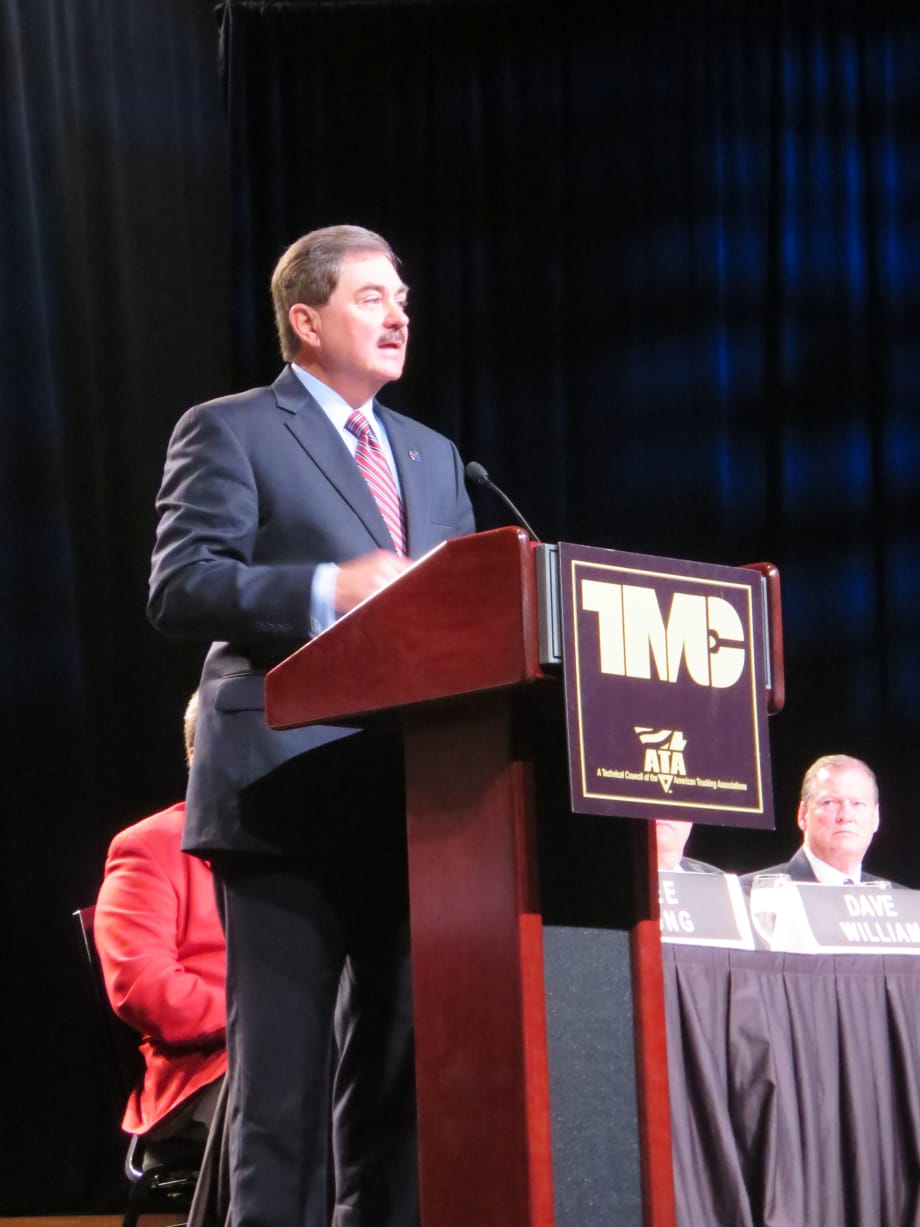
ATA Chairman Phil Byrd speaks at TMC Tuesday.

TMC, NASHVILLE – Trucking. It's complex, highly technological, and essential to the nation's economy. That was the theme of Phil Byrd, chairman of American Trucking Associations and president and CEO of Bulldog Hiway Express, speaking Tuesday at ATA’s Technology & Maintenance Council’s 2014 Annual Meeting.
Byrd said while some people may think trucking is as simple as getting a truck and some freight and taking it from one place to another, "transportation and logistics and trucking is anything but simple. It's a complicated and complex industry. I would submit to you that our businesses from a technological standpoint far exceeds those of the customers we serve."
First, he said, there is the complex process of spec'ing a truck to perform precisely in the environment in which it will be used. It has to be spec'd correctly, built correctly and maintained correctly.
Then you have to have the right driver to put behind the wheel of that truck – another complicated part of the business. "The driver has to be well trained, he has to be well licensed, and qualified in every respect as set forth by the Department of Transportation," Byrd said. "We can leave no stone unturned."
Once you have the truck and the driver, he said, you have to have cargo to move. "That's what we do every day when we wake up, we deliver America's economy."
"Then we have to hit the highways, our interstates, our toll roads, and that's not a simple task anymore," Byrd said. "That is a complex and complicated problem we all face. We're delivering America's freight with a piece of equipment that's technologically advanced with a driver who's well qualified... over a highway system that is crumbing beneath our trucks. We have to embrace a form of stabilizing the Highway Trust Fund that will allow America to rebuild its road systems."
Of course, all this is made more complex by government regulations.
And then, we have to communicate all this to lawmakers, to regulators and to the general public.
"By and large Americans don't understand what we do," Byrd said. "And whose fault is that? We have to effectively communicate the essentiality of our industry. Today in America, 68.5% of tonnage in this country moves on trucks. That's a big responsibility."
Despite what you may hear about railroads and short sea shipping taking a bigger share, he said, he most recent studies have shown that by 2024, as these other modes increase capacity, our industry will be called on to move 71% of everything manufactured or shipped in this great country of ours. And we have to communicate that. We have to tell our stories."
Byrd was referring to ATA's new image campaign, “Trucking Moves America Forward,” which will officially be launched later this month.
Citing figures from ATA Chief Economist Bob Costello, Byrd said last year the trucking industry moved more than 530 million truckload shipments. That compares to the rail industry, he said, which moved 29 million truckload equivalent shipments. In January alone, he said, the trucking industry moved more truckload shipments than the railroad industry will move all year.
Byrd said he recently was asked at a press conference why trucks couldn't operate only at night and on weekends.
"That's how uninformed most Americans are," he said. "I looked that individual in the eye and I said, 'Have you ever had a loved one in the hospital in ICU that needed specific medications, specific supplies? Have you ever seen a railroad track or a ship offloading freight at a hospital? No. But what you have seen is trucks delivering life saving medications.
"That's what we do. We save lives, we change lives, we move America's commerce."
He emphasized the importance of the industry working together on this and other issues.
To help make this happen, Byrd said, ATA has three initiatives:
A strategic planning committee that is looking at every process ATA has. "We have to be more effective, more nimble, communicate better, and move legislation in a shorter time frame," he said. "We need to be recognized in Washington as the horsepower of trucking."
A committee is looking at the funding problem, chaired by Dan England of C.R. England, with CEOs of major trucking and logistics companies, including FedEx and UPS, on that committee.
The committee working on trucking's image.
"On our company's website you'll find the word family. We are a business family and we care about each other and our business. We think it's important that people feel ownership, respect, that they're bringing value to the process. i think that's one thing that can be taken from our company and distributed through the industry. We may be competitors, but from an industry perspective we're family, we're interconnected, what affects one affects another.
"There's great strength in our unity. Yes, families argue, they don't always see things the same way. But at the end of the day we have to settle on what's best for the industry at large."
More Fleet Management
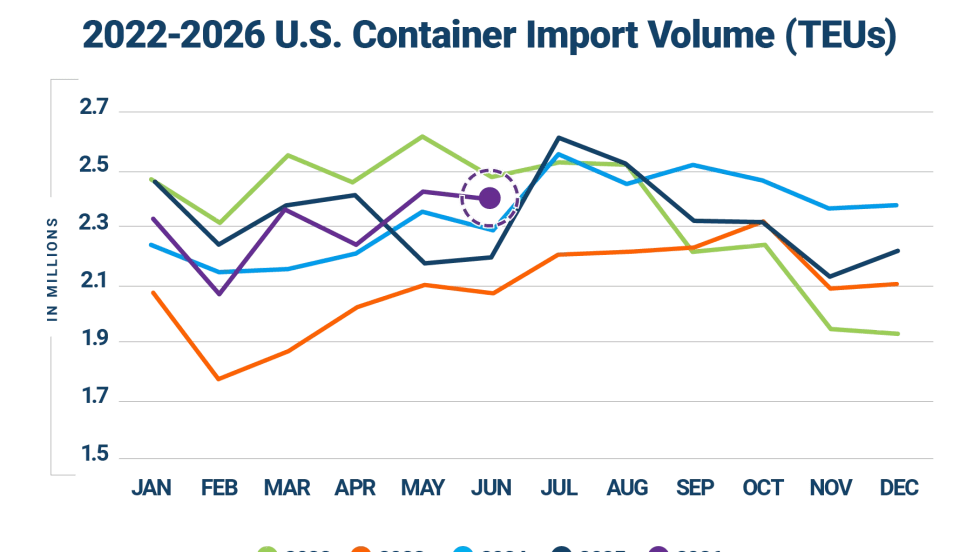
Import Cargo’s Early Peak Season is Winding Down
There was an early start to peak season this year at the nation's gateway ports, as retailers brought in merchandise ahead of tariff changes in late July and responded to other supply chain uncertainties,
Read More →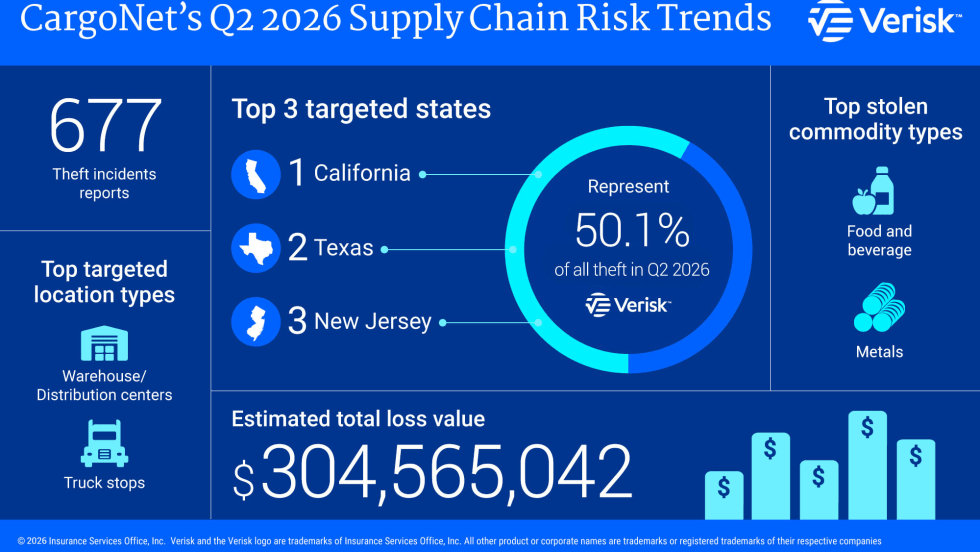
Fewer Cargo Thefts, Bigger Losses: Criminals Target Higher-Value Loads
CargoNet says organized theft rings are stealing fewer shipments but choosing more valuable freight, including metals and technology, resulting in record losses.
Read More →
How Innovative Trucking Leaders Turn Change Into an Advantage
As the pace of change accelerates in trucking, the fleets that adapt best have more than the latest technology. They have cultures that embrace improvement.
Read More →
Freight Broker Bonds Just Got Harder to Get. Here's What That Means for Your Fleet.
When it gets harder for a freight broker to prove they are financially sound, the ones who cannot clear that bar get pushed out of the market. And those are exactly the brokers who used to leave motor carriers holding the bag.
Read More →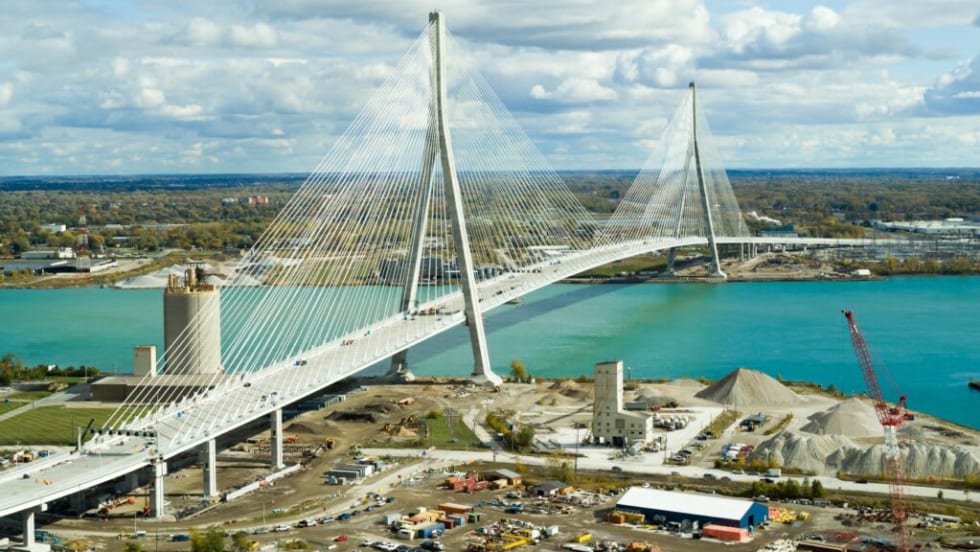
Long-Awaited Canadian Border Bridge to Open in Detroit
For trucking, the bridge opening should offer immediate improvements in efficiency and reliability, with new customs facilities, expanded inspection capacity, and direct freeway-to-freeway connections.
Read More →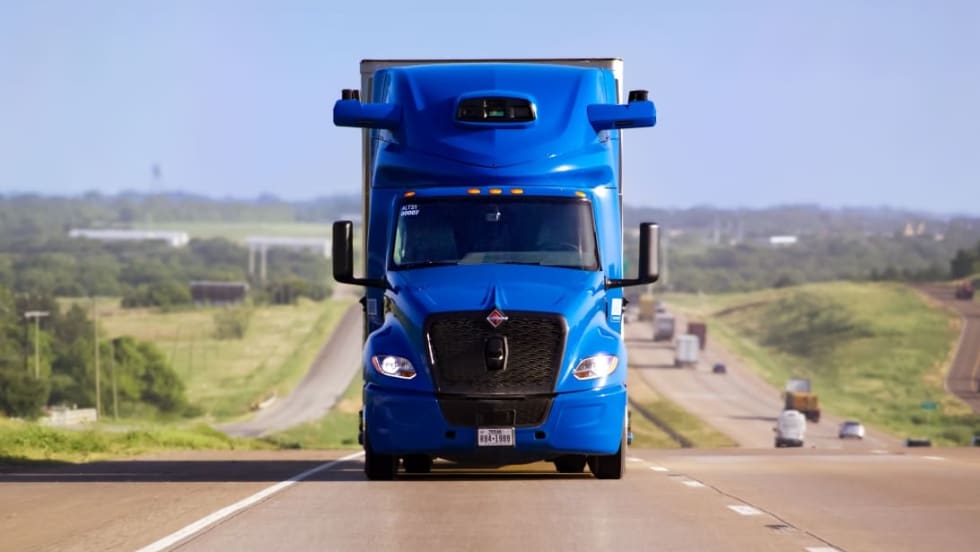
Aurora Rolls Out Next Generation of Driverless Trucks for Commercial Freight
Aurora's latest autonomous trucks it's rolling out with International feature lower-cost hardware designed for a million miles as the company expands commercial driverless freight operations across the U.S. Sun Belt.
Read More →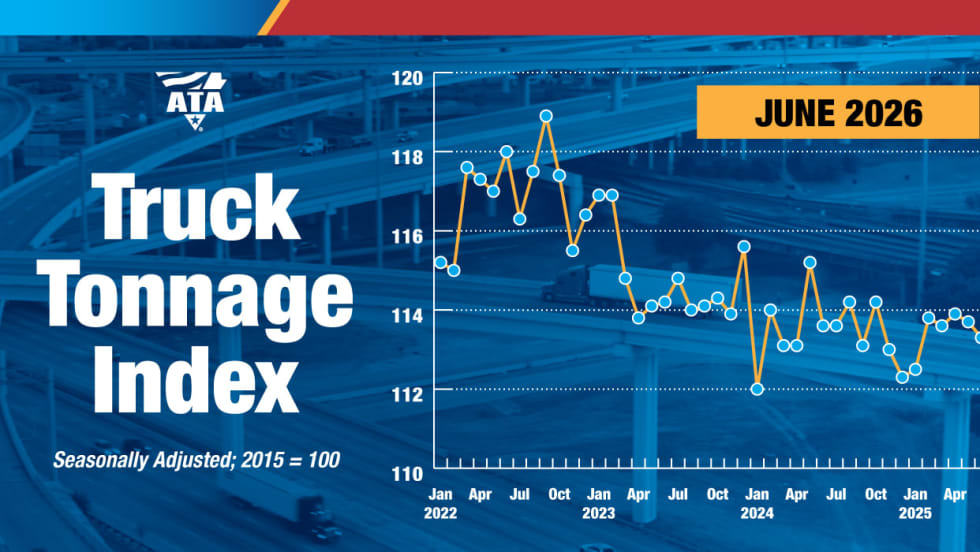
Freight Tonnage Down, Rates up, as Lower Capacity Powers Trucking Recovery
The recovery from the freight recession continues to be driven by reduction in capacity rather than by increased demand.
Read More →
Think Your Trucking Fleet Isn't Using Much AI? Think Again
Shadow AI — the use of unauthorized artificial intelligence tools at work — is becoming increasingly common, putting sensitive company data at risk. Learn how trucking fleets can protect sensitive data while embracing AI.
Read More →
ArcBest Consolidates Brands, Cuts Workforce
The company will bring three business units under the ArcBest brand, eliminate about 2% of positions, and expects the changes to generate $40 million in annual savings.
Read More →
Trucking Fleets Faced Record Operating Costs During Third Year of Freight Recession
ATRI's annual operational cost report shows carriers trimmed fleets, delayed equipment purchases, and ran older trucks as expenses continued to outpace freight rates.
Read More →