




Bush Signs Ergonomics Repeal
President Bush signed into law Tuesday afternoon a repeal of new workplace safety regulations that the trucking industry and other business groups said would be far too costly

President Bush signed into law Tuesday afternoon a repeal of new workplace safety regulations that the trucking industry and other business groups said would be far too costly.
Earlier this month, the measure to revoke wide-ranging ergonomics rules issued just days before President Clinton left office sailed through Congress, after a barrage of faxes and e-mails and lots of lobbying put forth by uncommonly unified business interests that criticized the rules' cost and scope. One company sent 15-pound frozen turkeys, which violated the new rules lifting limit. "It was our attempt to find some way to make them understand how absurd this regulation was for our industry," said the Food Marketing Institute's John Motley.
In signing the repeal of the rules, which were to take effect in October, Bush complained that all sorts of businesses would have faced a one-size-fits-all bureaucratic approach, the Associated Press reported. "The ergonomics rule would have cost both large and small employers billions of dollars and presented employers with overwhelming compliance challenges," Bush said.
U.S. business interests and the trucking industry applauded the decision, calling the ergonomics rules "ill-conceived, expensive and unscientific." American Trucking Associations President and CEO Walter B. McCormick Jr. praised the vote as a "victory for employers in this country," and a "victory for workers as well."
The rollback was a big loss to labor unions, however. They had worked for a decade in support of the regulations. According to reports, Teamsters union President James P. Hoffa said it was "clear that corporate profits matter more than working people" in the eyes of the U.S. Congress. "Congress has bought into the big business lie that this will hurt their profits. Companies that choose to invest in their workers and prevent work place injuries will see a healthier bottom line over time."
The ergonomics rules were designed by the Occupational Safety and Health Administration to protect workers from nagging neck, arm, back, and joint injuries, such as carpal tunnel syndrome and tendonitis, associated with repetitive motion, awkward postures and contact stress. These musculoskeletal injuries are estimated to cost $15 billion to $20 billion a year in workers' compensation claims. Businesses claimed implementation of the rules could cost $100 billion. The American Trucking Associations put trucking's share of those costs at $6.5 billion.
OSHA began to develop its mandatory rules 10 years ago, focusing on complaints raised by two labor unions regarding jobs in the meatpacking industry. However, industry began to develop voluntary worker training programs to counter union demands for government regulation of the workplace.
Recent years have brought significant ergonomic improvements to trucking, which was ranked the No. 1 most dangerous job by a Labor Department study done under the Clinton administration. The industry has taken the initiative to equip nearly all new Class 8 trucks with power steering, power brakes and air-ride seats. In addition, the truck cab has been redesigned in response to "anthropometric" studies that revealed ill-fitting equipment in all industries, especially trucking, leads to more chronic work place injuries and complaints. Today's cab accommodates all shapes and sizes of truck drivers. Additional training for dock workers, forklift certification, unitized shipping and dock improvements have all been implemented by companies concerned about workers' compensation claims.
The nullification of the rules prevents the Labor Department from simply revamping them. Labor Secretary Elaine Chao must come up with new rules.
More Drivers
Platform Science Adds Dispatch and Safety Tools
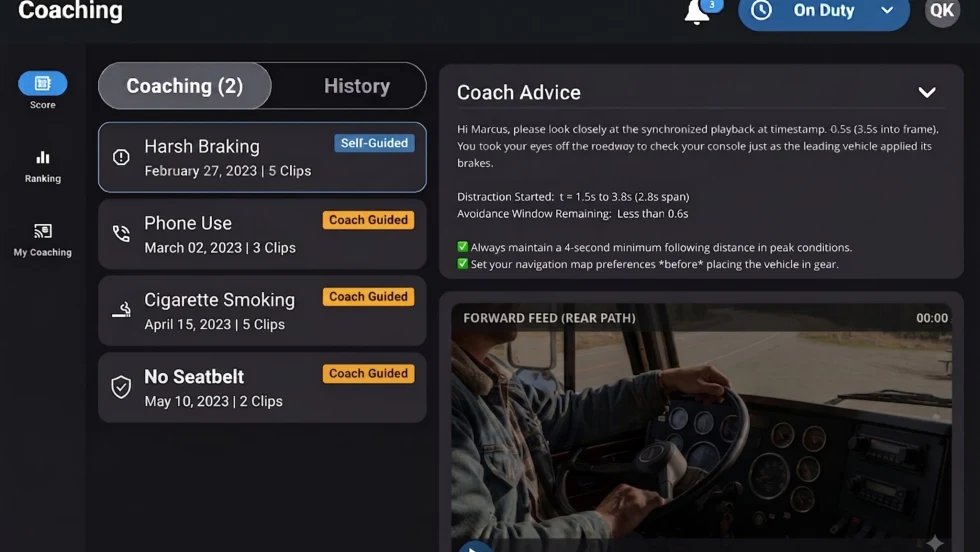
Four additions to PS Fleet help fleets monitor loads, manage driver coaching, share truck locations and adjust video system settings.
Read More →
When Language Stops the Truck: The Return of ELP Out-of-Service Orders
English language proficiency rules for commercial drivers aren’t new, but renewed out-of-service enforcement has raised the stakes. Here’s what carriers need to know before a driver reaches a roadside inspection.
Read More →
Samsara Launches Custom AI Agent Builder
Agent Studio lets fleets create AI tools for hours-of-service monitoring, reporting and driver support, including agents that communicate by phone.
Read More →
Trucker Path Expands Reserved Parking Network
Trucker Path has added close to 6,000 more truck parking spaces to its Trucker Path Reserved Parking Network with the addition of Safe Truck Parking.
Read More →
EEOC Sues Texas Trucking Company Over Driver Age Limits
The agency says Trancasa USA rejected applicants over 65 and applied tougher driving-record standards to those over 60.
Read More →
Nussbaum, Roehl Announce Second Driver Pay Increase This Year
This year has seen a swath of major truck driver pay increases as freight capacity has tightened.
Read More →
From One Generation to the Next: How Mentorship Builds Safer Truck Drivers
After three decades in trucking, Harold Perry shares what he's learned about driver safety, mentorship, and helping the next generation build confidence behind the wheel.
Read More →
Truck Drivers Need More Than Another Alert
Fleets have more visibility into truck health, safety events, and driver activity than ever. The next challenge is turning all that information into useful guidance for the person who has to decide what to do next.
Read More →
FMCSA Removes 110 Truck Driver Training Schools from Certified ELDT List
Federal regulators also are targeting more than 160 additional training providers and launching a nationwide audit of third-party CDL skills testers as part of a broader crackdown on trucking fraud.
Read More →
Hours of Service Pilot Programs: FMCSA Readies for 2027 Rollout
Two pilot programs could eventually reshape hours-of-service rules, giving truck drivers options to pause their 14-hour clock or use longer split sleeper rest periods.
Read More →