




Bridge Repairs at Risk if Highway Trust Fund Runs into Red
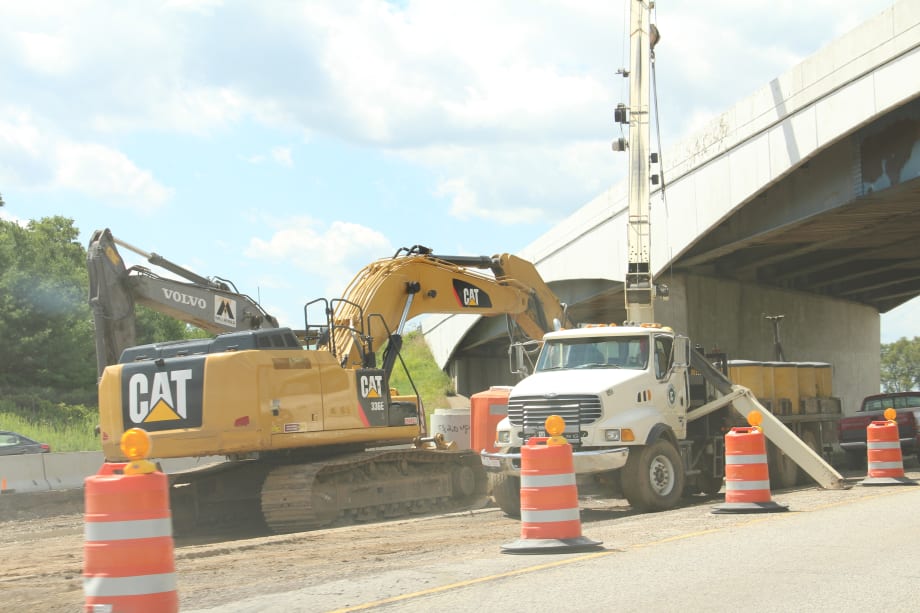
Another warning about infrastructure funding: 63,000 of the nation’s bridges are structurally compromised and at risk of not being repaired unless the Highway Trust Fund is preserved, says the American Road and Transportation Builders Association.
Another warning about infrastructure funding: 63,000 of the nation’s bridges are structurally compromised and at risk of not being repaired unless the Highway Trust Fund is preserved, says the American Road and Transportation Builders Association.
“Letting the Highway Trust Fund investment dry up would have a devastating impact on bridge repairs,” said ARTBA Chief Economist Alison Black. “It would set back bridge improvements in every state for the next decade.”
If that happens, Black said, there will be no Fund support for any new road, bridge, or public transportation projects in any state during fiscal year 2015, which starts October 1.
She was commenting on a report prepared by the association using the 2013 National Bridge Inventory database recently released by the Department of Transportation.
The report highlights bridges that are found “structurally deficient” in a rating system used by state departments of transportation.
The system rates each bridge on a scale of one to nine. Nine is excellent. Anything rated four or below is termed “structurally deficient.” That does not mean the bridge is about to fall, but it does need repairs.
The association is suggesting that these bridges be posted as deficient as a way to alert the public to the need for action.
Among the deficient bridges are 250 heavily used spans on urban Interstates, practically all of which are at least 39 years old, the association said.
Pennsylvania has the most deficient bridges: 5,218. Close behind is Iowa with 5,043, followed by Oklahoma with 4,227, Missouri with 3,357 and California with 2,769.
Nevada, Delaware, Utah, Alaska and Hawaii have the fewest deficient bridges.
“The bridge problem sits squarely on the backs of our elected officials,” Black said in a statement.
“The state transportation departments can’t just wave a magic wand and make the problem go away. It takes committed investment by our legislators. Members of Congress need to come to grips with that. Some of our most heavily travelled bridges were built in the 1930s. Most are more than 40 years old.”
Congress is considering a variety of approaches to the crisis, from raising the fuel tax to one-time infusions derived from corporate tax reforms. The Obama administration is preparing a bill that will call for tax reforms to generate enough to support a four-year program.
Given the political difficulty of these options, they are not likely to be resolved before the November mid-term elections. That leaves the likelihood of a transfer of money from the treasury to keep the Highway Trust Fund solvent until a longer-term solution can be found.
More Fleet Management

Color Match Smarter: Tools That Restore & Perform
For fleet managers and collision repair professionals keeping heavy-duty trucks on the road, getting the color right the first time isn't just about appearance — it's about efficiency, turnaround time, and bottom-line results. Discover how today's digital color tools are transforming the repair process from guesswork to precision.
Read More →
FMCSA Pauses Biennial-Update Enforcement Amid Motus Transition
Carriers whose updates were due on or after June 1 have more time, while FMCSA works to stabilize its new registration system and warns of phishing sites impersonating its new carrier registration system, Motus.
Read More →
2026 Blueprint for Countering Smarter Supply Chain Theft
Cargo theft is no longer just the cost of doing business. It's a multi-billion-dollar criminal enterprise exploiting vulnerabilities across your fleet, drivers, and supply chain.
Read More →


How Telematics Improves Visibility, Control, and Performance in Refrigerated Fleets
Explore how telematics help refrigerated fleets improve visibility, uptime, efficiency, compliance, and cargo protection across connected cold chain operations.
Read More →
What the U.S.-Canada Trade War Means for Trucking
Escalating U.S.-Canada tariffs could disrupt cross-border freight, reduce truck volumes, raise costs, and create new uncertainty for carriers on both sides of the border.
Read More →
What Are Trucking’s Top Concerns for 2026?
The American Transportation Research Institute wants to know what's worrying trucking fleet managers, drivers, and other stakeholders in its annual Industry Issues survey.
Read More →
American Trucking Associations Looks for a New Leader
ATA President and CEO Chris Spear abruptly left his job at the association on August 21, at a pivotal time for the trucking industry.
Read More →
Public Wi-Fi Cybersecurity Risks: How Truck Drivers and Fleets Can Protect Their Data
Public Wi-Fi can expose truck drivers and fleets to credential theft, malware, and other cyber threats. Here’s how to reduce the risk on the road.
Read More →
For Nicky Cupp, Fleet Innovation Starts With Frustration
HDT Truck Fleet Innovator Nicky Cupp turns everyday pain points at Fraley & Schilling into opportunities for better technology and smarter processes.
Read More →
Adam Buttgenbach’s Approach to Electric Trucks: Start With Where They Fit
HDT Truck Fleet Innovator Adam Buttgenbach helped PepsiCo build one of North America’s largest EV fleets by focusing on where electric trucks make operational sense.
Read More →