





Coalition of Trade Groups Throw Support Behind Younger Truck Driver Bill
Bill to Allow Younger Interstate Truck Drivers Reintroduced
Reintroduced for the third time, the DRIVE-Safe Act proposes to allow certified commercial truck driver’s who are under 21 to cross state lines after completing safety training and apprenticeship opportunities.
March 11, 2021
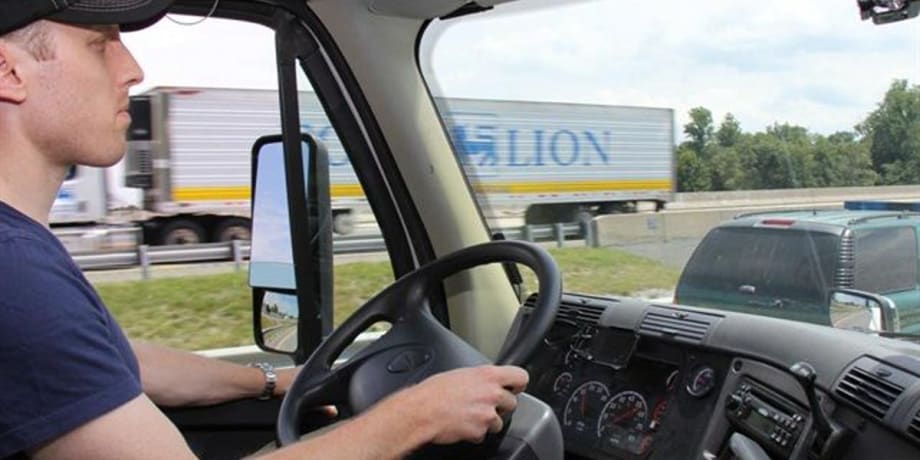
Under the DRIVE-Safe Act, after a driver meets the requirements currently in place to obtain a CDL, they can then begin a two-step program of additional training, which includes rigorous performance benchmarks.
File Photo: Virginia Tech
3 min to read
A group of bipartisan legislators reintroduced the DRIVE-Safe Act to address the growing shortage of professional truck drivers in the U.S. by allowing certified commercial truck driver’s who are under 21 to cross state lines after completing safety training and apprenticeship opportunities.
Under the proposed Developing Responsible Individuals for a Vibrant Economy (DRIVE-Safe) Act, after a driver meets the requirements currently in place to obtain a CDL, they can then begin a two-step program of additional training, which includes "rigorous performance benchmarks."
The program requires these drivers to complete at least 400 hours of on-duty time and 240 hours of driving time with an experienced driver in the cab with them. All trucks used for training in the program must be equipped with advanced safety technology including active braking collision mitigation systems, video event capture and a speed governor set at 65 miles per hour or less. Only once all these benchmarks are successfully met will the candidate be permitted to cross state lines.
The legislation addresses the federal regulations which prohibit individuals with a CDL who are under 21-years-old from crossing state lines, even though 49 states permit those same individuals to obtain a CDL and operate large commercial vehicles.
These restrictions bar a vital population of job seekers from interstate trucking, exacerbating the driver shortage as qualified candidates are lost to other industries, the American Trucking Association wrote in statement in support of the act.
“The DRIVE Safe Act is not a path to allow every young person to drive across state lines, but it envisions creating a safety-centered process for identifying, training and empowering the safest, most responsible 18- to 20-year-olds to more fully participate in our industry,” said ATA President and Chief Executive Officer Chris Spear.
This is the third go-round of the bill, which was originally introduced in 2018, and then again in early 2019. It was never brought to a vote.
In both 2018 and 2019, the Owner-Operator Independent Drivers Association opposed the bill saying bringing in younger drivers would not be less safe, but also negatively affect driver wages and working conditions.
The DRIVE-Safe Act was re-introduced this month by Sens. Todd Young (R-Indiana), Jon Tester (D-Montana), Joe Manchin (D-West Virginia), Tom Cotton (R-Arkansas), Angus King (I-Maine), Krysten Sinema (D-Arizona), Jerry Moran (R-Kansas) and Jim Inhofe (R-Oklahoma) in the Senate, and by Reps. Trey Hollingsworth (R-Indiana), Jim Cooper (D-Tennessee), Henry Cuellar (D-Texas), Elissa Slotkin (D-Michigan), Jared Golden (D-Maine), Troy Balderson (R-Ohio), Ashley Hinson (R-Iowa), Bruce Westerman (R-Arkansas) and Darin LaHood (R-Illinois) in the House.
A coalition of nearly 90 companies and trade associations throughout the supply chain, including International Foodservice Distributors Association and others in manufacturing, agriculture, retail and restaurants, have long supported enactment of the DRIVE-Safe Act, ATA officials said.
The truck driver shortage is expected to grow worse in the coming years as more drivers move into retirement and the demand for freight transportation increases. Over the next decade, it’s projected that the trucking industry will need to hire roughly 1.1 million new drivers, or an average of nearly 110,000 per year, to keep up with demand, ATA officials said.
More Drivers

Platform Science Adds Dispatch and Safety Tools
Four additions to PS Fleet help fleets monitor loads, manage driver coaching, share truck locations and adjust video system settings.
Read More →
When Language Stops the Truck: The Return of ELP Out-of-Service Orders
English language proficiency rules for commercial drivers aren’t new, but renewed out-of-service enforcement has raised the stakes. Here’s what carriers need to know before a driver reaches a roadside inspection.
Read More →
Samsara Launches Custom AI Agent Builder
Agent Studio lets fleets create AI tools for hours-of-service monitoring, reporting and driver support, including agents that communicate by phone.
Read More →
Trucker Path Expands Reserved Parking Network
Trucker Path has added close to 6,000 more truck parking spaces to its Trucker Path Reserved Parking Network with the addition of Safe Truck Parking.
Read More →
EEOC Sues Texas Trucking Company Over Driver Age Limits
The agency says Trancasa USA rejected applicants over 65 and applied tougher driving-record standards to those over 60.
Read More →
Nussbaum, Roehl Announce Second Driver Pay Increase This Year
This year has seen a swath of major truck driver pay increases as freight capacity has tightened.
Read More →
From One Generation to the Next: How Mentorship Builds Safer Truck Drivers
After three decades in trucking, Harold Perry shares what he's learned about driver safety, mentorship, and helping the next generation build confidence behind the wheel.
Read More →
Truck Drivers Need More Than Another Alert
Fleets have more visibility into truck health, safety events, and driver activity than ever. The next challenge is turning all that information into useful guidance for the person who has to decide what to do next.
Read More →
FMCSA Removes 110 Truck Driver Training Schools from Certified ELDT List
Federal regulators also are targeting more than 160 additional training providers and launching a nationwide audit of third-party CDL skills testers as part of a broader crackdown on trucking fraud.
Read More →
Hours of Service Pilot Programs: FMCSA Readies for 2027 Rollout
Two pilot programs could eventually reshape hours-of-service rules, giving truck drivers options to pause their 14-hour clock or use longer split sleeper rest periods.
Read More →