




Behind the ATA Championship Course
Every year, contestants in the American Trucking Associations' National Truck Driving Championships contend with a course marked by cones and tape, and make their way through it probably without consciously wondering how it came to be. But who dreamed up the layout and the "problems" in it
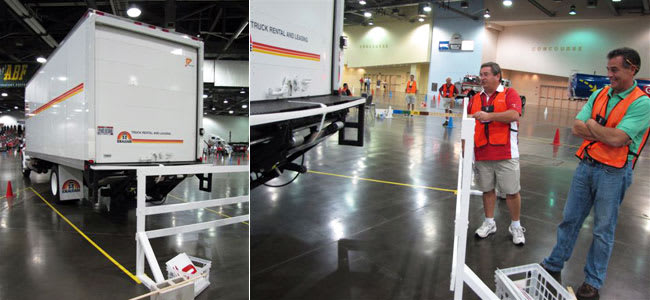
Judge Bill Patrolia of Iteris, right, smiles as Judge Rick Bryan of FedEx Freight finds this truck's driver stops way too far from the barricade. Backing a straight truck, left, into the blind-alley problem is easier than a semi. (Photos by Tom Berg)
Every year, contestants in the American Trucking Associations' National Truck Driving Championships contend with a course marked by cones and tape, and make their way through it probably without consciously wondering how it came to be. But who dreamed up the layout and the "problems" in it?
The indoor course is designed by members of a governing committee made up of people from participating companies. This year the main man was Daryl Decker, a regional safety manager for Wal-Mart Transportation in Bentonville, Ark., and a former over-the-road driver for Ryder and Yellow Freight.
"There's no set course, but there are standard street widths, turns" and other features that are used in the large convention center rooms rented for the event, like this year in Columbus, Ohio, Decker said. The course this year was 240 feet long with short straights and tight turns to challenge drivers' maneuvering skills.
Within the course every year are six problems, but they vary at each event so repeat competitors have no special familiarity that would give them an unfair advantage. Everyone can walk the course before driving it, and some pick out features on the floor or walls for them to key on during later maneuvering.
"When I'm designing a course, I think of everyday problems that drivers face, at docks, on streets and in alleys," Decker said. "The accidents we experience often involve backing, especially blindside backing, so one of the problems this year is the blindside dock."
Tough Alley
On the course in Columbus the taped dock "alley" bent at a shallow right-hand angle from a travel lane. Drivers squinted in their mirrors as they backed their trucks or semis into the alley leading to a white wood barricade that simulated the dock. But they couldn't "bump" the dock as they'd usually do in real life; they had to stop when the truck or trailer's rear was within 6 to 12 inches of the barricade.
Being able to judge where the rear of the rig was took exceptional depth perception, and a lot of people don't have it. That made it especially difficult for drivers of long rigs, like those in the five-axle sleeper-cab tractor-trailer class who pushed 53-foot trailers toward the barricade, said judges at the dock station.
"About 95 percent of them zeroed the problem" by touching the barricade or stopping too far away, said one judge, Rick Bryan of FedEx Freight in Fort Worth, Texas. As at the other five problems, a driver could win as many as 50 points at the docking station, and zeroing means he or she failed miserably but understandably.
It's more than 60 feet from the tractor's mirrors to the end of the trailer, and it's forbidden to lean out the window to try to see where the rear is. Drivers who did earned an automatic zero. Up to seven pull-ups are allowed in this problem, but each cost a driver 5 points. A driver signals he's done moving the truck by staying on the brakes and blowing his horn. After judges measure his placement, one blows a whistle and waves him on to the next problem.
The blind dock was much easier with a comparatively short straight truck, so about 45 percent of those competitors earned some points, said Bryan as he consulted his list. They included back-to-back scores of 50 - perfect - by Beningo Zamiedio from HEB Grocers in Texas, who stopped within 6 inches of the barricade; and 45 - darn good - by Ronald Phillips of Con-way Freight in Tennessee, who stopped within 12 inches, while this reporter appreciatively looked on.
Those men might or might not drive straight trucks in their work days, said Decker, the course designer. Drivers can compete in any categories they want to, but if a driver wins in one category two years in a row, he or she must switch to another class to continue competing.
Coin Toss
Back in 1972, while a Yellow driver, Decker competed in the ATA championships, then called the Roadeo, and tied in total points with another driver for the top spot. Judges decided the winner by flipping a coin, and Decker lost.
"I decided that if I ever had anything to say about it, I'd change that," he said. And he did, years later, after he got on the championships committee. So there are no more coin flips.
Instead there's a drive-off, where tied contestants are sent back onto the course and the one with more points wins, said Eric Renner, the event's spokesman. "It happened last year (in Pittsburgh), in fact."
(Read about this year's winners here.)
More Aftermarket
What Three Fleets Are Doing Differently When Buying Truck Parts in 2026
With freight improving but costs still climbing, fleet maintenance executives explain how they're balancing price, quality, and supplier relationships.
Read More →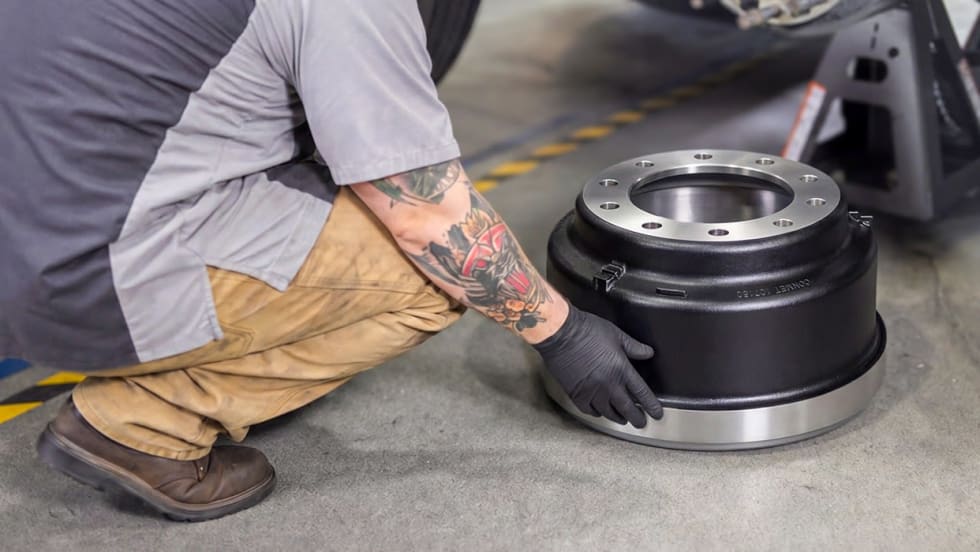
ConMet Expands Aftermarket Brake Drum Lineup With TruCast
A new heavy-duty truck brake drum option in the aftermarket gives customers more flexibility within the ConMet product family.
Read More →
Phillips Opens High-Tech Distribution Center for Faster Parts Delivery
Phillips Industries’ new Cincinnati-area distribution center is now shipping aftermarket trucking parts nationwide, aiming to speed up delivery times for customers.
Read More →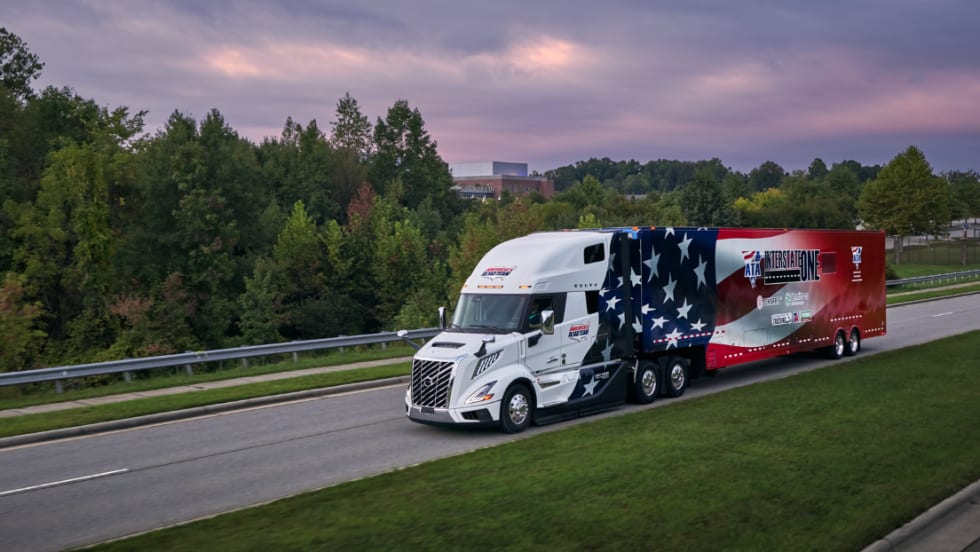
Volvo to Sponsor America’s Road Team for 2025
Volvo Trucks announced that it is extending its exclusive sponsorship of America’s Road Team for 2025.
Read More →
Webb to Start Taking Orders for UltraSet Pre-Adjusted Wheel Hubs
Webb, which recently acquired the Stemco Trifecta pre-adjusted hub program, will soon start taking orders for its replacement pre-assembled hub, the UltraSet.
Read More →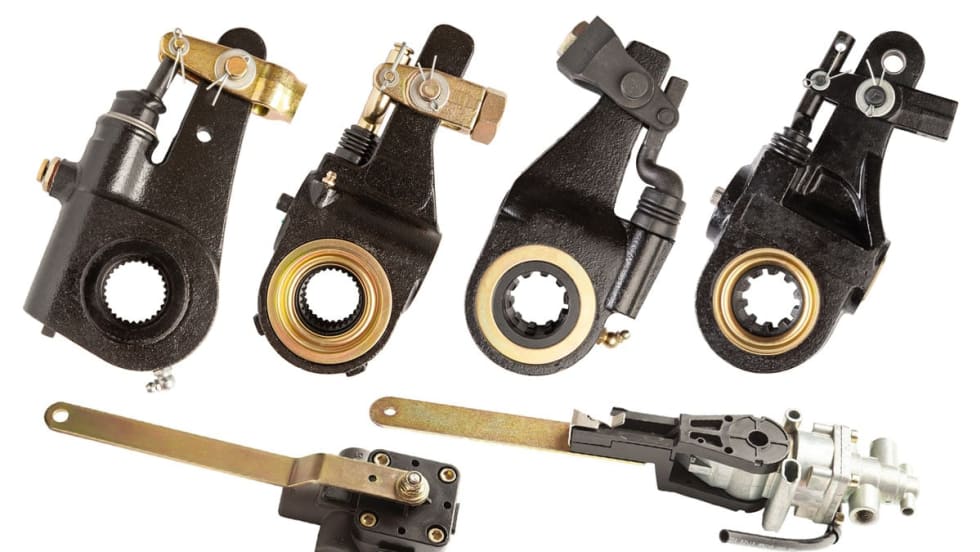
All-Makes Automatic Brake Adjusters, Ride Height Control Valves from Midland
SAF-Holland has added automatic brake adjusters and ride height control valves to its Midland All-Makes Program.
Read More →
ZF Aftermarket Expands [pro]Academy Training
ZF Aftermarket said it is expanding its ZF [pro]Academy training and will be adding 40 new modules this year.
Read More →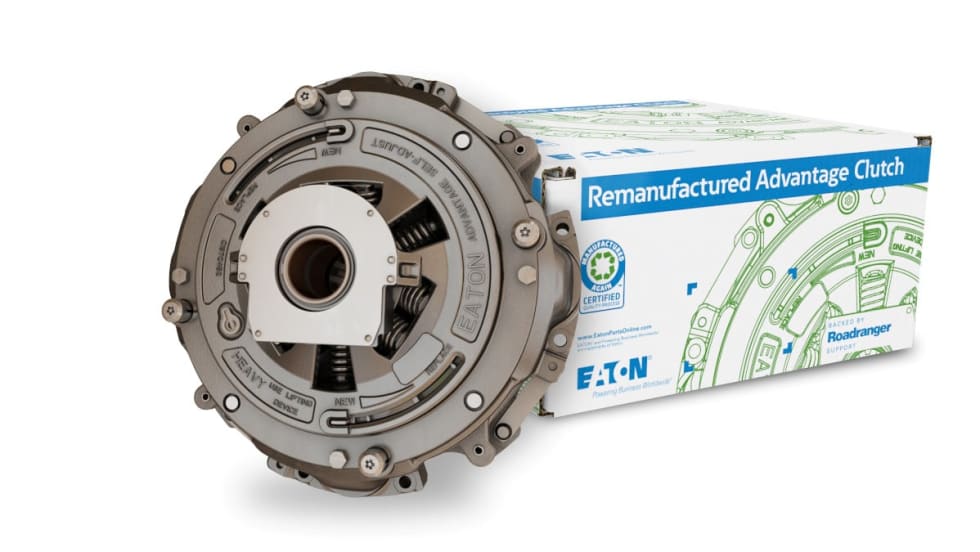
Eaton Adds Remanufactured Advantage Line of Clutches
Eaton has added its Advantage clutches to its remanufactured product line. The clutches feature a unique strap drive intermediate plate designed to allow customers to choose the latest OE specification
Read More →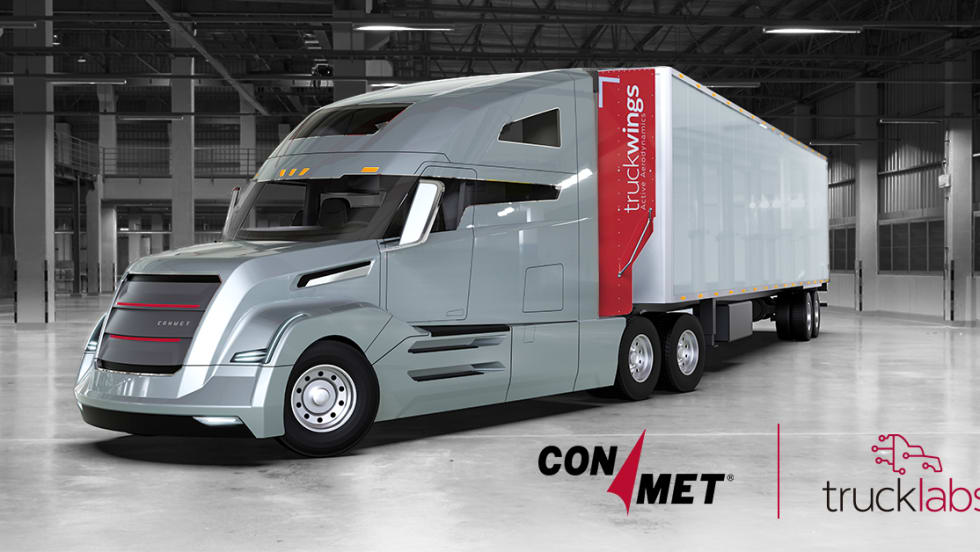
ConMet Acquires TruckLabs, the Creator of TruckWings
Commercial truck and trailer parts provider ConMet acquired TruckLabs, the company that created TruckWings, an aerodynamic device that attaches to truck cabs and deploys to close the gap between truck and trailer. TruckLabs now operates as a subsidiary of ConMet.
Read More →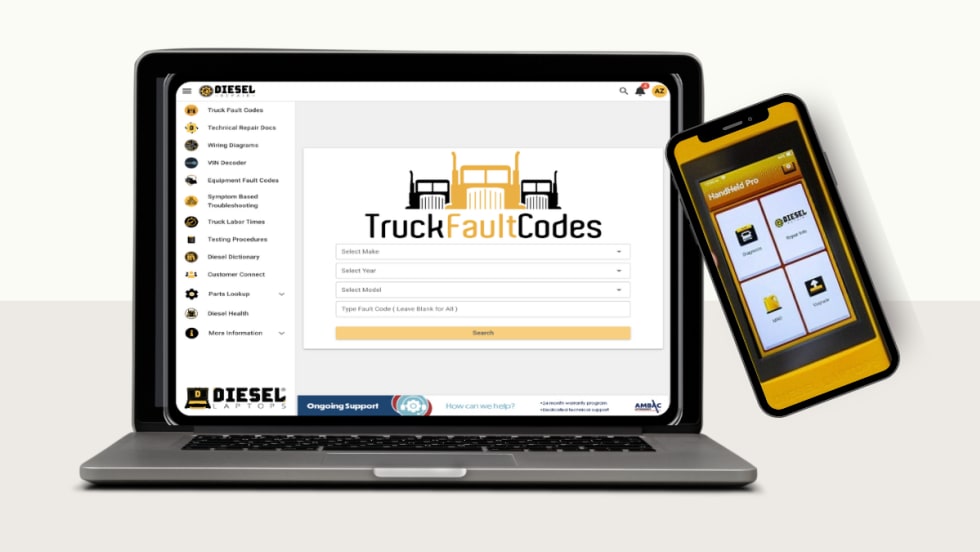
Diesel Laptops Releases Fault-Code-to-Part-Number Tool
Diesel Laptops said its Truck Fault Codes allows users to input a fault code and immediately identify and order the parts needed to complete repair work.
Read More →