




Autocar Launches Two Construction Truck Models
Autocar Trucks has launched two truck models designed for the concrete and construction industry - the Autocar DC-64M, designed for concrete mixers and the DC-64P, made for concrete pump applications.

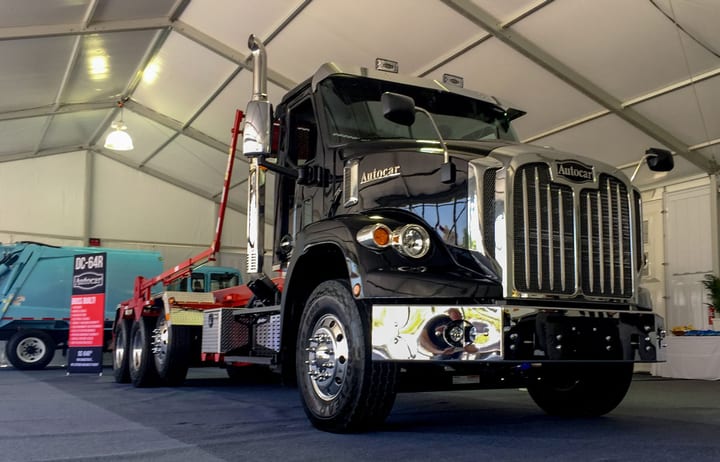
Autocar Trucks has launched two tuck models designed for the concrete and construction industry - the Autocar DC-64M (pictured), designed for concrete mixers and the DC-64P, made for concrete pump applications
Photos courtesy Autocar Trucks
Autocar Trucks has launched two truck models designed for the concrete and construction industry.
The Autocar DC-64M is designed for concrete mixers and the DC-64P is made for concrete pump applications. The Autocar DC is a conventional truck engineered from the ground-up for severe-duty vocational applications.
“The new DC models are the result of extensive input we received from our advisory board of concrete professionals,” said Eric Schwartz, managing director of Autocar Trucks. “Every inch of these trucks has been reviewed and improved based on the decades of experience of people operating concrete mixer and boom pump trucks.”
The Autocar DC-64M and DC-64P bring several innovations that make them uniquely suited for their respective vocations, according to Autocar.
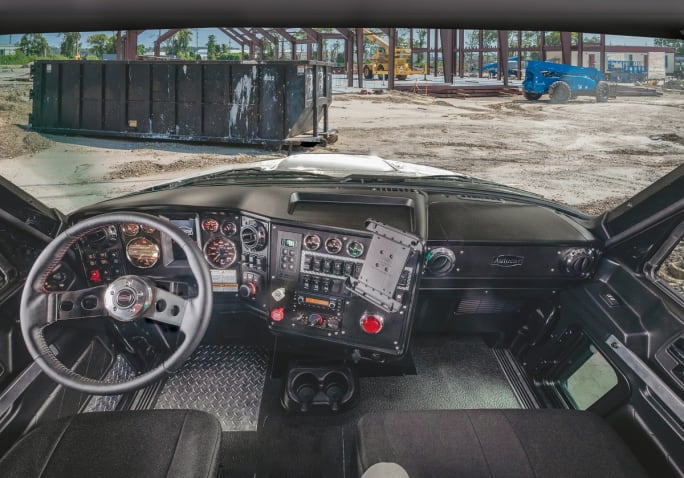
Autocar says the workspace of the cab maximizes productivity for drivers with everything designed to be visible and within easy reach.
The Autocar DC’s cab was designed by Autocar for exceptional productivity, durability and safety in the concrete industry. The cab structure is built from a combination of steel, aluminum components and corner castings, to withstand years of abuse the concrete industry dishes out.
The workspace of the cab maximizes productivity for drivers with everything designed to be visible and within easy reach, while the wide, raked windshield provides better visibility for safety. The interior uses materials like polished aluminum bars for door pulls and steel sheets as dash panels along with a full steel structure inside the dashboard.
The Autocar DC-64M and DC-64P join the other DC models featuring ultra-high-strength 160,000 p.s.i. steel frame rails, which Autocar says are stronger and lighter than the rails on comparable trucks and eliminate the need for frame liners in nearly all mixer applications.
“We’ve routed air lines and self-cleaning electrical harnesses on separate sides of the frame rail to make service easier,” said Tom Harris, Autocar’s vice president for concrete mixer trucks. “But even more importantly, everything is mounted away from the frame rail channels where concrete and liquids accumulate, so that will avoid additional problems we’ve all had to deal with before.”
The DC also features Autocar’s new Always Up display, with prominent warnings and dynamic gauges that tell the operator or technician what fault has occurred and shows them how to fix it.
“The DC-64M incorporates a raft of improvements and features specific to concrete mixer trucks, such as rear-engine PTOs and asymmetrical self-leveling front suspensions,” said Schwartz. “Every DC-64P will be custom-engineered for the specific pump body the pumper selects. So suspensions and multiple steer, drive, and auxiliary axles will all be selected and placed for optimal weight distribution and Autocar’s industry-leading maneuverability.”
The Autocar DC powertrain initially includes Cummins X12 engines up to 500 hp and 1,700 lb.-ft. of torque, with additional engines and specs available in the future. Transmissions include the Allison RDS4500 and 4700 series for maximum torque at low speeds and easy drivability on the road and in construction sites.
The company has already accepted orders for production of the DC models at its Birmingham, Alabama factory, for delivery in the spring of 2020.
More Equipment

How Volvo Updated Its D13 for EPA 2027 [Watch]
Volvo’s updated D13 promises lower emissions without sacrificing performance or fuel economy. Take a closer look at what changed inside the engine in this HDT Spotlight video.
Read More →
Michelin Tire Improves Efficiency and Durability for Regional Fleets
The Michelin X Multi Energy D2 is a regional haul drive tire engineered to help fleets improve fuel efficiency, durability and traction in demanding stop-and-go operations.
Read More →
ZF Expands Commercial Vehicle Push in North America
ZF is expanding its North American commercial-vehicle presence with new transmission applications, electrification, trailer technology and autonomous-driving systems.
Read More →
Tesla Wants a Self-Driving Semi. Are Cameras Enough?
Could Tesla’s camera-only autonomous driving technology work on an 80,000-pound Semi? In this commentary, HDT's Deborah Lockridge takes a look at Tesla, Cybercab, and how autonomous trucks see the road.
Read More →
Kodiak: Driverless Long-Haul Truck Launch on Track for 2026
Kodiak AI says its driverless long-haul safety case is 93% complete and it remains on track to begin commercial operations by year-end 2026.
Read More →
What DOT’s Automated Vehicle Strategy Means for Trucking
The U.S. Department of Transportation issued a new automated-vehicle strategy that outlines plans for driverless-truck regulations, cross-state freight corridors, and federal safety standards.
Read More →
East Coast Port Launches $45M Electric Truck Push
The Port Authority of New York and New Jersey announced millions in incentives for zero-emission drayage trucks, yard tractors, and new charging hubs near the port.
Read More →
PlusAI Going Public to Fund Autonomous Truck Launch
A SPAC deal could provide PlusAI with up to $300 million as it works toward a 2027 commercial launch of factory-built autonomous trucks.
Read More →
NHTSA Moves to Rewrite Truck Fuel-Economy Rules
The National Highway Traffic Safety Administration says it lacks authority to regulate medium- and heavy-duty truck engines separately from complete vehicles, but the existing standards have not yet been eliminated.
Read More →
Detroit Opens Orders for EPA 2027 Engines
Detroit isn’t starting from scratch to meet EPA 2027 diesel emissions standards. Its Gen 6 DD13 and DD15 engines keep much of today’s platform while updating the fuel and aftertreatment systems.
Read More →