




Related: Congestion Worsened at ATRI's Top Trucking Bottlenecks Locations
ATRI IDs Best Practices for State Freight Plans
The American Transportation Research Institute has released a report that presents best practices for freight planning at the state level.
by Staff
February 27, 2018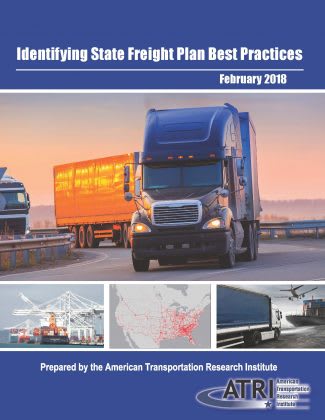
Texas was the highest ranked freight plan in ATRI's research based in part on the state's use of detailed commodity and freight flow data. Photo: ATRI
2 min to read
Texas was the highest ranked freight plan in ATRI's research based in part on the state's use of detailed commodity and freight flow data.Photo: ATRI
The American Transportation Research Institute on Feb. 27 released a report that presents best practices for freight planning at the state level. ATRI said the report aims to help state Departments of Transportation and their consultants “better address those freight planning components that are viewed as most critical by Federal Highway Administration, state DOTs and state trucking association leaders.”
The genesis of the report was ATRI’s call for innovative state freight plans from state DOT personnel and freight stakeholders nationwide. The top 12 plans selected formed the basis for an Ideal Attributes Checklist, by which the other state freight plans were assessed.
The report compares state plans against FAST Act-required and recommended components. The upshot is that ATRI “synthesized minimum freight planning requirements along with innovative practices and mapped nearly 50 different freight plans against the model freight plan framework.”
The research group said its Ideal Attributes Checklist, along with lessons learned and the various innovative practices highlighted within, will allow freight planners to consider a broad continuum of freight planning techniques for their next updates.
“The highest ranked plans utilize a variety of tools, including quantitative industry data, visualizations, project prioritization tools and strong reliance on Freight Advisory Committees, among other approaches.”
Texas was the highest ranked freight plan in ATRI's research based in part on the state's use of detailed commodity and freight flow data in developing its plan, as well as active engagement of its Freight Advisory Committee throughout the planning process.
"We are excited to be able to contribute our knowledge base to this important effort, and even more flattered that we were chosen by our peers as a model freight plan," said Caroline Mays, Director of the Texas Department of Transportation's Freight Office. "That said, our freight work has really just begun."
Other states receiving top accolades in ATRI's report include Georgia, California, Mississippi, Iowa, Florida, Washington, Michigan, Ohio, Nevada, Maryland, and Alabama.
For access to the full report, go to TruckingResearch.org or click here.
More Fleet Management

Nominations Open for HDT Emerging Leaders
Heavy Duty Trucking is looking for accomplished trucking fleet professionals under 40 who are making an impact and helping lead the industry forward.
Read More →
Why Private Fleets Are Taking More Freight
Private fleets are putting their own trucks on demanding customers and high-cost lanes as companies seek greater control over service, costs, and capacity.
Read More →
Sponsored•September 16, 2026
Color Match Smarter: Tools That Restore & Perform
For fleet managers and collision repair professionals keeping heavy-duty trucks on the road, getting the color right the first time isn't just about appearance — it's about efficiency, turnaround time, and bottom-line results. Discover how today's digital color tools are transforming the repair process from guesswork to precision.
Read More →


FMCSA Pauses Biennial-Update Enforcement Amid Motus Transition
Carriers whose updates were due on or after June 1 have more time, while FMCSA works to stabilize its new registration system and warns of phishing sites impersonating its new carrier registration system, Motus.
Read More →
Sponsored•September 14, 2026
2026 Blueprint for Countering Smarter Supply Chain Theft
Cargo theft is no longer just the cost of doing business. It's a multi-billion-dollar criminal enterprise exploiting vulnerabilities across your fleet, drivers, and supply chain.
Read More →
Sponsored•September 1, 2026
How Telematics Improves Visibility, Control, and Performance in Refrigerated Fleets
Explore how telematics help refrigerated fleets improve visibility, uptime, efficiency, compliance, and cargo protection across connected cold chain operations.
Read More →
What the U.S.-Canada Trade War Means for Trucking
Escalating U.S.-Canada tariffs could disrupt cross-border freight, reduce truck volumes, raise costs, and create new uncertainty for carriers on both sides of the border.
Read More →
What Are Trucking’s Top Concerns for 2026?
The American Transportation Research Institute wants to know what's worrying trucking fleet managers, drivers, and other stakeholders in its annual Industry Issues survey.
Read More →
American Trucking Associations Looks for a New Leader
ATA President and CEO Chris Spear abruptly left his job at the association on August 21, at a pivotal time for the trucking industry.
Read More →
Public Wi-Fi Cybersecurity Risks: How Truck Drivers and Fleets Can Protect Their Data
Public Wi-Fi can expose truck drivers and fleets to credential theft, malware, and other cyber threats. Here’s how to reduce the risk on the road.
Read More →