





ATRI: Young Drivers Most Likely To Use Apps to Find Truck Parking
ATRI: Drivers Find Truck Parking Signs Useful
About 66% of long-haul drivers indicated that variable message signs, which give commercial truck drivers information on available truck parking, were useful, according to an ATRI survey.
June 18, 2021
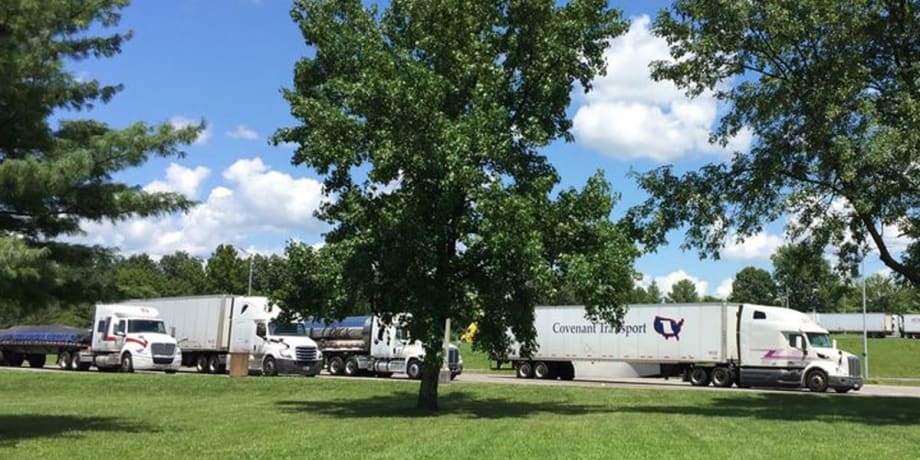
The majority of long haul, inter-regional and regional operators found truck parking VMS accurate.
Photo: Deborah Lockridge
2 min to read
Many states utilize variable message signs to give commercial truck drivers information on available truck parking, including the distance to the parking area and the number of parking spaces open.
While 70% of drivers surveyed by the American Transportation Research Institute in 2019 indicated they’ve seen message signs with truck parking information, just about 66% of long-haul drivers indicated that they were useful for finding parking.
Newer drivers found truck parking VMS more useful than drivers with 11 or more years of driving experience. Anecdotally, the degree of usefulness of the data likely relates to the degree of perceived accuracy of the technology, ATRI officials said in a recently release report, which summarizes the results of a 2019 survey of more than 1,100 drivers.
For all respondents, the accuracy of truck parking VMS was perceived as extremely important. And the majority of long haul, inter-regional and regional operators found them accurate.
Almost 47% of respondents reported taking action based on VMS, while about 53% of respondents reported they do not take action.
About 14% of drivers rely exclusively on variable message signs to access truck parking availability, and nearly 33% use both truck parking apps and variable message signs, according to ATRI.
Ohio, Kentucky, Florida and Michigan were the states listed with the most frequent sightings of VMS.
In 2019, ATRI’s Research Advisory Committee developed and conducted the truck driver survey online and at the Mid-America Trucking Show. The results were released as a report on how truck drivers currently use truck parking availability systems, and their perspectives on how truck parking information is distributed.
More Drivers

Why Hiring Truck Drivers Is Getting Harder
Higher recruiting costs, a shrinking driver pool, and renewed pay competition are raising the stakes for fleets heading into 2027.
Read More →
Roehl Offers Truck Drivers $10,000 Retention Incentive
Payments begin after the first load and continue in mileage-based installments for eligible experienced drivers joining the fleet.
Read More →
Platform Science Adds Dispatch and Safety Tools
Four additions to PS Fleet help fleets monitor loads, manage driver coaching, share truck locations and adjust video system settings.
Read More →
When Language Stops the Truck: The Return of ELP Out-of-Service Orders
English language proficiency rules for commercial drivers aren’t new, but renewed out-of-service enforcement has raised the stakes. Here’s what carriers need to know before a driver reaches a roadside inspection.
Read More →
Samsara Launches Custom AI Agent Builder
Agent Studio lets fleets create AI tools for hours-of-service monitoring, reporting and driver support, including agents that communicate by phone.
Read More →
Trucker Path Expands Reserved Parking Network
Trucker Path has added close to 6,000 more truck parking spaces to its Trucker Path Reserved Parking Network with the addition of Safe Truck Parking.
Read More →
EEOC Sues Texas Trucking Company Over Driver Age Limits
The agency says Trancasa USA rejected applicants over 65 and applied tougher driving-record standards to those over 60.
Read More →
Nussbaum, Roehl Announce Second Driver Pay Increase This Year
This year has seen a swath of major truck driver pay increases as freight capacity has tightened.
Read More →
From One Generation to the Next: How Mentorship Builds Safer Truck Drivers
After three decades in trucking, Harold Perry shares what he's learned about driver safety, mentorship, and helping the next generation build confidence behind the wheel.
Read More →
Truck Drivers Need More Than Another Alert
Fleets have more visibility into truck health, safety events, and driver activity than ever. The next challenge is turning all that information into useful guidance for the person who has to decide what to do next.
Read More →