





Retention Practices: Align With Shippers That Care About Your Drivers
DOT Roundtable Explores Truck Driver Recruiting, Retention Challenges
The Federal Motor Carrier Safety Administration hosted a roundtable discussion on the challenges and opportunities facing the trucking workforce and federal policymakers.
July 8, 2021
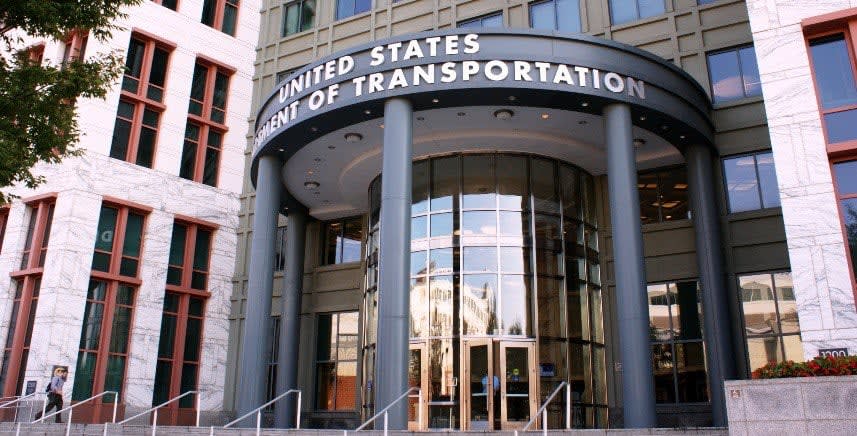
The Federal Motor Carrier Safety Administration's truck driver retention roundtable featured ATA, Secretary of Transportation Pete Buttigieg, FMCSA Deputy Administration Meera Joshi and Secretary of Labor Marty Walsh.
Photo: USDOT
6 min to read
The Federal Motor Carrier Safety Administration hosted a roundtable discussion July 8 with "trucking stakeholders" to explore solutions to truck driver recruiting and retention challenges. Transportation Secretary Pete Buttigieg, Labor Secretary Marty Walsh, and Deputy Administrator Meera Joshi of FMCSA joined "industry stakeholders" to discuss the challenges and opportunities facing the trucking workforce and federal policymakers.
A news release was vague about who the participants were, but in response to an email from HDT, a spokesperson said the participants included:
drivers groups
industry representatives
safety advocates
organized labor
academics
government partners
"Our economy is getting back on its feet, but the pandemic has exposed and exacerbated longstanding challenges in our supply chain — including truck driver retention.” said Buttigieg. “We are bringing government, industry, and key stakeholders together to help support truck drivers and all the consumers and businesses who rely on them."
This roundtable was one part of the Biden-Harris administration's efforts to address the post-covid supply chain challenges. Last month, President Biden announced the Supply Chain Disruptions Task Force, to bring a whole-of-government approach to addressing near-term supply/demand mismatches.
The FMCSA news release noted that turnover rates are over 90% for large long-haul carriers and over 72% for small carriers, meaning that drivers are regularly leaving companies or leaving the industry altogether. The lag time that results in training and onboarding new drivers can result in driver shortages. This turnover, coupled with effects from the pandemic, has helped lead to supply chain disruptions for essential goods and helped snarl freight being moved in and out of ports.
One of the participants was American Trucking Associations’ Executive Vice President of Advocacy Bill Sullivan, according to an ATA news release. Sullivan addressed several topics, including the industry’s safety record, support for improved infrastructure, and the growing need for more truck drivers across the country.
The trucking industry moves more than 72% of total domestic freight tonnage, with more than 80% of U.S. communities relying exclusively on trucks to receive their goods, Sullivan said. Projections show the industry will need to hire roughly 1.1 million new drivers over the next decade, or an average of nearly 110,000 per year, to keep pace with retirements and the nation’s growing freight transportation needs.
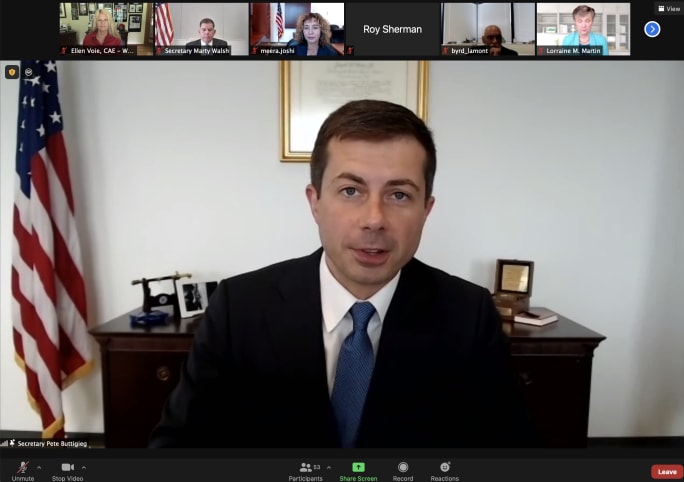
"Our economy is getting back on its feet, but the pandemic has exposed and exacerbated longstanding challenges in our supply chain — including truck driver retention,” said Transportation Secretary Pete Buttigieg.
Screenshot courtesy Women in Trucking
Another participant was Women In Trucking Association President Ellen Voie. “From drivers to technicians and carriers to dealerships, women play an integral role in the trucking industry. But we believe they can play an even greater role in meeting the current demand for more drivers,” she said, according to a news release.
During her presentation, Voie outlined the programs WIT has developed and supported to increase female participation in the industry and ensure their safety. “We have made tremendous progress over the years, but more work remains to be done," she said.
Are Apprenticeships an Answer?
ATA's Sullivan stressed the industry’s high priority of reaching new talent — including the recruitment of more urban, rural, female and younger drivers — to help stem the tide of attrition. The median age of truck drivers is well above national average of all workers. The average age of new drivers being trained is 35 — making trucking a career of last resort, rather than first choice, for many, he explained.
Labor Secretary Walsh provided an overview of the Department of Labor’s registered apprenticeship programs. Apprenticeships can allow drivers to enter the industry without the burden of debt from training, help drivers prepare for the challenges of the job, and receive training on innovative technologies, he noted. FMCSA said it "will facilitate connections between stakeholders and DOL apprenticeship resources and help support the implementation of best practices and administrative actions to improve long-haul truck driver retention."
"Registered apprenticeship — which offers workers quality, on-the-job training along with wage progression, and has been shown to improve job retention — can help build a more stable and resilient workforce,” Walsh said, according to the news release. “I look forward to working with Secretary Buttigieg and industry leaders to expand registered apprenticeship in order to improve access and retention in the trucking industry."
Earlier this year, President Biden revoked an executive order issued by his predecessor that expanded apprenticeship programs in an “industry-led” model. He announced plans to expand the Labor Department’s registered apprenticeship programs favored by organized labor.
The Trump administration's “industry recognized apprenticeships" were designed to bring together trade and labor groups to design and certify high-quality apprenticeships appropriate for each industry. As then-Labor Secretary Alex Acosta explained during the American Trucking Associations Management Conference & Exhibition in 2017, each industry could define its industry needs and appropriate apprenticeship programs, rather than managing apprenticeships from Washington. However, that program was slow to come to fruition. The first IRAP wasn’t announced until last October, when Raytheon Technologies was names as a pilot participant.
ATA's Sullivan also emphasized the positive correlation between increases in compensation and turnover rates. As demand for freight transportation and a scarcity of available truck drivers pushes compensation up, turnover increases as drivers jump between fleets competing for their services. Many small- and medium-sized fleets have increased pay by 10% or more in recent months, with some offering $10,000 signing bonuses, he explained.
“The COVID pandemic made Americans more acutely aware of how critical truckers are in sustaining the high standards of living we enjoy in this country,” said Sullivan in the ATA release. “We appreciate Secretaries Buttigieg and Walsh and FMCSA Deputy Administrator Joshi for their leadership in providing a forum to strengthen collaboration as we work together on positive solutions that improve highway safety, make our supply chain more resilient, and grow our workforce.”
What Else the DOT is Doing
In addition to this meeting, the FMCSA noted in its release that it is working to address other challenges in trucking.
FMCSA is supporting state DMVs as they return to — or even exceed — pre-pandemic commercial drivers license issuance rates, to help address backlogs in getting new drivers into the industry. In 2021, an average of 50,000 commercial drivers licenses have been issued each month, which is 14% higher than the 2019 monthly average and 60% higher than the 2020 monthly average, according to the agency.
FMCSA also granted operating authority to more than 92,000 motor carriers, an 88% increase from the same time period in 2020 and a 60% increase from the same time period in 2019.

In June, FMCSA Deputy Administrator Meera Joshi visited the Port of New York & New Jersey to discuss ongoing supply chain disruptions after the COVID-19 pandemic.
Photo: FMCSA
Last month, Joshi visited the Port of New York & New Jersey to learn from port leaders and trucking companies about how to support driver retention and apprenticeships, and how to alleviate unnecessary downtime for drivers, and the financial consequences of returning empty cargo containers. She then spoke with the chairman of the Federal Maritime Commission about ways to work together.
Joshi and Deputy Secretary Polly Trottenberg also spoke with National Tank Truck Carriers leadership about short and long-term strategies to improve gas supply chain resiliency and tank truck driver recruitment and retention. And, the release noted, DOT staff "has engaged with a broad cross-section of the trucking industry — carriers of all sizes; private carriers and for-hire carriers; women and minority driver organizations; organized labor; experts in transportation labor; as well as road safety advocates."
Edited 7/12 9 a.m. EDT to add WIT remarks
More Drivers

Truck Drivers Need More Than Another Alert
Fleets have more visibility into truck health, safety events, and driver activity than ever. The next challenge is turning all that information into useful guidance for the person who has to decide what to do next.
Read More →
FMCSA Removes 110 Truck Driver Training Schools from Certified ELDT List
Federal regulators also are targeting more than 160 additional training providers and launching a nationwide audit of third-party CDL skills testers as part of a broader crackdown on trucking fraud.
Read More →
Hours of Service Pilot Programs: FMCSA Readies for 2027 Rollout
Two pilot programs could eventually reshape hours-of-service rules, giving truck drivers options to pause their 14-hour clock or use longer split sleeper rest periods.
Read More →
Medical Cards, English Proficiency Reshape Roadcheck Violations
Medical-card violations jumped to the top of the driver out-of-service list during CVSA’s 2026 International Roadcheck, while English-language proficiency violations appeared among the leading violations for the first time.
Read More →
Driver Trust Can Make or Break the Success of Fleet Safety Technology
New Teletrac Navman research suggests that onboarding, transparency about driver data, and positive feedback can play a significant role in how commercial drivers respond to safety and coaching technology.
Read More →
EEOC Sues KLLM Over Alleged Sex Discrimination in Driver Training
KLLM is facing a federal sex-discrimination lawsuit over policies the EEOC alleges put female truck driver trainees at a disadvantage.
Read More →
FMCSA Moves to Codify English Language Requirements for Commercial Drivers
By changing regulations on English-language proficiency requirements for commercial drivers, rather than relying on a guidance memo, the FMCSA said future administrations won't be able to walk back the Trump administration's stricter enforcement with just a memo.
Read More →
Drivers Put Western Star Trucks to the Test at Star Nation Experience
Watch to get an inside look at the Western Star trucks, technology, and community behind the Star Nation Experience 2026!
Read More →
Trump Administration Looks to Put More Veterans Behind the Wheel
The Freedom Haulers program pulls together existing and expanded programs at several federal agencies to recruit veterans to drive commercial heavy-duty trucks and cut the red tape for them to get a CDL, training, and employment.
Read More →
Putting Mack’s Command Steer to the Test
A test drive of Mack’s Command Steer active steering system evaluates how it can make truck driving easier and less tiring.
Read More →