




ATA Offers Suggestions To Lighten The Logjam At West Coast Ports
The American Trucking Assns. (ATA) has offered a number of recommendations to resolve the container congestion and traffic jams currently plaguing West Coast ports
The American Trucking Assns. (ATA) has offered a number of recommendations to resolve the container congestion and traffic jams currently plaguing West Coast ports.
William J. Canary, president of the ATA, outlined a list of possible solutions to the port logjam in a letter addressed to Capt. William G. Schubert, administrator of the Maritime Administration.
Canary presented a number of recommendations, including a suggestion that the Secretary of Transportation temporarily suspend the hours-of-service rules for truck drivers until the clogged ports are clear of containers. Other suggestions from the ATA include:
-- Port employees should work at standard productivity levels. Anything less than full productivity will result in truck traffic jams inside and outside the port areas.
-- Steamship lines should place orders for sufficient labor for each access gate to assure maximum port capacity.
-- A 24-hour-a-day, seven-day-a-week terminal operation should be implemented so trucks can operate during off-peak traffic hours. Extended gate hours are needed even in normal conditions to achieve infrastructure efficiency, and to reduce traffic congestion on regional portions of the national highway system. Under the current emergency conditions, extended gate hours are imperative to a safe and effective recovery.
-- Ports should run "full gates" (a balance of in-gates and out-gates), otherwise ports will run out of chassis necessary to freight-system recovery. Sometimes a terminal operator will order only outgoing gates, or some other imbalance of in-and-out gates that are not proportional to the traffic waiting outside the gates. The right balance will provide for the return of chassis needed to haul containers inland and mitigate regional traffic congestion.
-- Particularly during the recovery period, consignees and retailers should be encouraged to do their part by receiving freight during off-hours. This will enable trucks to return to the ports. Without their cooperation, all other efforts would be mostly for naught.
-- Freight brokers and steamship lines are the parties dealing with the shippers and consignees -- their customers. Accordingly, they are the party that should be tasked to make all the arrangements necessary for each piece of the solution to be implemented. Unclogging the rest of the freight system (distribution centers and terminals other than ports) will be a natural consequent of the foregoing.
-- The objective at hand is to mitigate a national economic and security emergency.
In suggesting that hours of service be liberalized or temporarily suspended, Canary said, "This relief could apply to drivers in a regional area hauling an ISO container (whether loaded or empty, interstate or intrastate). The initial relief could be for a limited duration (one or two weeks) and the need for it reassessed on an ongoing basis. The ATA and the California Trucking Assn. concur with this recommendation, and that highway safety should remain a priority."
The letter also warned that the current conditions at the ports pose a security problem. "Harbors filled with cargo-laden containers constitute an extraordinarily target-rich opportunity for terrorists," Canary wrote. "Once the freight resumes movement, the United States Customs Service likely will have reduced opportunity to conduct targeted inspections of containers. As you know, the Department of Defense (DOD) relies heavily on commercial movement of containerized freight to supply forward-deployed military personnel. To the extent that these DOD containers are mingled among other containers, they are entangled and impeded in the present quagmire. Perhaps most importantly, given a heightened possibility of war with Iraq, the logistic impediment posed by port congestion could be sufficient to delay or frustrate the President's decision to engage in that national security option."
Canary said the ATA welcomes the opportunity to assist the government in resolving the logjam at the ports.
More Drivers
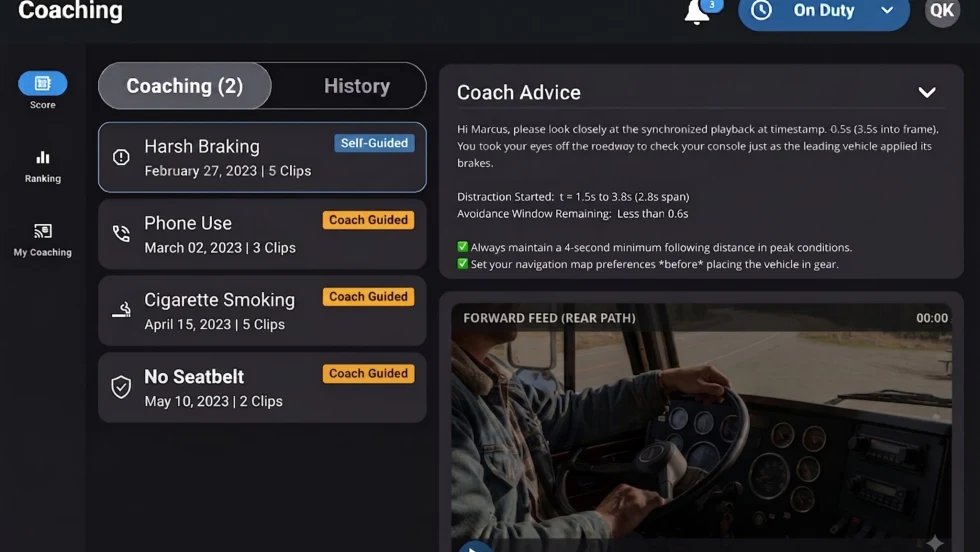
Platform Science Adds Dispatch and Safety Tools
Four additions to PS Fleet help fleets monitor loads, manage driver coaching, share truck locations and adjust video system settings.
Read More →
When Language Stops the Truck: The Return of ELP Out-of-Service Orders
English language proficiency rules for commercial drivers aren’t new, but renewed out-of-service enforcement has raised the stakes. Here’s what carriers need to know before a driver reaches a roadside inspection.
Read More →
Samsara Launches Custom AI Agent Builder
Agent Studio lets fleets create AI tools for hours-of-service monitoring, reporting and driver support, including agents that communicate by phone.
Read More →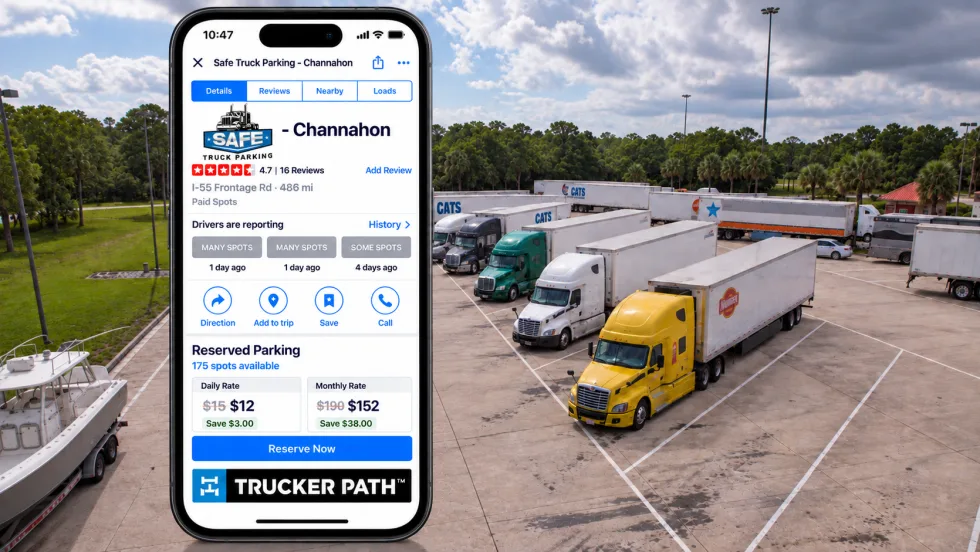
Trucker Path Expands Reserved Parking Network
Trucker Path has added close to 6,000 more truck parking spaces to its Trucker Path Reserved Parking Network with the addition of Safe Truck Parking.
Read More →
EEOC Sues Texas Trucking Company Over Driver Age Limits
The agency says Trancasa USA rejected applicants over 65 and applied tougher driving-record standards to those over 60.
Read More →
Nussbaum, Roehl Announce Second Driver Pay Increase This Year
This year has seen a swath of major truck driver pay increases as freight capacity has tightened.
Read More →
From One Generation to the Next: How Mentorship Builds Safer Truck Drivers
After three decades in trucking, Harold Perry shares what he's learned about driver safety, mentorship, and helping the next generation build confidence behind the wheel.
Read More →
Truck Drivers Need More Than Another Alert
Fleets have more visibility into truck health, safety events, and driver activity than ever. The next challenge is turning all that information into useful guidance for the person who has to decide what to do next.
Read More →
FMCSA Removes 110 Truck Driver Training Schools from Certified ELDT List
Federal regulators also are targeting more than 160 additional training providers and launching a nationwide audit of third-party CDL skills testers as part of a broader crackdown on trucking fraud.
Read More →
Hours of Service Pilot Programs: FMCSA Readies for 2027 Rollout
Two pilot programs could eventually reshape hours-of-service rules, giving truck drivers options to pause their 14-hour clock or use longer split sleeper rest periods.
Read More →