




ATA Asks Supreme Court to Review Contract Dispute Case
Should owner-operators be allowed to sue carriers over violation of of federal leasing rules? The American Trucking Assns. says no and has asked the U.S. Supreme Court to consider the issue
Should owner-operators be allowed to sue carriers over violation of of federal leasing rules? The American Trucking Assns. says no and has asked the U.S. Supreme Court to consider the issue.
Prior to the 1995 Interstate Commerce Commission Termination Act, the ICC was responsible for enforcing federal rules regarding carrier leases with owner-operators. If an owner-operator felt that a carrier had violated those rules, he had to take his case to ICC authorities. Unfortunately, lack of adequate budget and staff meant that fewer complaints were ever investigated.
The U.S. Department of Transportation as well as Owner-Operator Independent Driver Assn., which has several contract-related suits pending on behalf of its members, maintains that the Act gave individuals the right to sue carriers without stopping first at a regulatory authority. ATA disagrees. So does Missouri-based truckload carrier New Prime Inc., which has asked the Supreme Court to reconsider a lower court’s decision that sides with DOT and OOIDA.
In a “friend of the court” brief recently filed by ATA, the organization argued that the ICC Termination Act didn’t change the law, it merely transferred enforcement of leasing rules from the ICC to DOT. ATA also contends that court action regarding lease contract disputes is allowed only to enforce DOT orders.
The Supreme Court is expected to decide within the next 60 days if it will hear the case.
More Drivers

From One Generation to the Next: How Mentorship Builds Safer Truck Drivers
After three decades in trucking, Harold Perry shares what he's learned about driver safety, mentorship, and helping the next generation build confidence behind the wheel.
Read More →
Truck Drivers Need More Than Another Alert
Fleets have more visibility into truck health, safety events, and driver activity than ever. The next challenge is turning all that information into useful guidance for the person who has to decide what to do next.
Read More →
FMCSA Removes 110 Truck Driver Training Schools from Certified ELDT List
Federal regulators also are targeting more than 160 additional training providers and launching a nationwide audit of third-party CDL skills testers as part of a broader crackdown on trucking fraud.
Read More →
Hours of Service Pilot Programs: FMCSA Readies for 2027 Rollout
Two pilot programs could eventually reshape hours-of-service rules, giving truck drivers options to pause their 14-hour clock or use longer split sleeper rest periods.
Read More →
Medical Cards, English Proficiency Reshape Roadcheck Violations
Medical-card violations jumped to the top of the driver out-of-service list during CVSA’s 2026 International Roadcheck, while English-language proficiency violations appeared among the leading violations for the first time.
Read More →
Driver Trust Can Make or Break the Success of Fleet Safety Technology
New Teletrac Navman research suggests that onboarding, transparency about driver data, and positive feedback can play a significant role in how commercial drivers respond to safety and coaching technology.
Read More →
EEOC Sues KLLM Over Alleged Sex Discrimination in Driver Training
KLLM is facing a federal sex-discrimination lawsuit over policies the EEOC alleges put female truck driver trainees at a disadvantage.
Read More →
FMCSA Moves to Codify English Language Requirements for Commercial Drivers
By changing regulations on English-language proficiency requirements for commercial drivers, rather than relying on a guidance memo, the FMCSA said future administrations won't be able to walk back the Trump administration's stricter enforcement with just a memo.
Read More →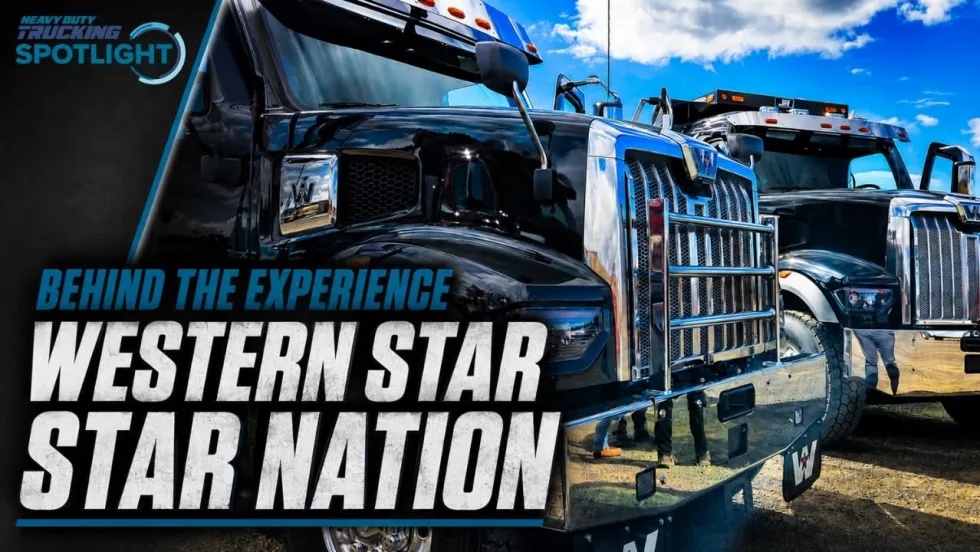
Drivers Put Western Star Trucks to the Test at Star Nation Experience
Watch to get an inside look at the Western Star trucks, technology, and community behind the Star Nation Experience 2026!
Read More →
Trump Administration Looks to Put More Veterans Behind the Wheel
The Freedom Haulers program pulls together existing and expanded programs at several federal agencies to recruit veterans to drive commercial heavy-duty trucks and cut the red tape for them to get a CDL, training, and employment.
Read More →