




Related: States Agree to Remove 'Friction' From I-10 Corridor
Arizona to Test Work Zone Notification, Quicker Safety Inspections
The Arizona Department of Transportation will use federal funding next year to testing technology to improve commercial transportation safety and efficiency.
by Staff
November 30, 2016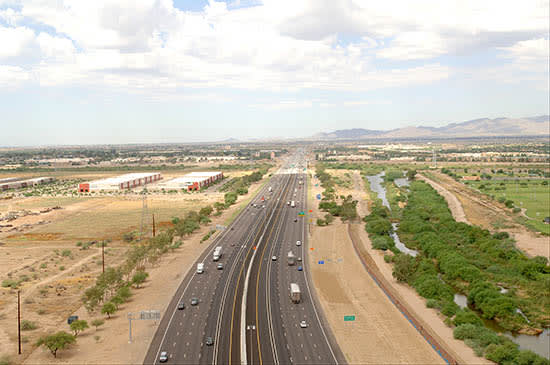
Safety at work zones and streamlined inspections at the Mexican border are involved in the Arizona programs.
2 min to read
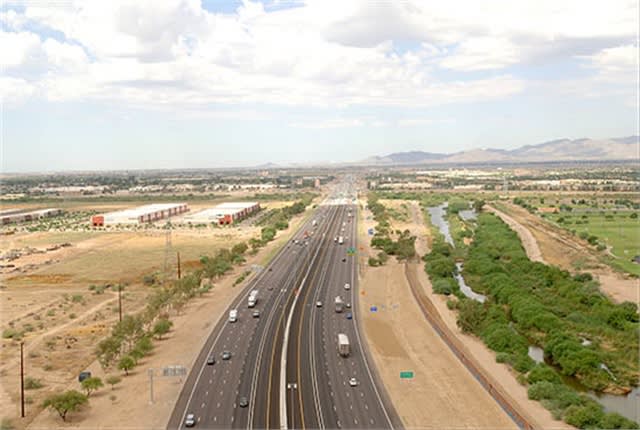
Safety at work zones and streamlined inspections at the Mexican border are involved in the Arizona programs.
The Arizona Department of Transportation will use federal funding next year to begin testing technology to improve commercial transportation safety and efficiency.
Commercial Vehicle Information Systems and Networks grants from the Federal Motor Carrier Safety Administration totaling $581,000 will go toward a work zone notification system and sharing of information beween state and federal inspectors at the Mexican border.
“These projects will make our work zones safer and improve how efficiently we inspect trucks that bring billions of dollars in commercial goods into our state,” said John Halikowski, ADOT director. “It’s another way ADOT is making our highways key commerce corridors that improve the quality of life in Arizona by moving products and people.”
The work zone notification system will use vehicle communication technologies to alert drivers that they are approaching construction or incidents on the freeway. It will also make them aware of variable speed limits, traffic congestion, and lane closures.
The notification system is designed to reduce accidents and injuries as well as to improve traffic flow and reduce congestion in work zones.
It’s a joint project involving ADOT, the Maricopa County Department of Transportation and the University of Arizona. One work zone will be chosen on a highway managed by ADOT, while a second zone will be on Maricopa County 85, which runs from the Agua Fria River in Avondale to State Route 85 near Buckeye.
The program will begin in early 2017 with pilot demonstrations in place by August 2018.
The inspection project will connect separate systems used by state and federal inspectors at the Mariposa Border Port of Entry. This will allow officers with ADOT’s Enforcement and Compliance Division to make more informed decisions about which commercial trucks to pull aside for expanded inspections.
Screenings by ADOT and FMCSA officers are based primarily on visual inspections of trucks and documents presented to officers in Rapid Enforcement Lanes. The two agencies have separate computer systems with different information about trucks crossing the border from Mexico. Some trucks cross several times in the same day.
The project should be completed by summer 2018, and will build an interface that allows state and federal inspectors to share safety and credential information about trucks crossing into Arizona from Mexico.
The shared information will be available by computer before a truck reaches the inspection booth. Combined with the truck’s weight and historical information from earlier border crossings, ADOT officers will decide whether to pull trucks aside for a closer look or allow them to continue.
More Fleet Management

Why Private Fleets Are Taking More Freight
Private fleets are putting their own trucks on demanding customers and high-cost lanes as companies seek greater control over service, costs, and capacity.
Read More →
Sponsored•September 16, 2026
Color Match Smarter: Tools That Restore & Perform
For fleet managers and collision repair professionals keeping heavy-duty trucks on the road, getting the color right the first time isn't just about appearance — it's about efficiency, turnaround time, and bottom-line results. Discover how today's digital color tools are transforming the repair process from guesswork to precision.
Read More →
FMCSA Pauses Biennial-Update Enforcement Amid Motus Transition
Carriers whose updates were due on or after June 1 have more time, while FMCSA works to stabilize its new registration system and warns of phishing sites impersonating its new carrier registration system, Motus.
Read More →


Sponsored•September 14, 2026
2026 Blueprint for Countering Smarter Supply Chain Theft
Cargo theft is no longer just the cost of doing business. It's a multi-billion-dollar criminal enterprise exploiting vulnerabilities across your fleet, drivers, and supply chain.
Read More →
Sponsored•September 1, 2026
How Telematics Improves Visibility, Control, and Performance in Refrigerated Fleets
Explore how telematics help refrigerated fleets improve visibility, uptime, efficiency, compliance, and cargo protection across connected cold chain operations.
Read More →
What the U.S.-Canada Trade War Means for Trucking
Escalating U.S.-Canada tariffs could disrupt cross-border freight, reduce truck volumes, raise costs, and create new uncertainty for carriers on both sides of the border.
Read More →
What Are Trucking’s Top Concerns for 2026?
The American Transportation Research Institute wants to know what's worrying trucking fleet managers, drivers, and other stakeholders in its annual Industry Issues survey.
Read More →
American Trucking Associations Looks for a New Leader
ATA President and CEO Chris Spear abruptly left his job at the association on August 21, at a pivotal time for the trucking industry.
Read More →
Public Wi-Fi Cybersecurity Risks: How Truck Drivers and Fleets Can Protect Their Data
Public Wi-Fi can expose truck drivers and fleets to credential theft, malware, and other cyber threats. Here’s how to reduce the risk on the road.
Read More →
For Nicky Cupp, Fleet Innovation Starts With Frustration
HDT Truck Fleet Innovator Nicky Cupp turns everyday pain points at Fraley & Schilling into opportunities for better technology and smarter processes.
Read More →