




Arizona Pushes for Rest Area Reform
Arizona Gov. Jan Brewer and the Arizona Department of Transportation are pushing to change the way states operate rest areas without cutting into budgets for public safety services
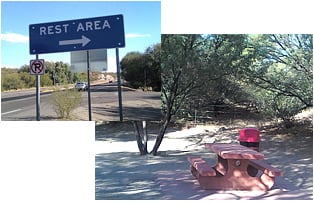
Arizona Gov. Jan Brewer and the Arizona Department of Transportation are pushing to change the way states operate rest areas without cutting into budgets for public safety services.
ADOT Director John Halikowski led a discussion on rest area commercialization with transportation leaders from across the nation during the American Association of State Highway and Transportation Officials meeting recently. Arizona has been working to change federal policies they say penalize states with newer infrastructure by prohibiting privatization or partnerships to operate rest areas.
Last fall, ADOT announced plans to temporarily close 13 highway rest areas as part of efforts to address a $100 million budget shortfall.
Currently, only states with rest areas in operation before passage of the 1956 Interstate Highway Act are eligible to privatize, outsource or engage in public-private partnerships. Arizona has none of those options and, unlike East Coast states, has long stretches of open highway, some with few driver services. Other Western region state transportation departments are supporting Arizona's call for reform.
Arizona officials are working with its Congressional delegation and other states to seek changes in federal law to allow for alternative funding strategies and flexibility to use federal highway funds. For now, the operation of rest areas continues to be part of ADOT's operations budget, a fund already constrained to provide highway maintenance, customer service, law enforcement support and other public safety services.
"Rest areas are part of the nation's highway system. While vehicles have become more fuel efficient, safe and comfortable, drivers - including commercial drivers - still need opportunities to stop and rest in safe locations," Halikowski said. "Budget restrictions and dramatic declines in revenues mean that some difficult decisions have to be made in order to prioritize safety services. Arizona has been teased by the East Coast media as 'hanging up on Nature's call' or moving to install pay toilets. The truth is that all states need greater flexibility from the federal government to complete our mission - a mission that is diverse beyond rest areas."
A representative of NATSO, the organization representing travel plazas and truckstops, warned the meeting participants of the negative impacts rest area commercialization would have on local communities and small businesses that rely on Interstate highway traffic. The group maintains that privatization of rest areas would amount to unfair competition to existing businesses along Interstate highways.
NATSO has cited a University of Maryland study, first published in 1997 and updated in 2003, which found that commercialization has a chilling effect on interchange business development.
More Drivers

Truck Drivers Need More Than Another Alert
Fleets have more visibility into truck health, safety events, and driver activity than ever. The next challenge is turning all that information into useful guidance for the person who has to decide what to do next.
Read More →
FMCSA Removes 110 Truck Driver Training Schools from Certified ELDT List
Federal regulators also are targeting more than 160 additional training providers and launching a nationwide audit of third-party CDL skills testers as part of a broader crackdown on trucking fraud.
Read More →
Hours of Service Pilot Programs: FMCSA Readies for 2027 Rollout
Two pilot programs could eventually reshape hours-of-service rules, giving truck drivers options to pause their 14-hour clock or use longer split sleeper rest periods.
Read More →
Medical Cards, English Proficiency Reshape Roadcheck Violations
Medical-card violations jumped to the top of the driver out-of-service list during CVSA’s 2026 International Roadcheck, while English-language proficiency violations appeared among the leading violations for the first time.
Read More →
Driver Trust Can Make or Break the Success of Fleet Safety Technology
New Teletrac Navman research suggests that onboarding, transparency about driver data, and positive feedback can play a significant role in how commercial drivers respond to safety and coaching technology.
Read More →
EEOC Sues KLLM Over Alleged Sex Discrimination in Driver Training
KLLM is facing a federal sex-discrimination lawsuit over policies the EEOC alleges put female truck driver trainees at a disadvantage.
Read More →
FMCSA Moves to Codify English Language Requirements for Commercial Drivers
By changing regulations on English-language proficiency requirements for commercial drivers, rather than relying on a guidance memo, the FMCSA said future administrations won't be able to walk back the Trump administration's stricter enforcement with just a memo.
Read More →
Drivers Put Western Star Trucks to the Test at Star Nation Experience
Watch to get an inside look at the Western Star trucks, technology, and community behind the Star Nation Experience 2026!
Read More →
Trump Administration Looks to Put More Veterans Behind the Wheel
The Freedom Haulers program pulls together existing and expanded programs at several federal agencies to recruit veterans to drive commercial heavy-duty trucks and cut the red tape for them to get a CDL, training, and employment.
Read More →
Putting Mack’s Command Steer to the Test
A test drive of Mack’s Command Steer active steering system evaluates how it can make truck driving easier and less tiring.
Read More →