




Appeals Court Upholds Personal Injury Decision Against Swift
The U.S. Court of Appeals for the 10th Circuit has upheld a personal injury verdict against Swift Transportation, thought to be the largest personal injury verdict in Kansas history
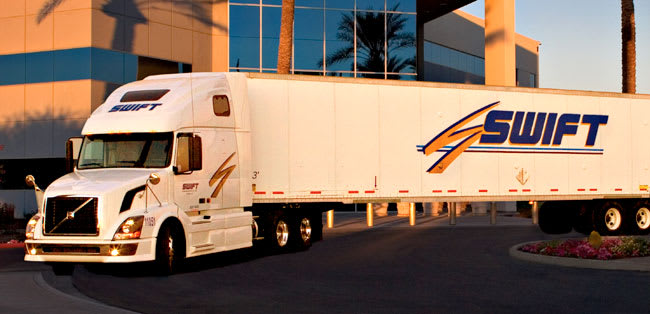
The U.S. Court of Appeals for the 10th Circuit has upheld a personal injury verdict against Swift Transportation, thought to be the largest personal injury verdict in Kansas history.
In 2006, a Yellow Freight tractor-trailer collided with a Swift truck, as the Swift driver was entering a rest stop off of U.S. Highway 54 in New Mexico, according to court documents. The driver of the Yellow Freight truck died, while the co-driver, Terry Frederick, who was in the sleeper berth, suffered paralyzing injuries in the accident. Frederick and his wife, Donna, sued Swift for damages.
The U.S. District Court in Wichita, Kan., ruled in favor of the Fredericks for a total of $23.5 million. However, the jury found the other driver was partly at fault and reduced the award to $15.3 million.
Swift decided to appeal the court's decision, arguing that the rulings resulted in an unfair trial. Swift challenged the court's ruling on several jury instructions and the admissibility of certain witness testimony and evidence, the court documents said.
Swift and the Fredericks' attorneys differed on their version of how the accident happened. The only eyewitness was the Swift driver involved, who testified that the Yellow truck rear-ended her as she was attempting to enter the rest area. The plaintiff's lawyers argued, successfully, based on the accident evidence, that the Swift driver was actually backing into oncoming traffic because she was not able to make the turn into the rest area properly.
In the appeal, Swift argued against the district court's motion to strike the testimony of Robert Reed, Swift's expert on trucking safety and regulatory compliance. The court held that several exhibits, including a turning study conducted at the scene of the accident and a perception study showing what a driver could have seen on the night of the accident, fell within areas outside the scope of Reed's expertise.
Another issue was that the Swift driver tested positive for methamphetamine in a drug test several hours after the accident. In its appeal, Swift argued that "whether its driver consumed methamphetamine before or after the accident is a disputed fact."
Swift also argued that regulations broken by the driver only apply to "driver," not "employers," and that Swift should not be held liable. But the court said the driver was Swift's employee and acting within the course of scope of her employment when the accident occurred. Therefore, Swift would be responsible for her negligent behavior.
Other arguments in the appeal involved whether the driver was experienced enough for her recent move to a transcontinental fleet; and the admissability of evidence regarding the Swift driver's prior license suspensions, drug use, convictions, and failures on different portions of the necessary licensing exams.
Swift officials issued the following statement: "Swift"s sympathies and apologies go out to the victims and their families for this tragic accident. The Swift truck, according to the police investigation, was struck from behind while making a legal turn. The Yellow driver, who failed to brake prior to impact, was found by the jury to have significant fault. Swift has a zero tolerance policy for drugs. This driver, who is no longer employed with Swift, had been previously drug tested and the test came back clean. Swift is considering further appellate options."
(Updated 11 a.m. CDT 8/16/2010 to add Swift's statement.)
More Drivers

When Language Stops the Truck: The Return of ELP Out-of-Service Orders
English language proficiency rules for commercial drivers aren’t new, but renewed out-of-service enforcement has raised the stakes. Here’s what carriers need to know before a driver reaches a roadside inspection.
Read More →
Samsara Launches Custom AI Agent Builder
Agent Studio lets fleets create AI tools for hours-of-service monitoring, reporting and driver support, including agents that communicate by phone.
Read More →
Trucker Path Expands Reserved Parking Network
Trucker Path has added close to 6,000 more truck parking spaces to its Trucker Path Reserved Parking Network with the addition of Safe Truck Parking.
Read More →
EEOC Sues Texas Trucking Company Over Driver Age Limits
The agency says Trancasa USA rejected applicants over 65 and applied tougher driving-record standards to those over 60.
Read More →
Nussbaum, Roehl Announce Second Driver Pay Increase This Year
This year has seen a swath of major truck driver pay increases as freight capacity has tightened.
Read More →
From One Generation to the Next: How Mentorship Builds Safer Truck Drivers
After three decades in trucking, Harold Perry shares what he's learned about driver safety, mentorship, and helping the next generation build confidence behind the wheel.
Read More →
Truck Drivers Need More Than Another Alert
Fleets have more visibility into truck health, safety events, and driver activity than ever. The next challenge is turning all that information into useful guidance for the person who has to decide what to do next.
Read More →
FMCSA Removes 110 Truck Driver Training Schools from Certified ELDT List
Federal regulators also are targeting more than 160 additional training providers and launching a nationwide audit of third-party CDL skills testers as part of a broader crackdown on trucking fraud.
Read More →
Hours of Service Pilot Programs: FMCSA Readies for 2027 Rollout
Two pilot programs could eventually reshape hours-of-service rules, giving truck drivers options to pause their 14-hour clock or use longer split sleeper rest periods.
Read More →
Medical Cards, English Proficiency Reshape Roadcheck Violations
Medical-card violations jumped to the top of the driver out-of-service list during CVSA’s 2026 International Roadcheck, while English-language proficiency violations appeared among the leading violations for the first time.
Read More →