




Appeals Court Strikes LA Port's Employee Requirement
The American Trucking Associations won a reversal of a key piece of the Port of Los Angeles concession program for drayage carriers. In a ruling yesterday, the U.S. Court of Appeals for the Ninth Circuit threw out the LA port's plan to force independent drivers to become employees of drayage companies. The court upheld several other aspects of the concession program, covering issues such as off-street parking, maintenance and financial capability
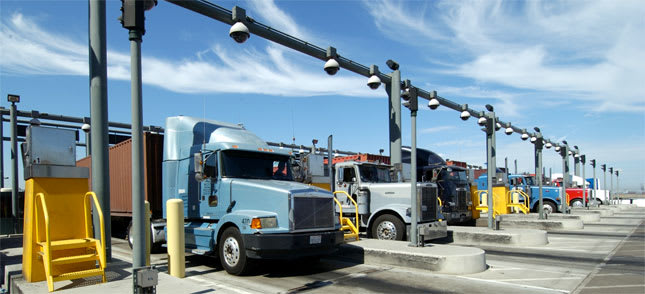
The American Trucking Associations won a reversal of a key piece of the Port of Los Angeles concession program for drayage carriers.
In a ruling yesterday, the U.S. Court of Appeals for the Ninth Circuit threw out the LA port's plan to force independent drivers to become employees of drayage companies. The court upheld several other aspects of the concession program, covering issues such as off-street parking, maintenance and financial capability.
The employee requirement has been the main sticking point between the port and the trucking industry.
The requirement would have given the concessionaires that serve the port would five years to convert entirely to employee drivers. Right now, about 90% of the trucks serving the port are driven by independent owner-operators.
The port's position is that the owner-operator business model cannot produce enough revenue to ensure that the truck owner will be able to afford a modern engine that meets federal clean air standards without ongoing financial assistance.
ATA contends that this and other aspects of the concession program are illegal and discriminatory.
The court, which was reviewing a lower court's decision that upheld the concession plan, found that the employee driver provision is "tantamount to regulation" and thus illegal.
The court ruled with the Port of LA on four other aspects of the concession plan that ATA had challenged.
It upheld the requirement that concessionaires submit an off-street parking plan to ensure that the carriers are in compliance with local parking restrictions.
It also upheld the port's assertion that it can tell carriers they have to meet safety and maintenance requirements, which ATA had challenged on grounds that it duplicates federal law. Even though the requirement does duplicate, it has an independent safety benefit, the court found.
In the third case, the court agreed that the port may require concessionaires to put signs on permitted trucks that show a phone number for questions about emissions, safety and other issues.
And the court said that carriers must demonstrate that they have the financial capability to fulfill the concession agreement.
One member of the three-judge panel dissented from the majority. Circuit Judge Randy Smith challenged the legal underpinning of the majority's decision, arguing that it is incorrect to say the port is exempt from a federal law that would limit its ability to enforce the concession agreement.
ATA was jubilant about the ruling, describing it as a decisive victory.
"By striking down the port's unjustified ban on owner-operators, the court has upheld the rights of trucking companies to structure their businesses to maximize efficiency and productivity," said ATA President and CEO Bill Graves in a statement.
"By throwing out the ban, the court has ensured that competition, not government regulation, will establish motor carrier's rates, routes, and services. This is a win for all involved; trucking companies; small business owner-operators; freight shippers; and ultimately average American consumers. The historic gains in air quality at the port clearly show that the interests of clean air have been served without running independent contractors out of the port."
Geraldine Knatz, executive director of the Port of Los Angeles, said in a statement that she is pleased that almost all aspects of the concession program have been upheld.
"The measures upheld in this ruling allow for significant accountability from the trucking companies that call at the Port of Los Angeles," she said. "We look forward to assuring safer, cleaner and more secure drayage for the long term."
Phillip Sanfield, director of media relations, said it is too soon to discuss the next step, or if there is a next step. Senior management at the port will have to review yesterday's ruling and decide if they will appeal it to the U.S. Supreme Court, a process that could take a month or more, he said.
ATA chief counsel Robert Digges said much the same thing.
"We are evaluating the rest of the court's ruling," he said in a statement. "While the court upheld our argument on the central issue, we will be deciding whether a further appeal is warranted."
Digges added that the dissent by Judge Smith supports ATA's position. "Should we appeal, that dissent will be very helpful to our effort," he said.
More Drivers

From One Generation to the Next: How Mentorship Builds Safer Truck Drivers
After three decades in trucking, Harold Perry shares what he's learned about driver safety, mentorship, and helping the next generation build confidence behind the wheel.
Read More →
Truck Drivers Need More Than Another Alert
Fleets have more visibility into truck health, safety events, and driver activity than ever. The next challenge is turning all that information into useful guidance for the person who has to decide what to do next.
Read More →
FMCSA Removes 110 Truck Driver Training Schools from Certified ELDT List
Federal regulators also are targeting more than 160 additional training providers and launching a nationwide audit of third-party CDL skills testers as part of a broader crackdown on trucking fraud.
Read More →
Hours of Service Pilot Programs: FMCSA Readies for 2027 Rollout
Two pilot programs could eventually reshape hours-of-service rules, giving truck drivers options to pause their 14-hour clock or use longer split sleeper rest periods.
Read More →
Medical Cards, English Proficiency Reshape Roadcheck Violations
Medical-card violations jumped to the top of the driver out-of-service list during CVSA’s 2026 International Roadcheck, while English-language proficiency violations appeared among the leading violations for the first time.
Read More →
Driver Trust Can Make or Break the Success of Fleet Safety Technology
New Teletrac Navman research suggests that onboarding, transparency about driver data, and positive feedback can play a significant role in how commercial drivers respond to safety and coaching technology.
Read More →
EEOC Sues KLLM Over Alleged Sex Discrimination in Driver Training
KLLM is facing a federal sex-discrimination lawsuit over policies the EEOC alleges put female truck driver trainees at a disadvantage.
Read More →
FMCSA Moves to Codify English Language Requirements for Commercial Drivers
By changing regulations on English-language proficiency requirements for commercial drivers, rather than relying on a guidance memo, the FMCSA said future administrations won't be able to walk back the Trump administration's stricter enforcement with just a memo.
Read More →
Drivers Put Western Star Trucks to the Test at Star Nation Experience
Watch to get an inside look at the Western Star trucks, technology, and community behind the Star Nation Experience 2026!
Read More →
Trump Administration Looks to Put More Veterans Behind the Wheel
The Freedom Haulers program pulls together existing and expanded programs at several federal agencies to recruit veterans to drive commercial heavy-duty trucks and cut the red tape for them to get a CDL, training, and employment.
Read More →