




Accident Appeals Process Improved
The Federal Motor Carrier Safety Administration has made a change in its compliance review procedures that may make it easier for carriers to keep non-preventable accidents from affecting their safety rating
The Federal Motor Carrier Safety Administration has made a change in its compliance review procedures that may make it easier for carriers to keep non-preventable accidents from affecting their safety rating.
A carrier’s accident record carries significant weight in the rating system. All reportable accidents are included in that record, even those that the driver could not have prevented. Until now, carriers could present evidence of non-preventability only during Administrative Reviews to protest a proposed safety rating. Now FMCSA division administrators or state directors have the authority to review a carrier’s accident record before a compliance review is sent to FMCSA headquarters.
The carrier must initiate the action. If, during a compliance review, they tell the safety investigator that some of the accidents in its record were non-preventable, the investigator is to direct them to the division administrator or state director. The carrier has seven calendar days to submit required documentation if the investigator has proposed an unsatisfactory rating, and 10 days to submit documentation if the proposed rating is conditional.
The compliance review will not be uploaded to FMCSA prior to review of the accident record by the division administrator or state director. If that person determines that the accident or accidents in question were non-preventable, they will be removed from the calculation of the carrier’s accident rate. A note explaining the change will be included in the comments section of the compliance review.
Field administrators can’t change the accident rate once the compliance review has been submitted to FMCSA headquarters. If the carrier wants to protest the accident rate after the rating has been assigned, it must request an Administrative Review.
But convincing FMCSA that a driver could not have prevented the accident still isn’t easy. Carriers are only allowed to submit official police or insurance accident investigation reports. FMCSA has instructed its regional authorities to “keep in mind that the motor carrier must present ‘compelling evidence’ on the issue of preventability.” Accident reports, the agency notes, may fail to indicate when the driver became aware of a dangerous roadway situation or how much time the driver had to react to the situation by taking effective evasive action.
“If there is any uncertainty in the report(s) as to whether the driver could have avoided the accident, it must be considered a preventable accident,” FMCSA advises. “The division administrator/state director must remember that who ‘caused’ the accident and whether the driver could have avoided the accident are entirely separate issues.”
The agency also offers examples of accidents that would not be preventable:
When another vehicle runs a red light and crashes into the commercial motor vehicle.
When the commercial vehicle is rear-ended by another vehicle.
When the commercial vehicle is stopped in traffic or legally parked and is struck by another vehicle.
Additional information on the safety rating and administrative review process can be found in Federal Motor Carrier Safety Regulations Part 385, available on the Internet at www.fmcsa.dot.gov. This new policy will be incorporated into the next release of the Field Operations Training Manual.
More Drivers

How Fraley & Schilling Improved Logbook Compliance by Over 50%
Fraley & Schilling needed a way to close a compliance workflow gap in its ELD system without adding more work from driver training, reminders, and back-office follow-ups. It found the answer in a custom driver app.
Read More →
Volvo Goes Gaming
Volvo has roared into American Truck Simulator with two new flagship trucks.
Read More →
What the Best Fleets to Drive For Teach About Driver Retention
Survey fatigue, AI-powered routing, owner-operator expectations, and the decline of social media all emerged as themes from this year's Best Fleets to Drive For program.
Read More →
Driver Retention Lessons From the Best Fleets to Drive For
What separates trucking's best workplaces from the rest? Jane Jazrawy shares the biggest lessons from this year's Best Fleets to Drive For program on driver retention, communication, AI, and workforce trends on the HDT Talks Trucking podcast.
Read More →
Farewell, CDL: Why I'm Giving Up My Commercial Driver's License
After more than 20 years as a CDL holder, HDT Executive Editor Jack Roberts is letting his commercial license expire. Not because he wants to — but because trucking's nuclear verdict crisis has made the risks of public-road test drives too great for editors, manufacturers, and everyone involved.
Read More →
How Top Trucking Fleets Improve Driver Retention [Video]
What do healthy snacks, optimized routing, and just picking up the phone have in common? They're all strategies the Best Fleets to Drive For are using to retain truck drivers.
Read More →
Trucker Path Adds Verisk CargoNet Theft Data to Navigation Platform
Trucker Path’s new cargo theft risk overlays give drivers and fleets visibility into high-risk areas, stolen commodity trends, and theft hotspots.
Read More →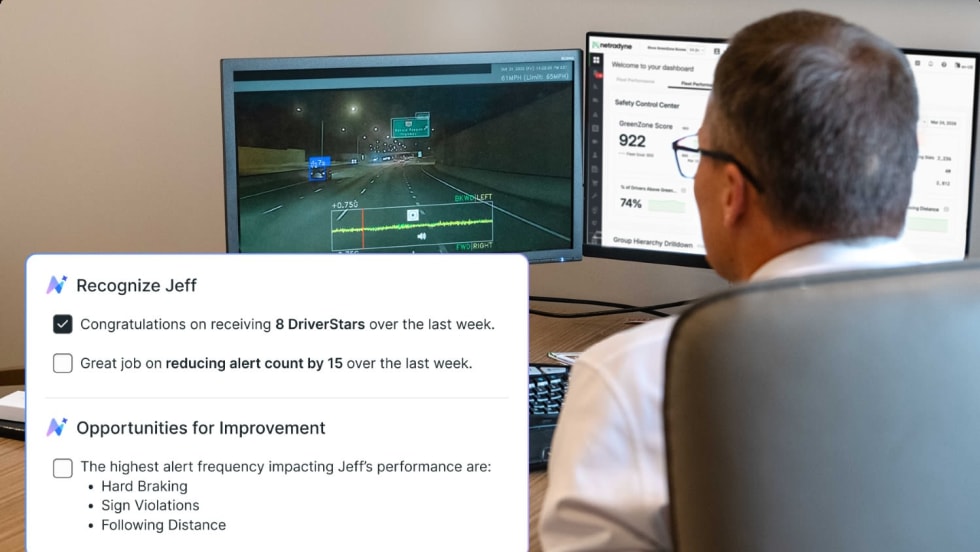
Netradyne Intelligence Uses New AI Agents to Automate Response to In-Cab Camera Data
The company called the next-generation in-cab camera safety platform "a fundamental shift from systems that report on what happened to systems that actively drive what should happen next."
Read More →
Why Truck Detention Keeps Costing Fleets Time and Money
A 2024 ATRI study found detention affects nearly 40% of truckload stops and costs the industry more than $15 billion annually. Despite the toll on drivers, fleets, and supply chains, the problem remains stubbornly persistent.
Read More →
Prime Inc. to Open $7.9M Flagship Used-Truck Dealership
A new driver-focused facility to sell Prime Inc's used trucks and trailers will be the first purpose-built location in the company's history.
Read More →