




Accelera by Cummins, Daimler, Paccar Team up to Advance U.S. Battery-Cell Production
Two truck and engine makers are teaming up with Cummins’ zero-emissions business unit in a deal to accelerate and localize battery cell production and the battery supply chain in the United States, initially focusing on Lithium-iron phosphate, or LFP, technology.

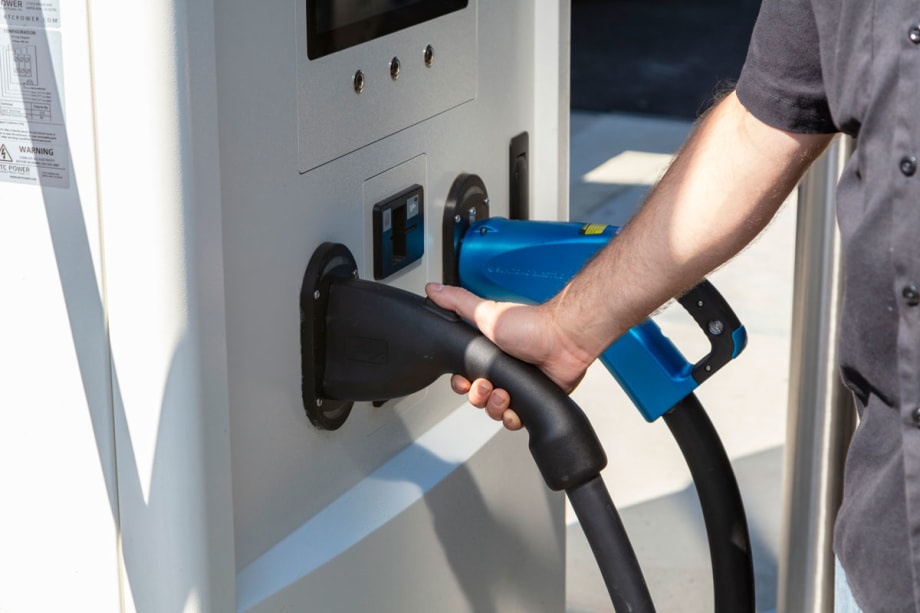
Lithium-iron phosphate batteriess offer certain advantages when it comes to charging.
Photo: Daimler Truck North America
Two truck and engine makers are teaming up with Cummins’ zero-emissions business unit in a deal to accelerate and localize battery cell production and the battery supply chain in the United States, initially focusing on Lithium-iron phosphate, or LFP, technology.
Accelera by Cummins, Daimler Trucks & Buses US Holding, and Paccar plan a joint venture that will make battery cells for electric commercial vehicles and industrial applications. Each company will own 30% of, and jointly control, the joint venture. The total investment is expected to be around $2 billion to $3 billion for the 21-gigawatt hour factory.
The three companies expect to see growing demand for battery technology throughout this decade and said U.S. customers will benefit from a state-of-the-art dedicated battery cell factory.
Why Lithium-Iron Phosphate Batteries?
The initial focus of the joint venture will be on lithium-iron-phosphate (LFP) battery technology for commercial battery-electric trucks.
LFP battery cells offer several advantages compared to other battery chemistries, according to the announcement, including lower cost, longer life, and enhanced safety, without the need for nickel and cobalt raw materials.
Accelera says on its website that the LFP battery “is poised to redefine battery manufacturing and EV sales in North America and Europe,” but notes that it’s actually not new. In fact, lithium iron phosphate batteries first came to light in 1996. Seventeen percent of the global EV market is already powered by LFPs. According to Forbes, LFP batteries already power the majority of electric vehicles in the Chinese market, but this technology is only recently making inroads in North America.
Lithium-ion (Li-Ion) batteries are a rechargeable battery type most people are familiar with, used in mobile phones, laptops and electric vehicles. But the Li-Ion battery family contains different battery chemistries named after their cathode. LFP is part of that family. So while an LFP is a Li-Ion battery, not all Li-Ions are LFPs. Other lithium-ion batteries include the nickel manganese cobalt oxide (NMC) battery and the lithium nickel cobalt aluminum oxides (NCA) battery. Both are already used in electric vehicles.
Why is it called “LFP” if it’s “lithium iron phosphate?” The “F” comes from “Fe,” the periodic table of elements chemical symbol for iron. Fe is derived from the Latin word for iron, ferrum.
One of the advantages of LFP is that it can hold up better to charging. Overall, it is considered best practice to avoid charging that’s too low or too high, with 80% being the standard battery capacity for an optimal lifetime of that battery. But LFPs have 100% of their capacity available, meaning they can be fully charged without causing accelerated battery degradation.
Another advantage is that LFPs are less prone to something called "thermal runaway." This is a chain reaction in a battery cell that can be very difficult to stop once it has started. It happens when the temperature inside a battery causes a chemical reaction inside the battery. This could be caused by damage to the battery or an external short. The chemical reaction produces even more heat, which drives the temperature higher, creating a vicious cycle.
Analyst: Why This is a Big Deal for the EV Truck Market
"21 gigawatt hour (GWh) is a very big number in the context of trucks and buses," said Jamie Fox, Principal Analyst at Interact Analysis. “A 21 GWh plant, operating at full capacity in 2026, would provide enough batteries for the entire North American market for all battery-electric buses and medium and heavy duty trucks combined, assuming about 10% of trucks are electric in that year."
He also noted that battery packs in trucks and buses can have double the per kWh price that passenger cars have, and this factory may contribute towards developing economies of scale that can reduce this gap.
“Some may want to wait and see until the factory has actually been built, but this announcement is big enough to make people who took a bearish stance on electric trucks in North America reconsider their position."
More About the Deal
EVE Energy will serve as the technology partner in the joint venture with 10% ownership and will contribute its battery cell design and manufacturing know-how. EVE Energy is a global leader in the manufacture of LFP battery cells for the vehicle industry and is publicly traded on the Shenzhen stock exchange, according to the announcement.
This strategic joint venture enables its owners to create the necessary scale for access to cost effective and differentiated battery cell technology.
“We have the responsibility to decarbonize in a way that is best for all of our stakeholders and the planet,” said Jennifer Rumsey, Cummins chair and CEO. “This requires working closely with key partners. Today’s announcement reflects that action. Not only are we advancing a key technology solution for our customers, but accelerating the energy transition in the United States.”
Martin Daum, CEO of Daimler Truck, noted that this planned joint venture enables economies of scale beyond what the company can enjoy on its own. “It is a key puzzle piece of our battery industrialization strategy, ensuring access to the right battery cell technology at the right cost.”
The transaction is subject to customary closing conditions and regulatory approvals.
Updated 9/12/2023 to add comments from Jamie Fox.
More Fuel Smarts

East Coast Port Launches $45M Electric Truck Push
The Port Authority of New York and New Jersey announced millions in incentives for zero-emission drayage trucks, yard tractors, and new charging hubs near the port.
Read More →
California Bill Could Shed Light on Electric Truck Prices
Why do battery-electric Class 8 trucks remain so expensive? A California bill headed to Gov. Gavin Newsom would give fleets and state agencies more visibility into what manufacturers charge.
Read More →
Detroit Opens Orders for EPA 2027 Engines
Detroit isn’t starting from scratch to meet EPA 2027 diesel emissions standards. Its Gen 6 DD13 and DD15 engines keep much of today’s platform while updating the fuel and aftertreatment systems.
Read More →
Zero-Emission Truck Corridor Planned for West Coast
California, Oregon, Washington, British Columbia and Baja California are coordinating plans for truck charging and hydrogen fueling from Canada to Mexico.
Read More →
A Closer Look at Kenworth’s Electric T880E Vocational Truck [Video]
Learn more about Kenworth's T880E battery-electric vocational truck at the Paccar Technical Center, including its range, applications, upfitting considerations, and PTO options, in this HDT Spotlight video.
Read More →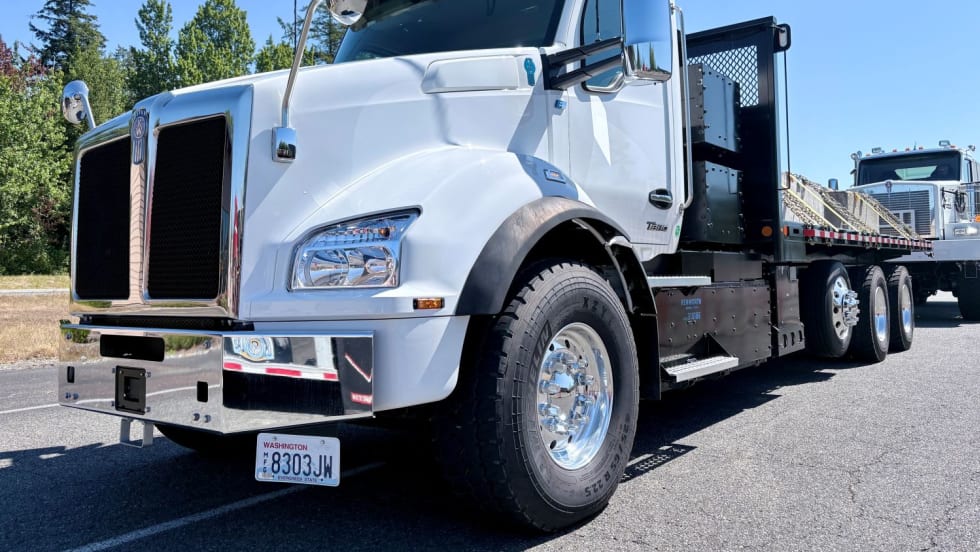
Kenworth T880E Brings EV Power to Vocational Trucks
A closer look at the Kenworth T880E’s range, charging, powertrain and upfit options — and where fleets are showing the most interest.
Read More →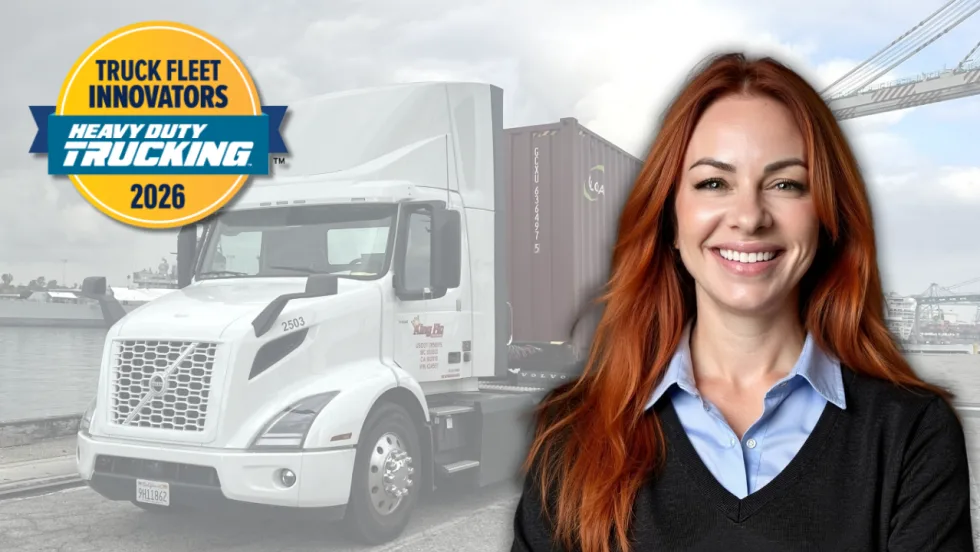
Jennie Abarca Is Proving Electric Trucks Can Do the Job
HDT Truck Fleet Innovator Jennie Abarca is building confidence in fleet electrification one load at a time while openly sharing the challenges she encounters along the way as a small-fleet owner.
Read More →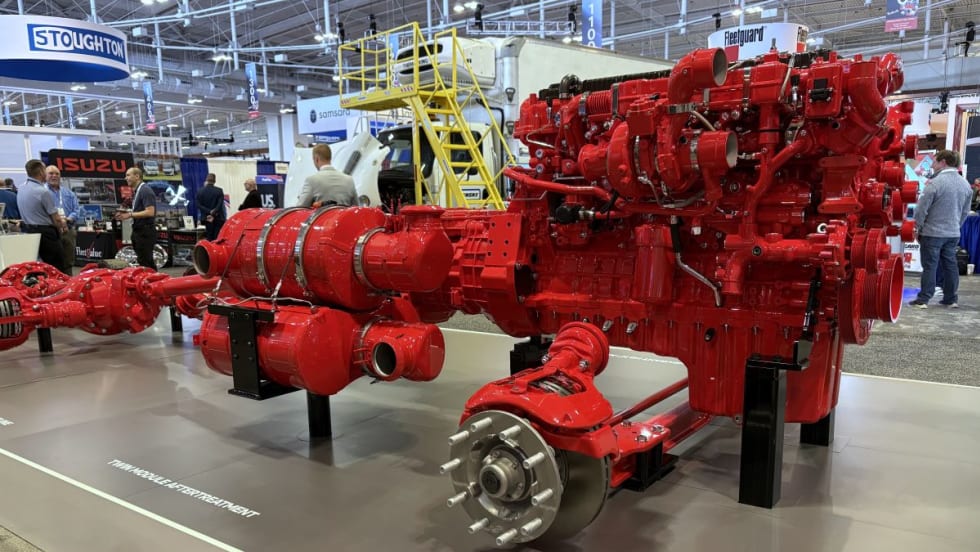
Cummins Adjusts 2027 Engine Rollout After EPA Proposal
The engine maker will gradually introduce its new Model Year 2027 diesel engines while continuing to offer current models during the transition, citing the EPA's proposed emissions rule changes.
Read More →
EPA Proposal Could Ease 2027 Truck Costs and Buying Uncertainty
The proposal doesn't change the tougher NOx standard, but it would revise key implementation requirements that manufacturers say have driven up costs and complicated fleet purchasing decisions.
Read More →
Cummins, Paccar Ease DEF Derates After EPA Guidance
Updated diesel engine software gives truck operators more time to address emissions-system issues while staying compliant with EPA emissions standards.
Read More →