





Sustainable Fleets: 2020 'Transformative' for Battery-Electric Growth
15 Countries Pledge 100% Zero-Emissions Truck, Bus Sales by 2040
Fifteen countries have agreed to work together toward 100% zero-emission new truck and bus sales by 2040.
November 10, 2021
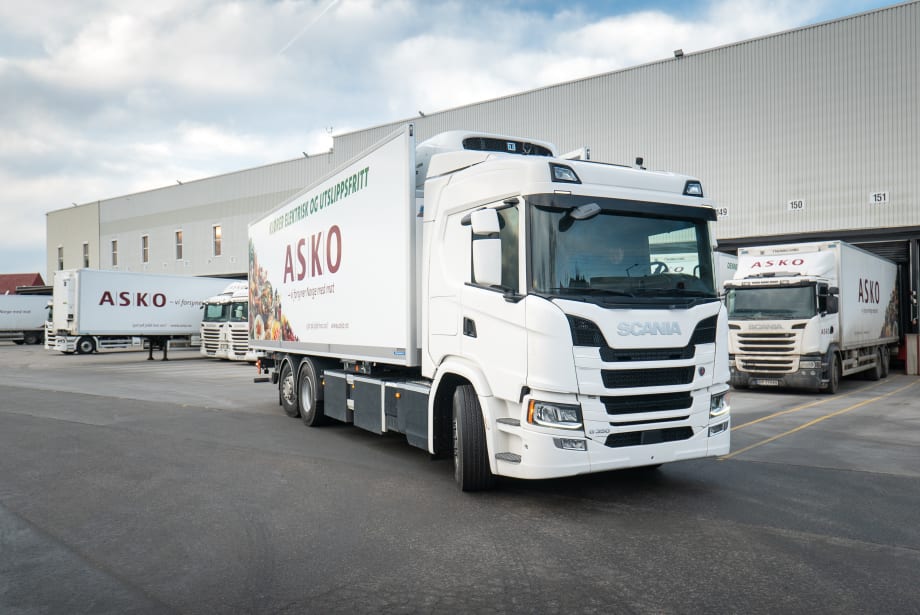
Scania is one of the manufacturers that has pledged to support the 15-country zero-emissions agreement.
Photo: Scania
4 min to read
Fifteen countries have agreed to work together toward 100% zero-emission new truck and bus sales by 2040.
During the COP26 UN Climate Change Conference of the Parties conference in Glasgow this week, Austria, Canada, Chile, Denmark, Finland, Luxembourg, Netherlands, New Zealand, Norway, Scotland, Switzerland, Turkey, the United Kingdom, Uruguay, and Wales signed a Global Memorandum of Understanding for Zero-Emission Medium- and Heavy-Duty Vehicles.
The agreement set an interim goal of 30% zero-emission new vehicle sales by 2030.
Although the U.S. is not one of the initial signatories, organizers say California’s previous actions and ambitious goals have been breaking new ground in zero-emission transport. It cited California’s Advanced Clean Truck rule that establishes firm sales targets for zero-emission trucks as a basis of the MOU ambition.
In addition, manufacturers and fleets, such as Scania, DHL, and Heineken, endorsed the MOU and agreed to work toward the same 2030 and 2040 goals.
Participants in this coordinated global effort agree that zero-emission trucks and buses are essential to reducing transport emissions, mitigating climate change, improving air quality, reducing the use of fossil fuels and energy costs, according to an announcement from Calstart.
Calstart’s Global Commercial Vehicle Drive to Zero program and campaign and the government of the Netherlands are the organizing bodies of the new MOU plus the endorsement. Together, the collective action is called the Global Agreement on Zero-Emission Trucks and Buses.
Part of Larger Global ZEV Goals
The effort was a headline announcement at COP26’s Transport Day in Glasgow Nov. 10.
In parallel, host nation the United Kingdom, with the support of the Climate Group, announced the COP26 declaration on zero-emission cars and vans, which brings together national governments, states, regions, cities, vehicle manufacturers, businesses, investors and civil society to work toward 100% zero-emission car and van sales by 2035 in leading markets, and no later than 2040 globally.
Via these coordinated agreements for road transport, cars, vans, trucks, and buses are all on a pathway to 100% zero-emissions and in line to meet the goals of the Paris agreement and limit global warming to 1.5 degrees Celsius, according to a news release from Calstart.
“For the first time we have a unified target, supported by leading governments and industry, for when new trucks and buses should fully transition to zero-emission technologies,” said Cristiano Façanha, Calstart’s global director. “Globally, freight trucks and buses represent about 4% of the on-road fleet globally but are responsible for 36% of greenhouse gas emissions, and over 70% of nitrogen oxide emissions that contribute to local air pollution. This makes trucks and buses a very effective target for fast decarbonization.”
The transition to 100% zero-emission technologies for trucks and buses will require massive investments in battery and electric component manufacturing and charging infrastructure as well as cross-collaboration between countries and the public and private sector, Calstart noted.
Active discussions are being held with other countries that have not yet signed on.
“We have been coordinating with many additional countries about joining the MOU, and we hope to announce additional countries in the coming year,” said Façanha. “In addition, the MOU includes a robust implementation process to ensure progress and support participating countries. Governments will meet annually to discuss progress, share plans on how they intend to meet the goals of the MOU, share data, and collaborate.”
Organizers said the goals of the agreement “are grounded in real-world data on model availability and technology readiness.”
“Historically seen as a challenging segment to electrify, there are currently more than 570 models of zero-emission trucks and buses on the market supporting a diversity of transport needs,” said the announcement. “In addition, a recent analysis evaluates how manufacturers need to ramp up production of zero-emission vehicles to meet the ambition of the MOU.”
Fleet ZEV Goals
Fleet owners and operators endorsing the agreement pledged to work toward 100% of their medium- and heavy-duty fleets being ZEVs by 2040, “recognizing that we strive for an earlier transition of the lighter MHDV segments.”
DHL is one of the fleets endorsing the MOU.
“DHL has been an early mover in the area of fleet electrification and we see this as a key factor in achieving our longer-term net zero emission aspirations,” said Greg Hewitt, CEO of DHL Express USA. “We believe that collaboration between the private and public sectors will play an important role in accelerating the development of electric vehicles for long-haul and heavier-duty road transportation. The MOU signed by national governments this week represents a highly significant statement of intent in this area and will provide added impetus for companies in our industry to integrate more electric MHDVs into our fleets.”
More Fuel Smarts
Wex Adds Cardless Fuel Payments for Over-the-Road Customers
A new fuel card feature for Wex customers offers convenience and security.
Read More →
New California Law Could Shed Light on Electric Truck Prices
Why do battery-electric Class 8 trucks remain so expensive? A California bill signed by Gov. Gavin Newsom would give fleets and state agencies more visibility into what manufacturers charge.
Read More →
How Volvo Updated Its D13 for EPA 2027 [Watch]
Volvo’s updated D13 promises lower emissions without sacrificing performance or fuel economy. Take a closer look at what changed inside the engine in this HDT Spotlight video.
Read More →

Diesel Price Spike Shortens Payback for Natural Gas Trucks, Report Says
Energy Vision estimates fleets could recover the higher purchase price of an RNG-fueled Class 8 tractor in 1.3 to 2.8 years under current fuel-price scenarios.
Read More →
Calstart Becomes Catalyst Mobility, Reflecting Broader Focus
Calstart is now Catalyst Mobility, reflecting the nonprofit’s growing national role in clean transportation, including zero-emission trucks, infrastructure and incentive programs.
Read More →
Record Diesel Prices Squeeze Trucking Fleets
Average U.S. diesel prices have climbed to nearly $6 a gallon, surpassing the 2022 record as tight refinery capacity and Middle East disruptions keep fuel costs elevated.
Read More →
Sponsored•September 9, 2026
How Fuel Delivery Shapes Engine Performance
Fuel delivery depends on more than what happens at the injector. For fleet, maintenance and technical professionals, looking at the full path from pump to injector can provide useful context for understanding engine performance.
Read More →
East Coast Port Launches $45M Electric Truck Push
The Port Authority of New York and New Jersey announced millions in incentives for zero-emission drayage trucks, yard tractors, and new charging hubs near the port.
Read More →
Detroit Opens Orders for EPA 2027 Engines
Detroit isn’t starting from scratch to meet EPA 2027 diesel emissions standards. Its Gen 6 DD13 and DD15 engines keep much of today’s platform while updating the fuel and aftertreatment systems.
Read More →
Zero-Emission Truck Corridor Planned for West Coast
California, Oregon, Washington, British Columbia and Baja California are coordinating plans for truck charging and hydrogen fueling from Canada to Mexico.
Read More →