




President Obama signed the long-awaited highway bill into law at the White House this afternoon. The bill, Moving Ahead for Progress in the 21st Century, or MAP-21, funds transportation programs through September 2014.
The bill holds transportation spending at current levels, authorizing $101.3 billion for highways and transit over the next 27 months.
"This measure includes historic reforms - cutting red tape and consolidating or eliminating nearly 70 federal programs," said Transportation and Infrastructure Committee Chairman John Mica, R-Fla., in a statement.
"This bill will provide a major boost to our economy by putting Americans back to work building our nation's bridges and highways," he said.
"It has been a very long and winding road to get to this place," said Sen. Barbara Boxer, D-Calif., chairman of the Environment and Public Works Committee. "This sends a message to the people of America, and that is that we can work together."
The agreement lays the groundwork for the first national freight policy. It includes a number of trucking provisions, including mandator electronic onboard recorders to track driver logs, a study of the 34-hour restart provision, a study of size and weight limits. It gives FMCSA legal authority for a range of initiatives, many of which already are under way.
Although an agreement was reached and the legislation passed last week, Obama had to sign a one-week measure last Friday to extend the two programs until the new legislation reached his desk. The previous transportation funding extension expired on June 30.
Reactions
American Trucking Associations President and CEO Bill Graves noted in a statement that "it has been 30 months since we have had a true, long-term highway funding bill, so today's bill signing is a good thing for trucking and for our national economy."
"It is not perfect, but this law advances the cause of highway safety and, I believe, will ultimately be seen as a springboard to even more robust transportation funding in the future," Graves said. He did say he was disappointed that it fails to deliver adequate funding to improve our nation's infrastructure network.
"If America is to maintain its place as the world's preeminent economy, then we must do more to maintain and improve our nation's system of roads and bridges to ensure that goods can move freely and efficiently from factories to ports and from farms to markets," Graves said. "While this bill takes steps in that direction, much more must be done in the future."
The Commercial Vehicle Safety Alliance emphasized that it provides a steady level of funding for state safety and enforcement programs and advanced key safety initiatives supported by the group, such as stronger requirements to help address the chameleon carrier threat, an industry-wide requirement that CMVs be equipped with electronic logging devices for HOS compliance, and tighter CDL and driver training requirements.
For more details on the bill, see 6/29/2012 Agreement Sets New Course for Highway Program
President Signs Highway Bill
President Obama signed the long-awaited highway bill into law at the White House this afternoon. The bill, Moving Ahead for Progress in the 21st Century, or MAP-21, funds transportation programs through September 2014
More Drivers
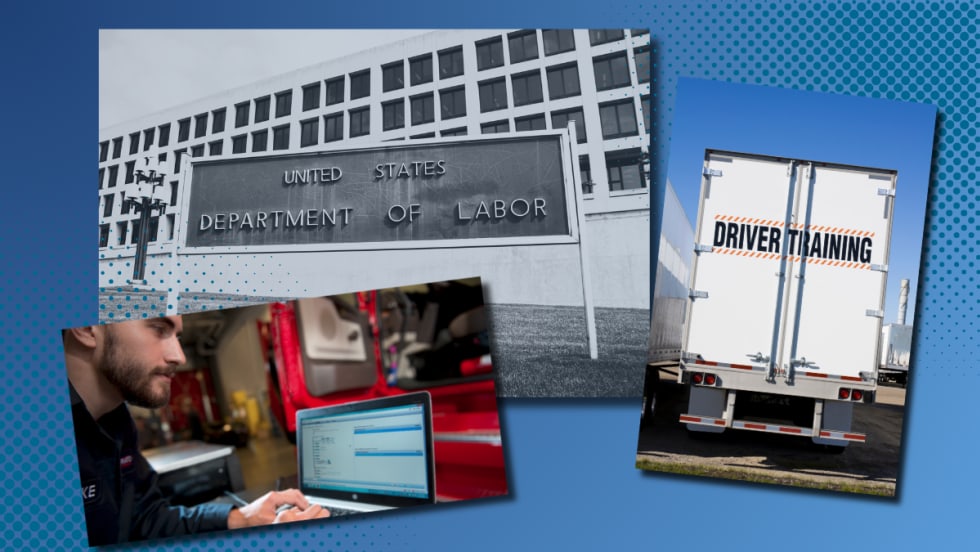
Federal Proposal Would Allow Pell Grants for Shorter-Term Job Training
The Department of Labor plans to expand Pell Grant eligibility to some shorter workforce training programs, a move the American Trucking Associations said will help strengthen commercial driver training schools and diesel technician training programs.
Read More →
Owner-Operator Model Gets Boost as DOL Proposes 2024 Independent Contractor Definition Reversal
For an industry that has watched this issue go back and forth for years, the independent contractor proposal marks the latest swing in the regulatory pendulum.
Read More →
FMCSA Reinstates Field Warrior ELD to Registered Device List
One electronic logging device has been reinstated to the FMCSA's list of registered ELDs.
Read More →
How One Company is Using Smart Suspension Technology to Reduce Driver Injuries and Improve Retention
America’s Service Line adopted Link’s SmartValve and ROI Cabmate systems to address whole-body vibration, repetitive strain, and driver turnover. The trucking fleet is already seeing measurable results.
Read More →
CarriersEdge Announces 2026 Best Fleets to Drive For
The 18th annual contest recognizing the best workplaces for truck drivers sees changes to Top 20, Hall of Fame
Read More →
FMCSA Targets 550+ ‘Sham’ CDL Schools in Nationwide Sting Operation
The Federal Motor Carrier Safety Administration issued more than 550 notices of proposed removal to commercial driver training providers following a five-day nationwide enforcement sweep. Investigators cited unqualified instructors, improper training vehicles, and failure to meet federal and state requirements.
Read More →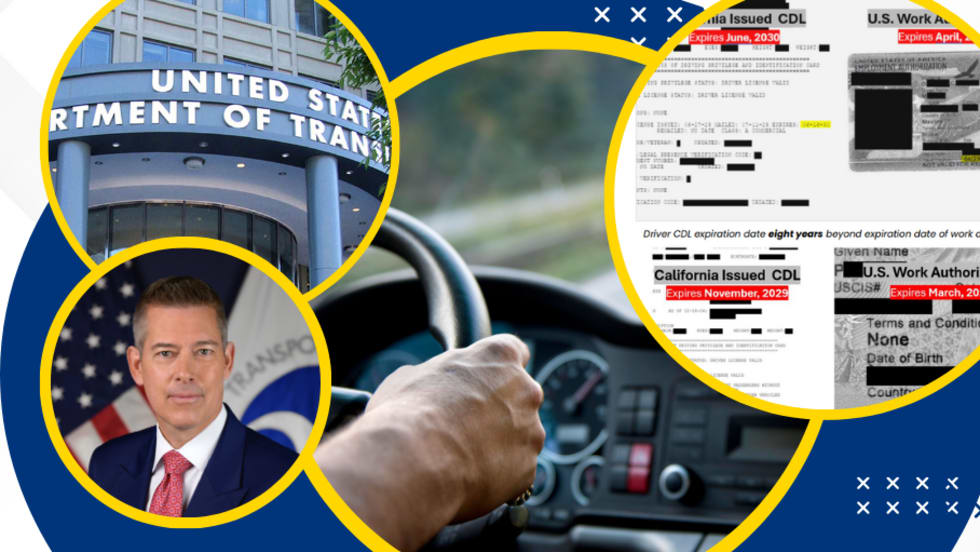
DOT Alleges Illinois Issued Illegal Non-Domiciled CDLs
Illinois is the latest state targeted and threatened with the loss of highway funding by the U.S. Department of Transportation in its review of states' non-domiciled CDL issuance procedures. The state is pushing back.
Read More →FMCSA Locks in Non-Domiciled CDL Restrictions
After a legal pause last fall, FMCSA has finalized its rule limiting non-domiciled commercial driver's licenses. The agency says the change closes a safety gap, and its revised economic analysis suggests workforce effects will be more gradual than first thought.
Read More →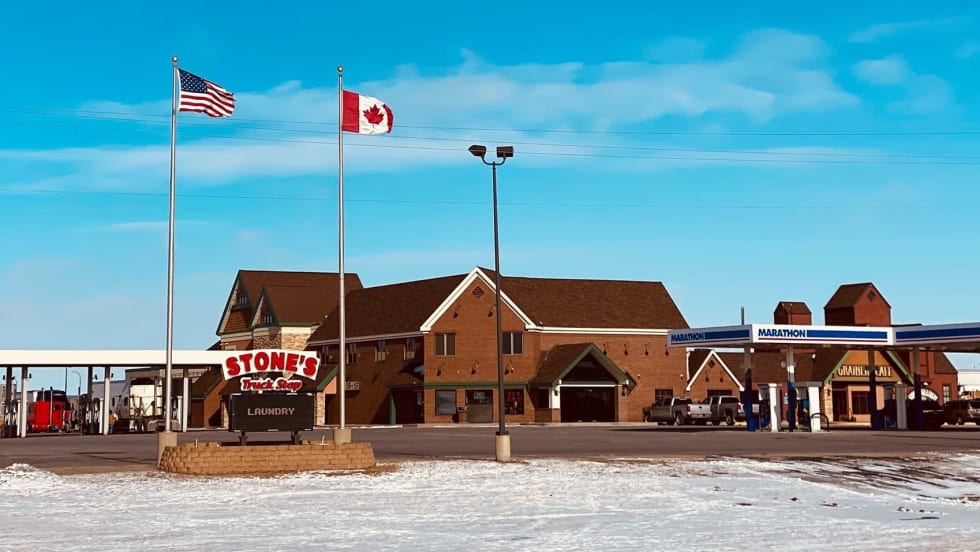
Trucker Path Names Top Truck Stops for 2026
Truck driver ratings reveal the best chain and independent truck stops in the country.
Read More →
6 Dashcam Tactics to Improve Safety & ROI
6 intelligent dashcam tactics to improve safety and boost ROI
Read More →