News
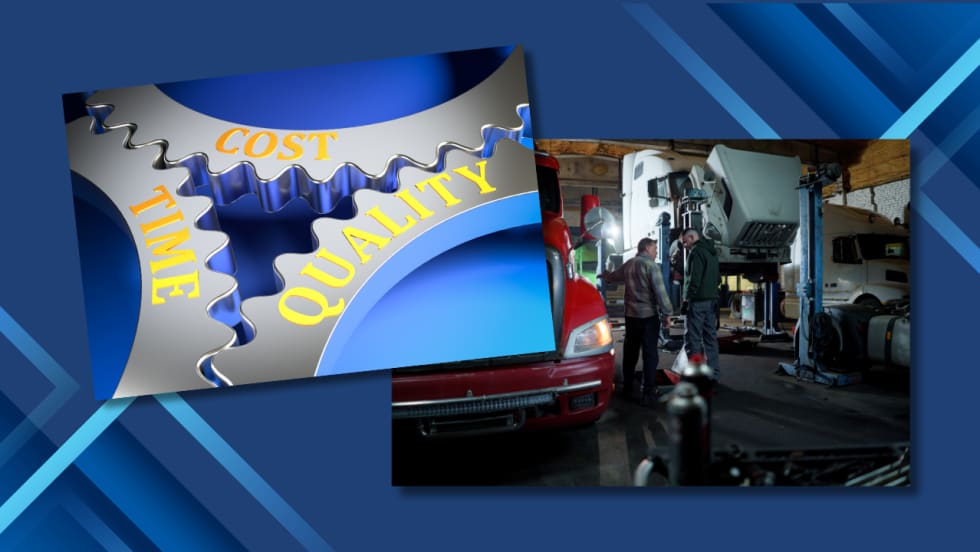
What Three Fleets Are Doing Differently When Buying Truck Parts in 2026
With freight improving but costs still climbing, fleet maintenance executives explain how they're balancing price, quality, and supplier relationships.
Read More → MENU
 SEARCH
With freight improving but costs still climbing, fleet maintenance executives explain how they're balancing price, quality, and supplier relationships.
Read More →
The U.S. Supreme Court has ruled that a West Virginia coal company must honor a union arbitrator’s decision to reinstate a truck driver who twice tested positive for marijuana
Read More →
Atlanta-based Dorsey Trailers has suspended operations at its three manufacturing plants in order to review its financial options, which could include filing for bankruptcy
Read More →
Saying the “supply chain execution market” will reach $8 billion by 2004, E-Stamp Corp. is closing its 15-month-old online postage operation Dec. 31 to focus on Web-based logistics and shipping
Read More →
The acquisition of TravelCenters of America should fuel the expansion plans of the truckstop chain, according to a report in Crain’s Cleveland Business magazine
Read More →Caterpillar has announced advanced engines running on an 85% natural gas/diesel dual fuel system and “clean diesel” for use in emissions-sensitive environments
Read More →Beginning January 1, 2001, a new law affecting the registered weight of two-axle and three-axle trucks will go into effect in the state of Delaware
Read More →A three-part video training kit to help drivers and owners get top fuel economy by driving and managing assets intelligently will be available from Caterpillar early in 2001
Read More →Freightliner has opened a SelecTrucks Center in the Cleveland, Ohio, area
Read More →CargoLinx of Toronto has introduced a new North American freight-matching service
Read More →Reacting to a proposal by California and 13 other states to put their own regulations into effect, Caterpillar and Cummins proposed an alternate plan to the U.S. Environmental Protection Agency. The plan would have challenged engine manufacturers to voluntarily meet more stringent engine emission testing requirements in 2005 -- rather than in 2007 as EPA has proposed -- in exchange for revised emission levels in 2007 and beyond
Read More →