




Why Better Underride Guards, and Maybe Other Stuff, Are Worth It
Senior Editor Tom Berg offers some personal insight into trailer underride guards and why they're so important in his "Trailer Talk" blog.

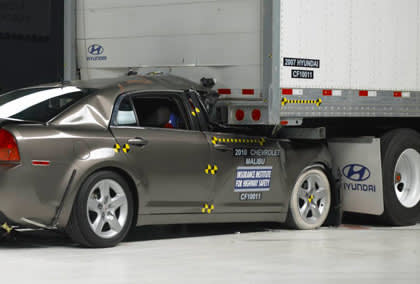
When the Insurance Institute for Highway Safety tested underride guards in 2010, one guard failed. That trailer manufacturer has since redesigned its guards, and it worked properly in the IIHS' latest round of tests.

When the Insurance Institute for Highway Safety tested underride guards in 2010, one guard failed. That trailer manufacturer has since redesigned its guards, and it worked properly in the IIHS' latest round of tests.
Over the years I’ve sat through maybe six or eight meetings where fleet managers were told of upcoming requirements to improve underride guards on trailers. Their responses to proposals were usually negative, based on the costs involved.
In 1952, the old Interstate Commerce Commission first required simple rear horizontal bars that came to be called “ICC bumpers.” Non-industry people wanted these flimsy things strengthened to keep errant motorists from crashng their cars, and themselves, beneath trailer bodies. This didn’t happen often, but when it did, the car drivers were killed or badly injured.
The National Highway Traffic Safety Administration had its way, and in 1998 came a requirement for “rear-impact guards” that absorb some of the collision forces. Each trailer maker designed its own, which complicated repair costs because instead of replacing a damaged member by welding on a piece of channel iron, specific parts had to be found and bolted into place.
Managers’ fears of greater expense were borne out, in repairs as well as initial added cost to trailers. Two or three hundred bucks is not a lot to add to the price of a $10,000 or $15,000 trailer, unless you run 500 or 1,000 or 5,000 trailers, especially at a time when everything in trucking was going up in price. Managers have a point.
About 25 years ago, when I first started hearing about bumpers in those meetings, I noticed a hard-heartedness among fleet managers: If a motorist is stupid or drunk or drugged enough to rear-end my trailer, should I have to worry about what happens to him?
A lot of people say yes, for several reasons: Then as now, failure to see a stopped semi up ahead is not just stupidity or being impaired. It’s also a result of motorists’ expectations and perceptions, and road, traffic and weather conditions.
They don’t expect to see traffic slowing and stopping; when this happens, even professional truck drivers sometimes rear-end other vehicles. Maybe they’ve become zombies from hours of continuous driving, or it’s dark and rainy and they can’t see, or roadside lights distract them and take attention from traffic, and their perception – depth and otherwise – is compromised.
That’s also true if a semi is making a U-turn across a highway and a motorist comes around a bend and sees it too late and crashes under the trailer – a side-impact accident. The motorist didn’t expect to see a big rig doing that, and that curve kept him from seeing it until he was right on it.
Maybe all drivers should watch out for such things, but in our everyday world, most of them don’t. (By the way, there’s also a call for side-impact guards, like those used in the United Kingdom and in Japan – something more for frugal managers to fear.)
Know what? I agree with those safety people. Because in 1973 I heard about a guy who was killed when he underrode a semi in Buffalo, N.Y. According to the story, the semi was stalled on an expressway with some of its lights not working. It was dark and rainy, and the guy had had a drink or two. He rammed the semi and was decapitated.
He was one of perhaps 100 people who died in that kind of wreck in ‘73, so was almost statistically insignificant in a year when 54,051 other people also died on American highways.
But he had a name -- Mike Mathews -- and he was my best buddy in college. He was brilliant without being eccentric, and was terrifically humorous. He could party with the rest of us yet still ace an exam the next morning. He could discuss philosophy and the physical attributes of certain ladies with equal vigor. He was doing well in life after we graduated, but his life lasted only eight more years. And he certainly was significant to his family, including his young widow and little boy, and to friends like me.
Since then, things have changed with trailers. Many now have the stronger rear-impact guards, and some have the better Canadian versions. And that highly reflective red-and-white tape – another NHTSA mandate from 1993 that some managers complained about -- makes trailers easier to see at night. Also, many fleet managers now seem enlightened and see public safety as a responsibility.
Too bad all that wasn’t in place back in ’73, when Mike was killed. Sometimes I think of him when the subject of safety equipment comes up and people complain about the cost. If you knew Mike, or somebody who was killed like he was, you might just order the stuff.
The Insurance Institute for Highway Safety earlier this year released results from its latest round of testing of underride guards; here's a video showing some of the results:
More Blog Posts

Pulsing Back-of-Trailer Lamps Aim to Prevent Crashes
Can the addition of a pulsing brake lamp on the back of a trailer prevent rear-end collisions? FMCSA seems to think so, if its exemptions are any indication.
Read More →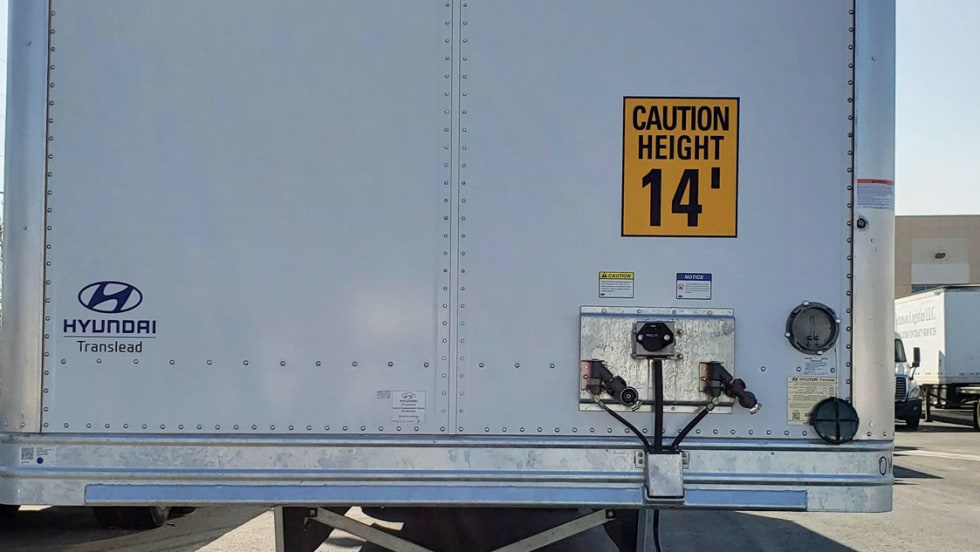
Designing a 14-Foot Trailer
Trailers are 13 feet, 6 inches high, right? Not for Hub Group, which developed a special 14-foot-high trailer spec for a dedicated customer based in California. Learn more in the Trailer Talk blog.
Read More →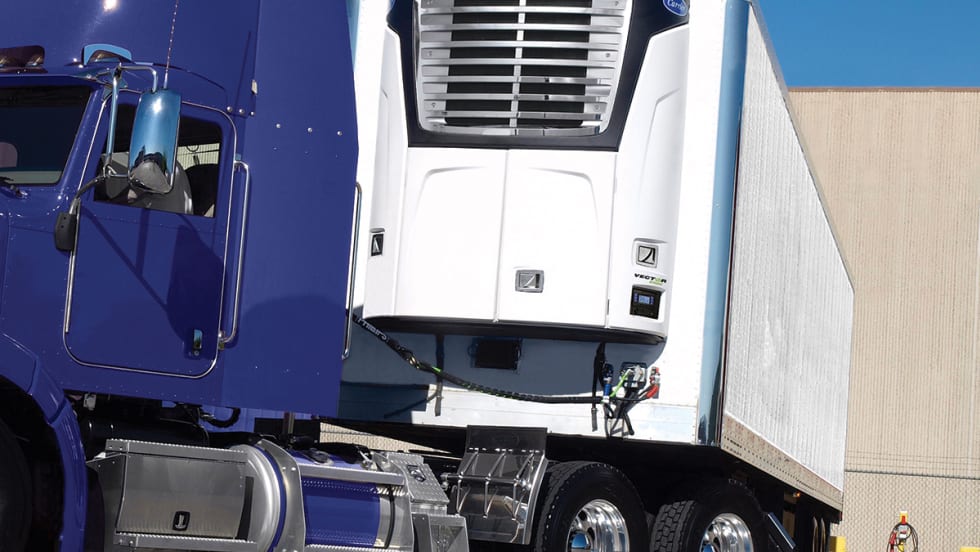
CARB Comes for Reefer Trailers
A new round of emissions control regulations decreed by the California Air Resource Board will begin affecting refrigerated trailer and TRU design and operations next year.
Read More →
5 Ways Data Analysis Maximizes the Value of Trailer Telematics
Are you getting the most out of your trailer telematics investment?
Read More →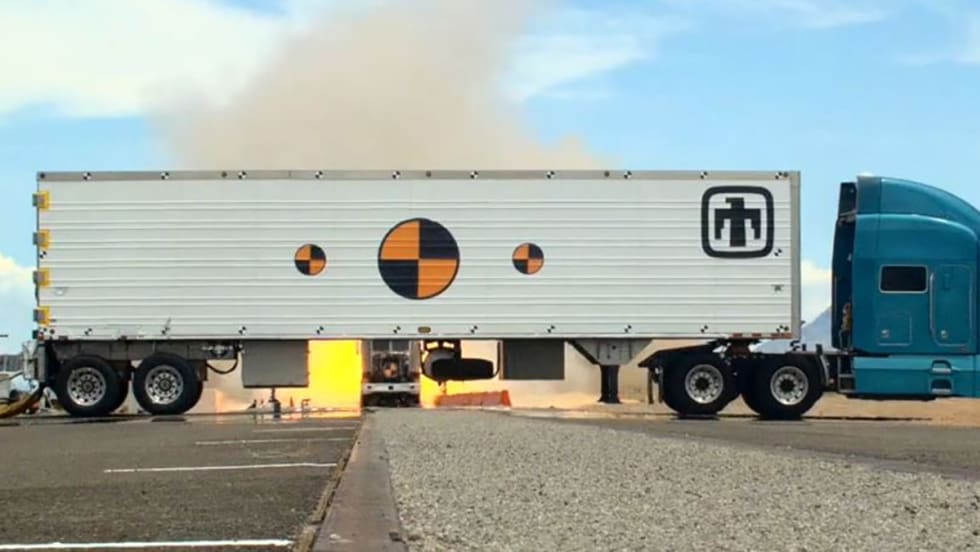
Can You Guess What's in That Trailer?
You don’t always know what’s in the trailers that pass you on the road. But some of those trailers are carrying something a little more dangerous that frozen food or new bedding…like, maybe, a nuclear weapon. But this isn’t an ordinary trailer; this is a trailer specifically made to not only carry this type of payload, but protect it at all costs.
Read More →
How Trailers Are Harnessing 'Free' Energy
Can trailers play a more active role in sustainable transport beyond aerodynamic add-ons or low-rolling-resistance tires? Some companies think so.
Read More →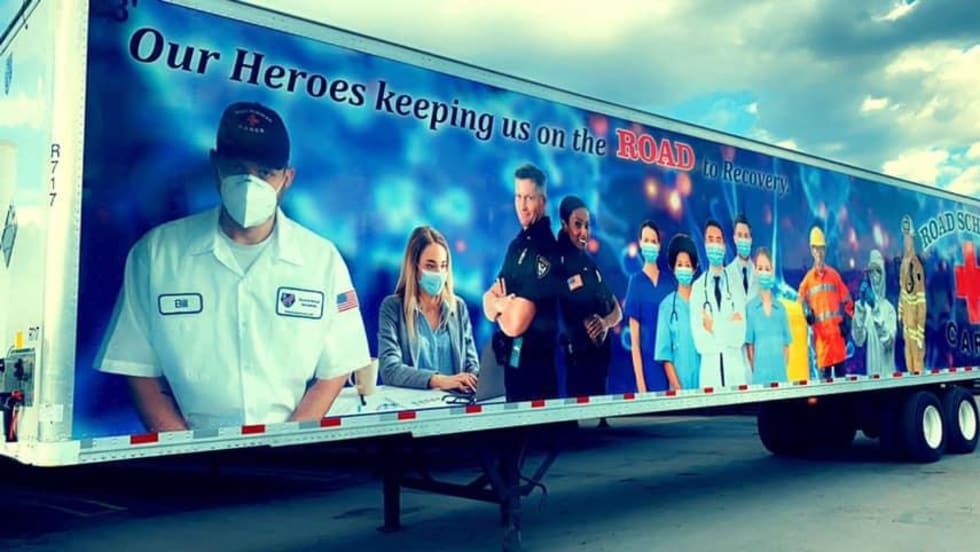
Wrapping a Trailer for COVID’s Everyday Heroes
“We don’t only deliver freight. We deliver awareness.” That’s what Jim Barrett, president and CEO of Road Scholar Transport, likes to say about the Dunmore, Pennsylvania-based carrier’s “awareness fleet.” Its latest trailer wrap honors the everyday heroes of the pandemic.
Read More →
How a Tanker Fleet is Using Unorthodox Trailer Lighting to Fight Rear-End Collisions
Groendyke Transport watched the number of rear-end collisions with its trailers rise steadily until it tried an unorthodox and then unapproved method of alerting following drivers that its trucks were applying brakes and slowing down.
Read More →
The Role Trailers are Playing in COVID-19 Funerals
In places such as New York City and Detroit, overwhelmed hospitals and mortuaries are using refrigerated trailers to store the bodies of people killed by COVID-19.
Read More →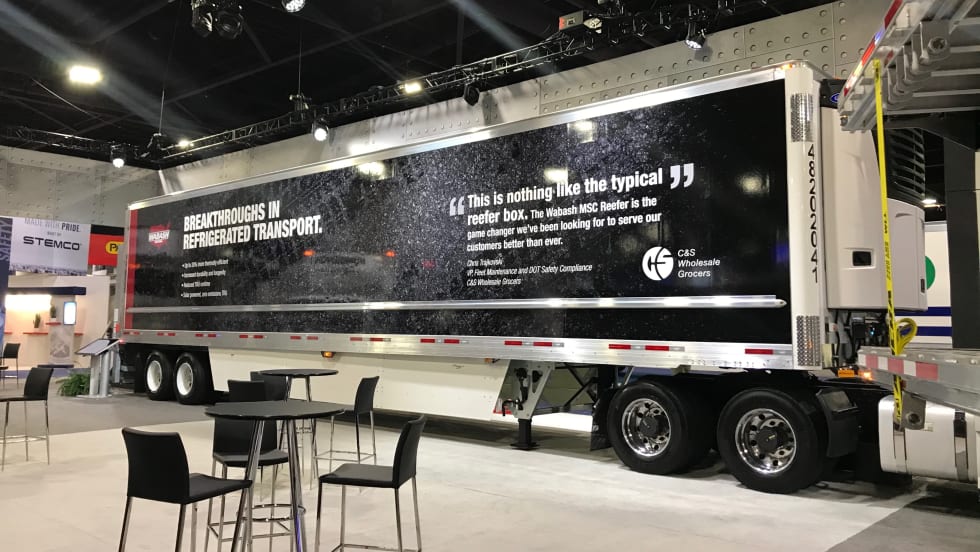
Reefer Trailer Aims to Help Reach Zero Emissions
Wabash National is partnering with C&S Wholesale Grocers to test a new type of zero-emissions refrigerated trailer.
Read More →