




Where Did the North Koreans Get Those Missile-Toting Trucks?
Where did North Korea get its trucks and trailers to haul weapons? On the internet there are reports that the trucks and tractor-trailers were made in China, with – yikes! -- American and German components. Tom Berg explores the question in the Trailer Talk blog.

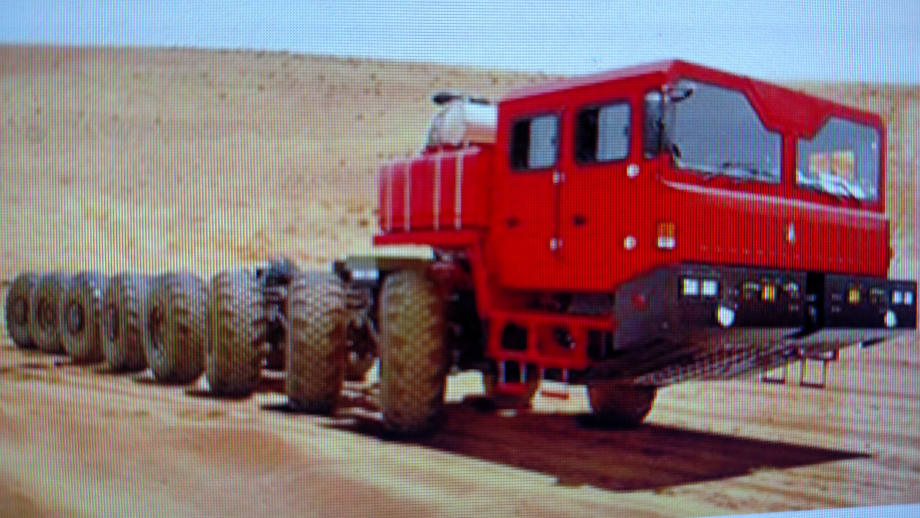
Civilian version of Wanshan's WS51200 is meant for off-road hauling of timber, ore and fuel. But paint it olive-drab and outfit it with an erector-launch body, and the rough-terrain truck becomes a military threat.
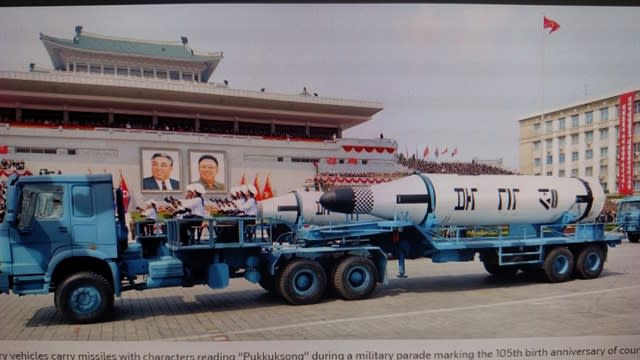
What looks like a Chinese civilian-design tractor-trailer carries a North Korean missile meant for submarine launching. Note the sailors sitting stiffly at attention on the platform behind the cab. Photos: KCNA and wstech.com
As a long-ago soldier, I'm intently watching news stories about North Korea’s missiles, some of them launched and some paraded through the streets of the country’s capital. And as a truck guy, I'm wondering where the nasty Commies got the trucks and trailers that carry the fearsome weapons, and just what kind of vehicles they are. Turns out I’m not the only one.
On the internet there are reports that the trucks and tractor-trailers were made by friendly Commies, in China, with – yikes! – American and German powertrain components in at least one of them. And the trucks themselves are sparking discussions about breaches of non-proliferation treaties among Communist and western nations.
The camouflage-blue rig is carrying a modest-sized missile reportedly designed for launching from submarines. On a platform behind the cab are white-uniformed sailors sitting stiffly at attention with rifles at arm’s length – a seated “parade rest” posture, I’d call it. I could find no information on the vehicle’s specifications, but the tractor looks like a Chinese civilian-type based on European designs.
The huge eight-axle trucks supposedly carrying new intercontinental ballistic missiles (several sources think the big canisters were empty) are definitely Chinese, according to several articles I found. The Wanshan WS51200 chassis are 16x12s (eight axles, six of them driven), resembling (but not related to) Oshkosh heavy equipment transporters used by the American military. Wanshan sold the trucks to North Korea for hauling timber, and the North Koreans illegally converted them to military use, Reuters reports.
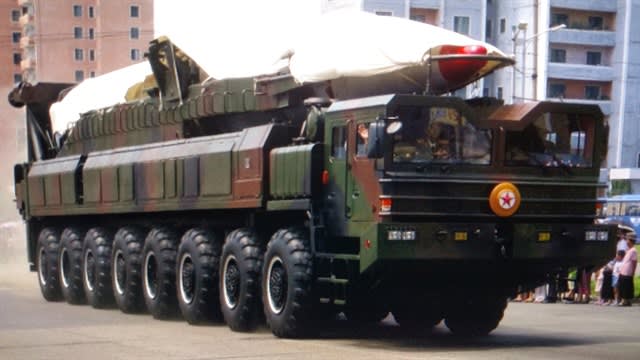
North Koreans converted Wanshan 16x12 trucks to missile erector-launchers, reports say. Powertrains include Cummins KTTA-700 and ZF automatic transmissions.
Wanshan is a specialist in off-road military vehicles, according to the Wikipedia page. The builder has looked for civilian uses for its military trucks, and this photo shows a chassis painted in un-military red.
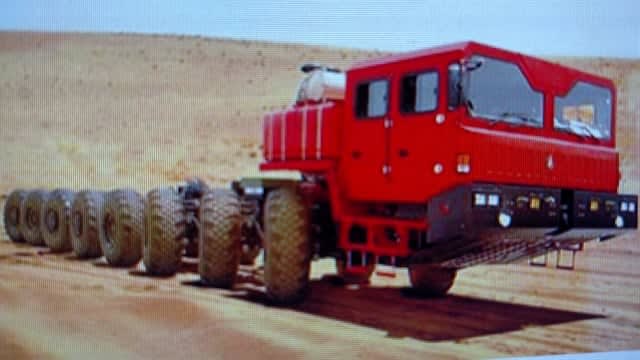
Civilian version of Wanshan's WS51200 is meant for off-road hauling of timber, ore and fuel. But paint it olive-drab and outfit it with an erector-launch body, and the rough-terrain truck becomes a military threat.
To expand a bit on componentry: The WS51200's engine is a 700-hp Cummins KTTA-19, twin turbocharged and aftercooled with a 19-liter (1,161-cubic-inch) displacement. It’s based on the KT-450 and KTA-600, which Cummins sold here as Big Power truck engines in the 1970s (I attended the KT’s introduction in Columbus, Indiana, in 1973).
Like other American and European companies, Cummins has joint ventures in China. Several years ago it introduced an ISG diesel that’s since been produced there. The ISG forms the basis for the new 11.9L X12 diesel destined for North America and to be built in Jamestown, New York.
The big truck's WSK440+16S251 automatic transmission is from Germany-based ZF, which also does business in China (and makes and sells automotive components in the U.S.). The Chinese market is huge and any world-class company worth its mettle (and metal) needs to be there to survive in the global marketplace.
China may be a potential enemy to us, but it is also a huge trading partner. To paraphrase an old saying, where goods cross borders, soldiers do not and President Trump is asking the Chinese to lean on the North Koreans to back off from their belligerency.
Now, let’s lighten up. We know that on Easter Sunday, the day after their big parade, the North Koreans tried to test a missile but it exploded on launch. But, who knew that a missile fell off a trailer not long before that, sending their Dear Leader into a rage? The Daily Cardinal, the University of Wisconsin’s student-run newspaper, did. Ha ha, the Cardinal has a writer who's a real spoofmeister.
More Blog Posts
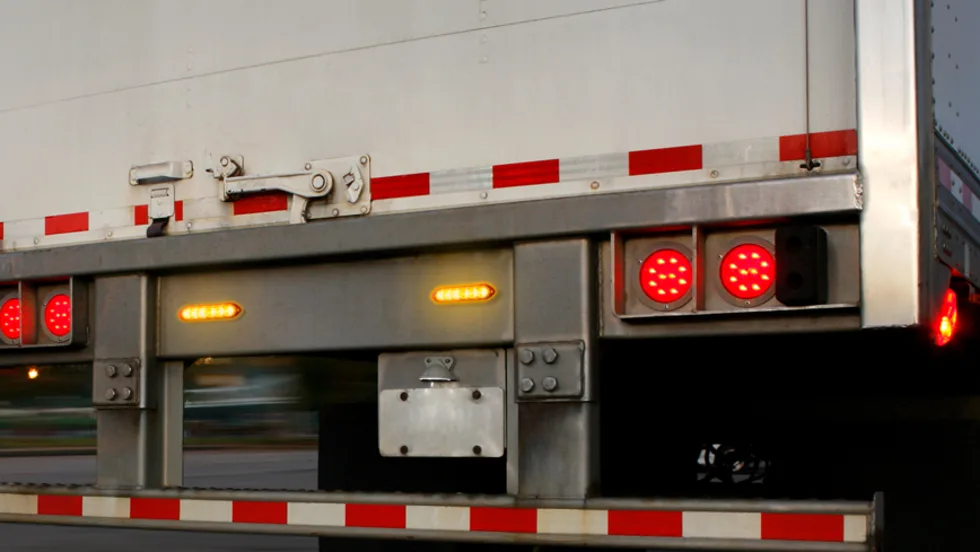
Pulsing Back-of-Trailer Lamps Aim to Prevent Crashes
Can the addition of a pulsing brake lamp on the back of a trailer prevent rear-end collisions? FMCSA seems to think so, if its exemptions are any indication.
Read More →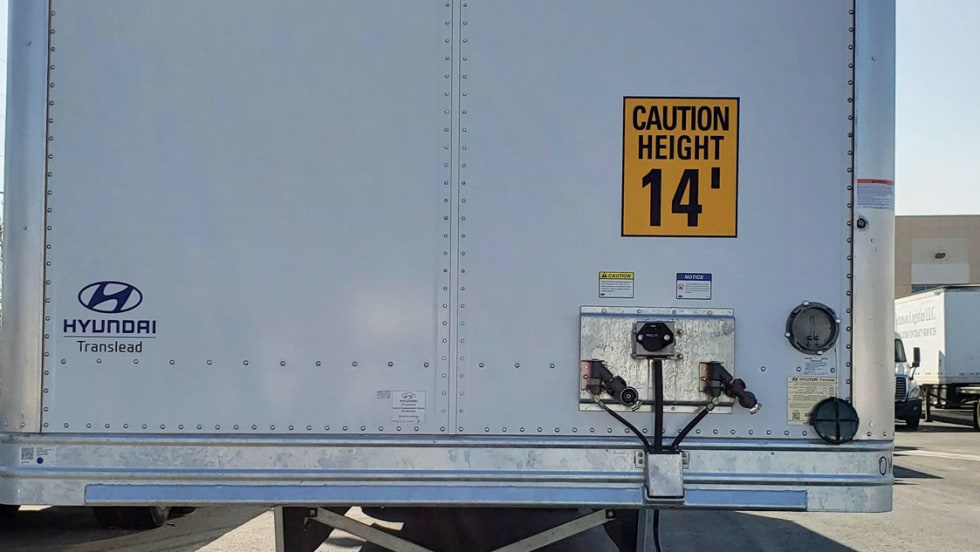
Designing a 14-Foot Trailer
Trailers are 13 feet, 6 inches high, right? Not for Hub Group, which developed a special 14-foot-high trailer spec for a dedicated customer based in California. Learn more in the Trailer Talk blog.
Read More →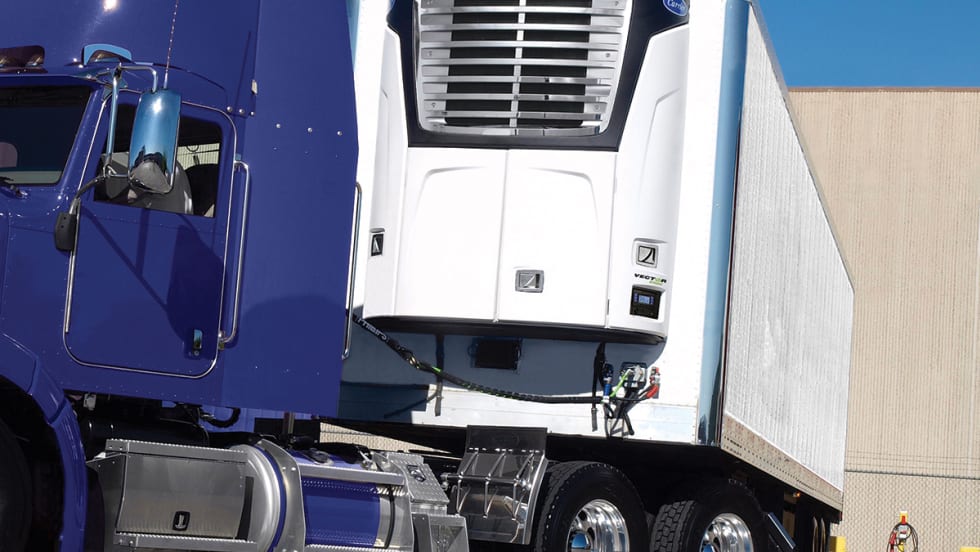
CARB Comes for Reefer Trailers
A new round of emissions control regulations decreed by the California Air Resource Board will begin affecting refrigerated trailer and TRU design and operations next year.
Read More →
5 Ways Data Analysis Maximizes the Value of Trailer Telematics
Are you getting the most out of your trailer telematics investment?
Read More →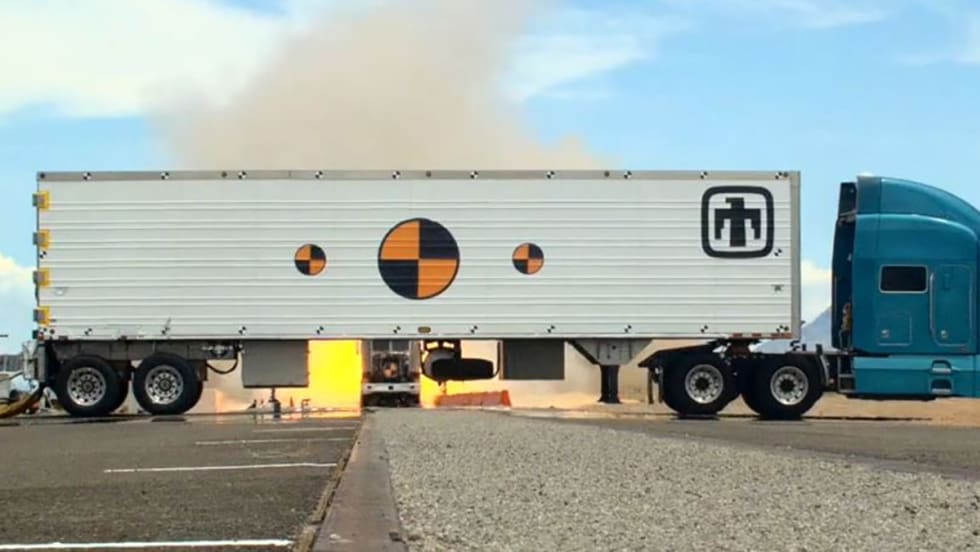
Can You Guess What's in That Trailer?
You don’t always know what’s in the trailers that pass you on the road. But some of those trailers are carrying something a little more dangerous that frozen food or new bedding…like, maybe, a nuclear weapon. But this isn’t an ordinary trailer; this is a trailer specifically made to not only carry this type of payload, but protect it at all costs.
Read More →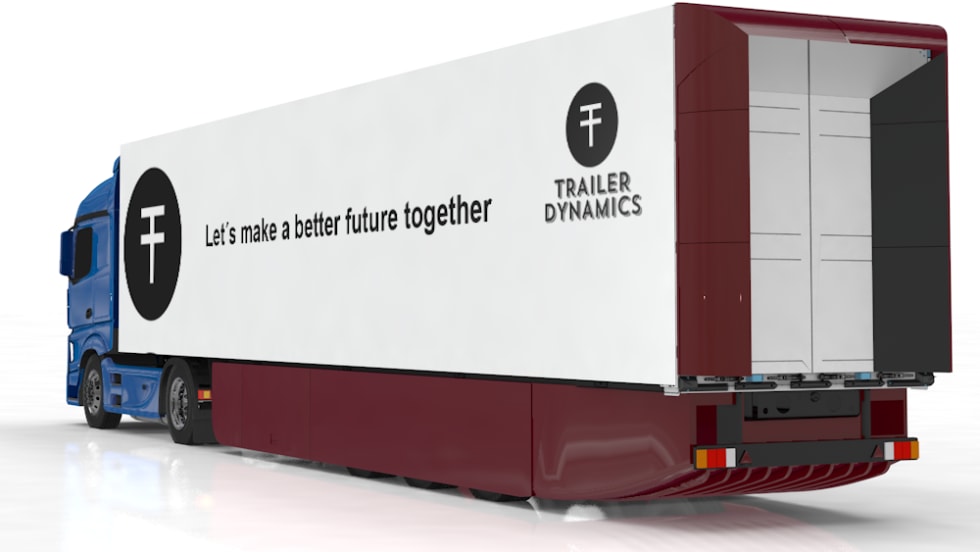
How Trailers Are Harnessing 'Free' Energy
Can trailers play a more active role in sustainable transport beyond aerodynamic add-ons or low-rolling-resistance tires? Some companies think so.
Read More →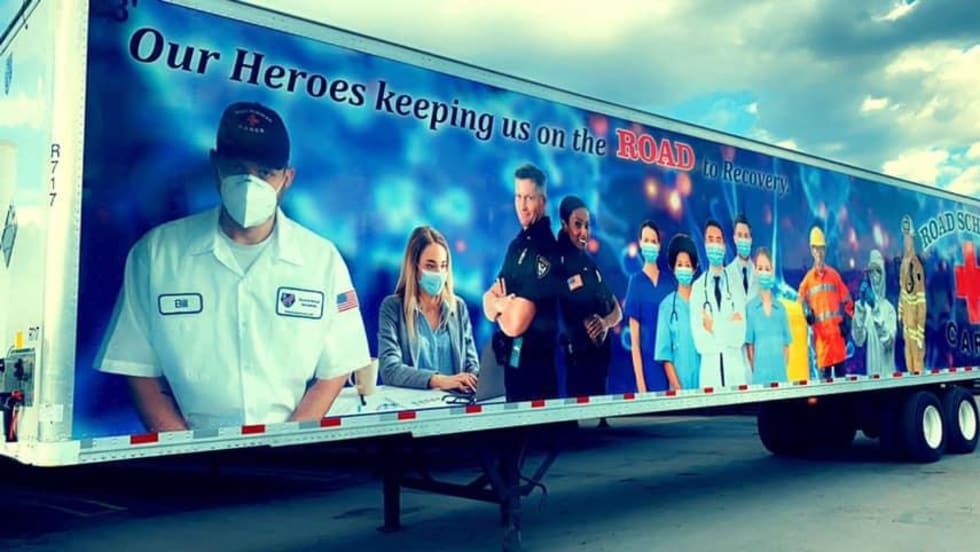
Wrapping a Trailer for COVID’s Everyday Heroes
“We don’t only deliver freight. We deliver awareness.” That’s what Jim Barrett, president and CEO of Road Scholar Transport, likes to say about the Dunmore, Pennsylvania-based carrier’s “awareness fleet.” Its latest trailer wrap honors the everyday heroes of the pandemic.
Read More →
How a Tanker Fleet is Using Unorthodox Trailer Lighting to Fight Rear-End Collisions
Groendyke Transport watched the number of rear-end collisions with its trailers rise steadily until it tried an unorthodox and then unapproved method of alerting following drivers that its trucks were applying brakes and slowing down.
Read More →
The Role Trailers are Playing in COVID-19 Funerals
In places such as New York City and Detroit, overwhelmed hospitals and mortuaries are using refrigerated trailers to store the bodies of people killed by COVID-19.
Read More →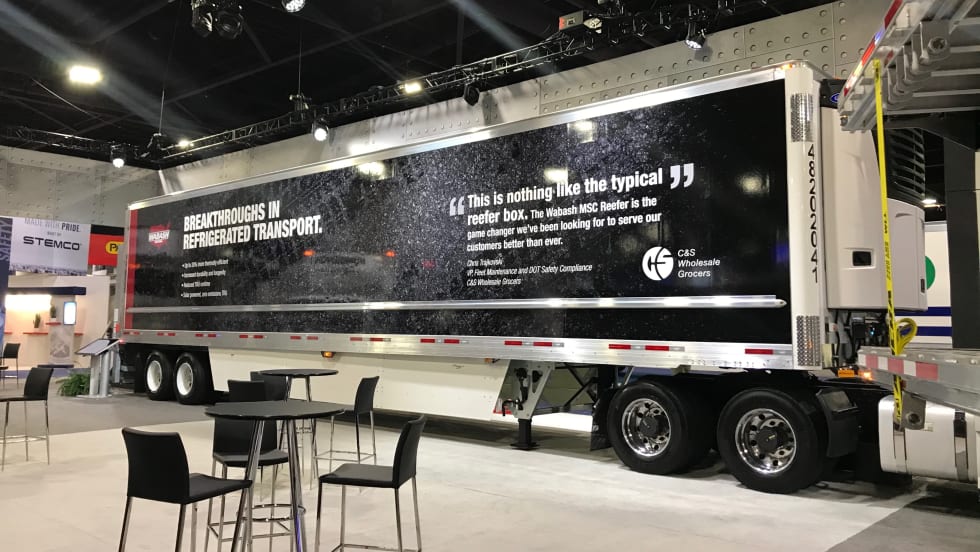
Reefer Trailer Aims to Help Reach Zero Emissions
Wabash National is partnering with C&S Wholesale Grocers to test a new type of zero-emissions refrigerated trailer.
Read More →