




When Minutes Count
DOT officers were diligently digging their way through fuel receipts and other bits of evidence to uncover the ugly truth: drivers were cheating on their logs in order to get home for the weekend.

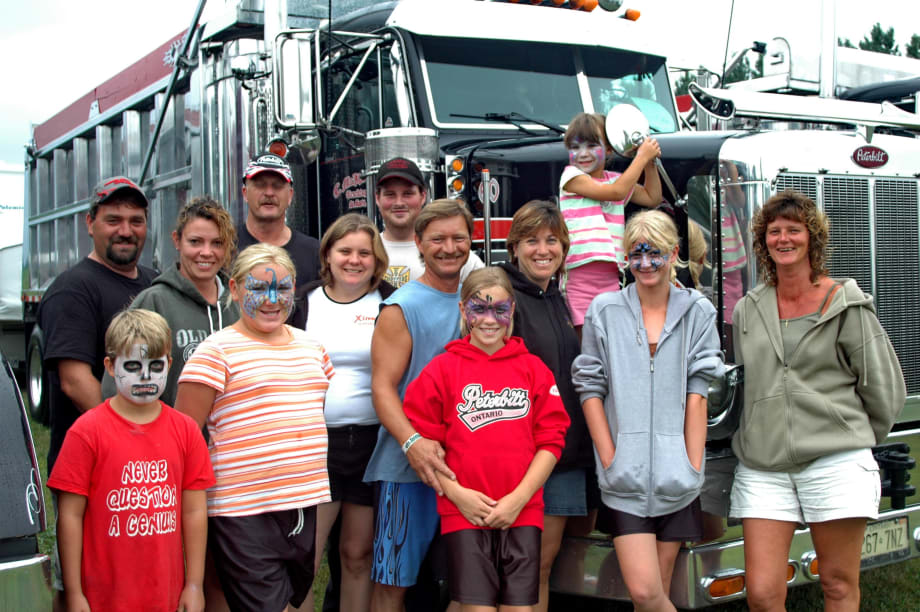
Whether it's time at a truck show or the family campsite, drivers' families need them home on special days.
Whether it's time at a truck show or the family campsite, drivers' families need them home on special days.
Could someone please explain how electronic on-board recorders/electronic logging devices might work to the drivers' advantage? With the new HOS rules just over a week away, and FMCSA's proposed EOBR/ELD rule bubbling up through the regulatory morass in Washington, I can see drivers spending a lot more time away from home -- with no extra compensation.
A few weeks ago I got an email from a driver who'd been pinched in a logbook blitz a few hours from where he lived. He and legions of other drivers were on their way home for the Memorial Day long weekend. Cottages scheduled to be opened, boats ready for the waves, campsites booked, and kids -- lots of kids -- expecting Daddy home for the fun.
But Daddy had been put out of service at a scale southern Michigan.
DOT officers were diligently digging their way through fuel receipts and other bits of evidence to uncover the ugly truth: drivers were cheating on their logs in order to get home for the weekend.
So, as a responsible editor, I wrote back to the driver, explaining that DOT/CVSA has a duty to keep the roads safe for all users, and that turning a blind eye to HOS compliance wasn't a good idea at any time, even if a lot of holiday plans hung in the balance.
That was the official response. Of course my true feelings rested with the driver and his mighty unhappy offspring. I've been there too, and truthfully, would be reluctant to let something like a logbook stand in the way of my vacation plans.
When you're under pressure -- whether it's the cops, the boss, or the kids -- most of us will weigh the likelihood of getting caught against the wrath yet to be incurred for failing to deliver.
It's not enough to simply say to a driver -- and by extension, his or her family -- "you lose" when something out of the ordinary threatens to wreck long-made plans.
A one-hour delay on a Monday can compromise an entire week's work, what with missed appointments, altered schedules, limited windows of opportunity, etc. A driver who makes minor but necessary adjustments to the logbook isn't the biggest problem here. It's rules that are written for some hard-wired interpretation that enforcement people can use, and later, lawyers can use against us.
A few stolen minutes here and there don't make a driver a threat to society. And neither do the administrative violations. An owner-operator who greases the truck on a day off, but fails to log it on-duty, is not a safety risk. But it's a violation. Period.
Fudging the logbook isn't always about gaining some competitive advantage -- though I'll admit those guys are out there. The violations that come from the minor adjustments that are often needed to keep things on track are about positioning, scheduling, and doing the best you can under the circumstances to keep everybody happy: customers, dispatchers, enforcement -- and the family.
No Grey Area
The problem with HOS is there's no legal grey area, and there really needs to be some neutral ground there. I fear that electronic on-board recorders will eliminate what little flexibility we have, leaving drivers stranded a few short hours away from a delivery – or a long weekend with the kids.
Drivers have been making minor adjustments to their logs for years -- and we've got a high number of violations to show for it -- but there's little to link those numbers to the relatively small number of truly fatigue-induced accidents.
A case in point is the backyard, Saturday afternoon mechanic, or for the driver that neglects to fill in the license number on his log sheet. Those infractions all wind up on the same rap sheet, but has safety been compromised?
I can see where black boxes could make a driver's life better, too, given the ability to track wasted time. I'm sure they'd help build a better case for billing that time to the offending party, but who do you bill for a border delay or a traffic jam? We do know who gets the bill for a forfeited houseboat rental.
FMCSA has steadfastly refused to allow a little flexibility into its HOS rules under the unbelievably lame and frankly unacceptable excuse that it can't figure out a way to do it that won't be subject to abuse. Well Ms Ferro and company, here's a suggestion: Give me an extra hour or two today to make a deadline and I'll give it back to you tomorrow -- or after my weekend at home.
Simply, let me make the necessary adjustments to the workday on the day I need it, and I will work that many fewer hours tomorrow. I know I'm not getting away with anything, and the payback comes with a potential penalty, so I'll have to use it with discretion.
I can't imagine an easier way to track such adjustments than with an electronic logging device. It's had to pull the wool over an EOBR's eyes. You're going to get your EOBR mandate, now, give a little something back to the drivers who have so much to lose with the limited flexibility.
If somebody can show me that EOBRs will improve the lives of drivers and their families, I'm all for them. If they'll put more money in drivers' pockets by ensuring they're paid for all the work they do, or getting drivers home for special days, I say bring 'em on. If EOBRs are about improving safety, please show me the numbers that prove the assertion. But if EOBRs are nothing more than a tool to make the cops' jobs easier, or to limit liability, I suggest there are less intrusive ways of doing that. I'm open to persuasion.
More Blog Posts
Truck Driver’s Dilemma: Click, Twist or Swipe?
Whether 'tis safer to twist a knob or press a button than to swipe right then swipe down to scan the menu for your favorite playlist...? That's a question for the age.
Read More →
Even the Swedes are Doing Turnpike Doubles
The government doesn't seem to mind asking trucking to invest a trillion dollars toward a greener future. But they won't let us pull turnpike doubles making 30% less CO2. Which is insanity, says HDT's Jim Park in his On the Road blog.
Read More →
Is Your Recruiting Message on Point?
How does your recruiting and retention messaging compare with the reality at your company? Would your drivers agree with your own assessment? Jim Park explores those questions in his On the Road blog.
Read More →
You Can’t Blame Trucks for the Highland Rest Area Bus Crash [Commentary]
The causes of the Highland Park rest area crash go far beyond the parking shortage and the need for flexibility in hours of service — but those issues must be addressed, too, says Jim Park in his On the Road blog.
Read More →
Electric Trucks Seem Far Down the Road for Fleets Dealing with Today's Maintenance Challenges
While the push for zero-emissions trucks rings clear for regulators, advocates and even a small crowd of suppliers, ZEVs seem to have run out of steam down on Main Street, says HDT Equipment Editor Jim Park in his latest On the Road blog.
Read More →
Guinea Pigs 2.0: Can Trucking Comply with a Near Impossible NOx Reduction?
The EPA’s Final Rule on NOx reduction will be incredibly difficult if not nearly impossible for trucking to comply with. Rather than endure another round of equipment failures, downtime and loss of customer faith, industry needs to rally ‘round the OEMs and seek a solution to this wrong-headed rule.
Read More →
Is Downspeeding Bad for Brakes?
Is there a connection between downsped drivetrains and increased brake wear? There shouldn’t be. Downsped fleets seeing increased brake wear are probably not letting the technology do its job, explains HDT Equipment Editor Jim Park.
Read More →
Dig for the Gold Behind CVSA’s Out-of-Service Numbers
Published out-of-service rates don’t mean much until you dig into the why. With brake problems consistently placing in two of the top five spots, maybe we’re missing something in brake maintenance, writes HDT Equipment Editor Jim Park.
Read More →
Things That Go Poof in the Night
We’re in electric-truck heydays now. But like another famous heyday, the 1849 California Gold Rush, there will be a lot fewer winners than losers, says Jim Park in his On the Road blog.
Read More →
Do Your Truck Drivers Know How to Descend a Mountain Grade?
Where do drivers learn mountain-driving techniques? It's sure not from the typical state CDL manual. Jim Park shares what he learned following a deadly 2019 Colorado crash.
Read More →